Solar panel array desert
1344×768 · AVIF · CC BY 4.0
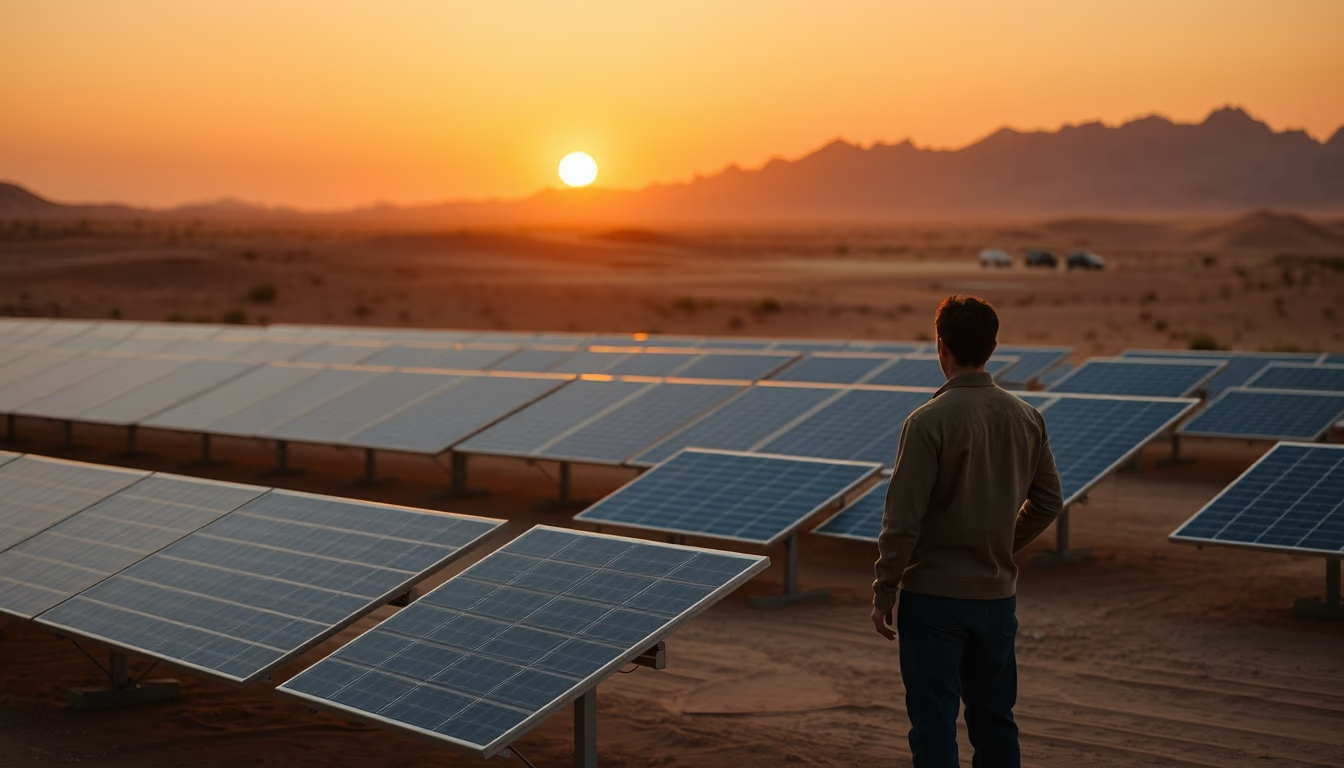
Solar farms in deserts harness intense irradiation and cheap land to generate clean energy on a massive scale.
About this subject
Solar farms in deserts represent one of the most promising solutions for large-scale renewable energy generation. Desert regions such as the Sahara, Mojave Desert, and Atacama receive an average of 2,000 to 3,000 kWh/m² of solar irradiation per year, twice that of temperate areas. This abundance of sunlight, combined with low population density and cheap land, makes these locations ideal for photovoltaic panel installation.
The largest solar farm in the world is currently the Bhadla Solar Park in India, with a capacity of 2,245 MW, located in a desert region. In Brazil, the Janaúba Solar Complex in Minas Gerais is one of the largest in Latin America, covering an area of 3,000 hectares. However, installing panels in deserts faces challenges such as dust accumulation, which reduces efficiency by up to 30%, and the need for cleaning and cooling systems.
Bifacial panel technology, which captures light from both sides, has proven efficient in deserts by taking advantage of sand reflection. Additionally, concentrated solar power (CSP) projects use mirrors to concentrate heat and generate electricity even after sunset. Combining solar panels with wind farms is also common in deserts, maximizing renewable energy generation.
Fun fact: the Sahara Desert receives in six hours more solar energy than humanity consumes in a year. If only 1% of the Sahara's area were covered with solar panels, it could meet global electricity demand. However, long-distance energy transmission and local environmental impacts are barriers to overcome.
Frequently Asked Questions
Why are deserts ideal for solar panels?
Deserts receive high solar irradiation (2,000 to 3,000 kWh/m² per year), have low population density, and cheap land, reducing installation costs and maximizing energy generation.
What are the main challenges of solar farms in deserts?
Dust accumulation reduces panel efficiency by up to 30%, requiring frequent cleaning. High temperatures can also decrease performance, and long-distance energy transmission requires expensive infrastructure.
Are there solar farms in deserts in Brazil?
Yes, the Janaúba Solar Complex (MG) is located in a semi-arid climate area with high solar irradiation. Other projects are under development in the northeastern hinterlands.
Direct URL
https://pub-c7d6a6ea828543ac903a74a341ccb2e1.r2.dev/imagens/solar-panel-array-desert-cinematic-wide-shot-v2.avifHow to credit
Include a visible link back to UtilizAí. Copy one of the snippets below:
<a href="https://xn--utiliza-eza.com/en/midia/imagens/solar-panel-array-desert-cinematic-wide-shot-v2">Solar panel array desert</a> by <a href="https://xn--utiliza-eza.com">UtilizAí</a>, licensed under <a href="https://creativecommons.org/licenses/by/4.0/">CC BY 4.0</a>.
[Solar panel array desert](https://xn--utiliza-eza.com/en/midia/imagens/solar-panel-array-desert-cinematic-wide-shot-v2) by [UtilizAí](https://xn--utiliza-eza.com), CC BY 4.0
License: CC-BY-4.0