Shoji screen wooden
1344×768 · AVIF · CC BY 4.0
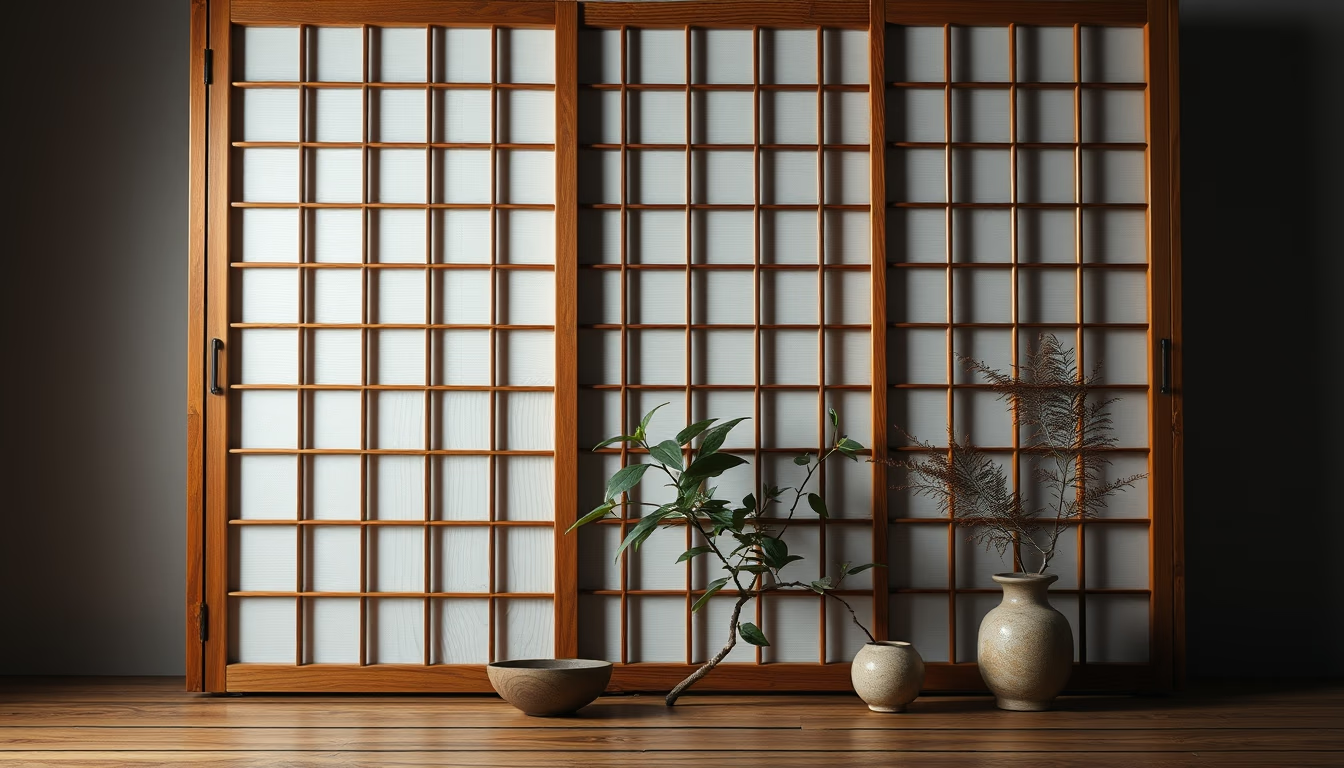
The wooden shoji screen is a traditional element of Japanese architecture that combines functionality and zen aesthetics in room partitioning.
About this subject
The shoji is a sliding panel consisting of a light wooden frame, typically made of cedar or hinoki, filled with translucent washi paper. Originating in ancient Japan, it evolved from fixed screens to sliding doors during the Heian period (794-1185). Its handcrafted construction requires precise joinery without nails, a technique known as "shōji kumiko". The washi paper, made from mulberry fibers, softly diffuses light, creating a serene atmosphere.
Culturally, the shoji represents the Japanese pursuit of harmony between interior and exterior. Rather than completely blocking the view, it filters light and provides privacy without fully isolating the space. This aligns with zen principles of simplicity and connection to nature. During the Edo period, shoji became common in homes across social classes, adapting to various climates.
An interesting detail is that the arrangement of wooden slats (kumiko) is not random: each pattern carries symbolic meaning. The most common design, called "yotsuba-arame", represents four-leaf clovers and good luck. Today, contemporary shoji may use glass or acrylic instead of washi, but the wooden version with paper remains preferred by purists and wabi-sabi enthusiasts. Its popularity has crossed borders, used in Western interiors as both a decorative and functional element.
Frequently Asked Questions
What is a wooden shoji screen?
It is a traditional Japanese sliding panel made of a wooden frame and washi paper, used to partition rooms, control light, and provide privacy with visual lightness.
What is the difference between shoji and fusuma?
Shoji uses translucent washi paper that diffuses light, while fusuma is an opaque panel with fabric or thick paper, often decorated with paintings. Shoji is more associated with natural light.
How to maintain a wooden shoji?
Avoid excess humidity and direct sunlight. Clean the frame with a dry cloth, and for the washi, use a soft duster. If the paper tears, it can be replaced by a skilled artisan.
Direct URL
https://pub-c7d6a6ea828543ac903a74a341ccb2e1.r2.dev/imagens/shoji-screen-wooden-studio-still-life-fresh2.avifHow to credit
Include a visible link back to UtilizAí. Copy one of the snippets below:
<a href="https://xn--utiliza-eza.com/en/midia/imagens/shoji-screen-wooden-studio-still-life-fresh2">Shoji screen wooden</a> by <a href="https://xn--utiliza-eza.com">UtilizAí</a>, licensed under <a href="https://creativecommons.org/licenses/by/4.0/">CC BY 4.0</a>.
[Shoji screen wooden](https://xn--utiliza-eza.com/en/midia/imagens/shoji-screen-wooden-studio-still-life-fresh2) by [UtilizAí](https://xn--utiliza-eza.com), CC BY 4.0
License: CC-BY-4.0