Sextant navigation tool
1344×768 · AVIF · CC BY 4.0
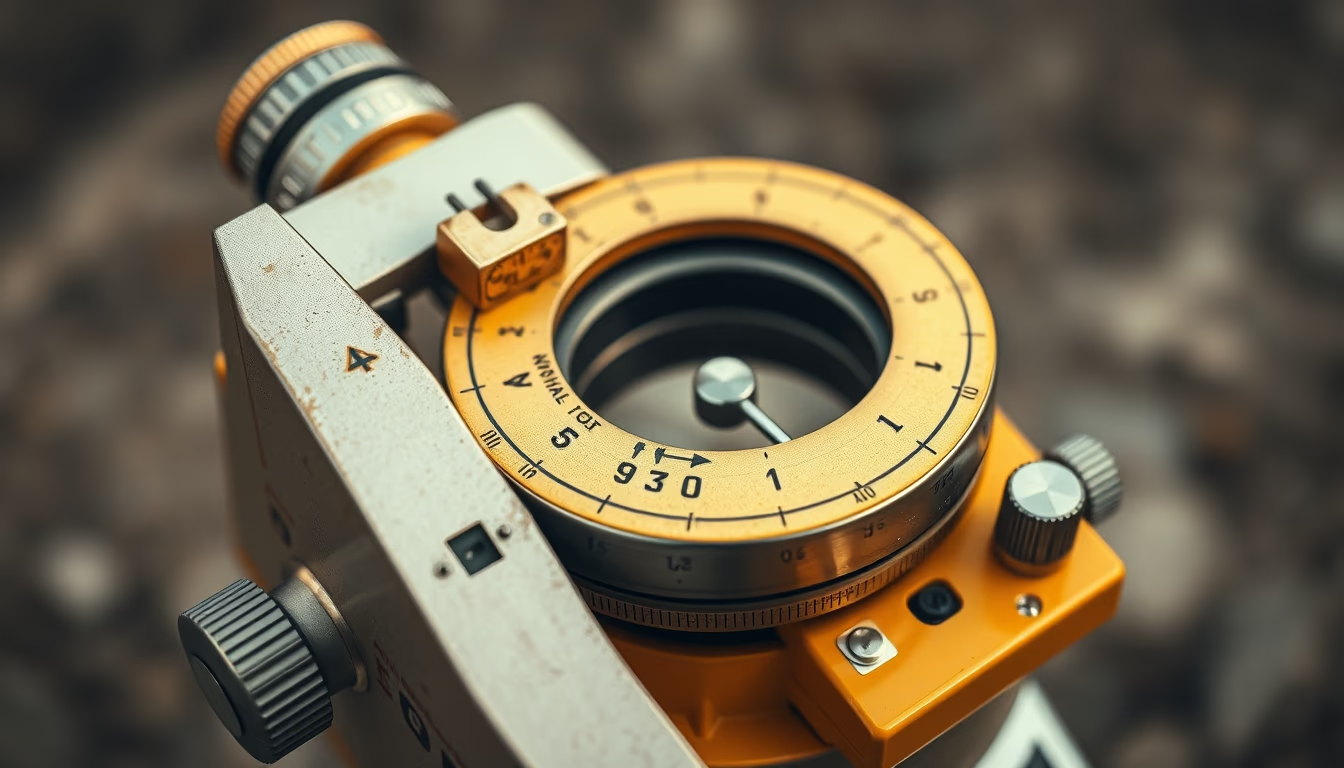
O sextante é um instrumento de navegação que mede ângulos entre astros e o horizonte, essencial para a navegação astronômica desde o século XVIII.
Sobre o tema
O sextante foi inventado independentemente por John Hadley na Inglaterra e Thomas Godfrey na América por volta de 1730, substituindo o astrolábio e o quadrante. Ele permite medir ângulos de até 120 graus, o que possibilita determinar a latitude e a longitude com precisão ao observar o Sol, a Lua ou estrelas. Diferente do quadrante, o sextante usa um espelho duplo que alinha o astro com o horizonte, mesmo com o movimento do navio.
Durante os séculos XVIII e XIX, o sextante foi crucial para a exploração marítima, incluindo as viagens de James Cook e Charles Darwin. A precisão das medições dependia da habilidade do navegador e da qualidade do instrumento, que era feito de latão e vidro. O sextante também teve variações como o sextante de bolso e o sextante de aviação, usado em aeronaves antes do GPS.
Com o advento do GPS, o uso do sextante diminuiu, mas ainda é ensinado em escolas de navegação como método de backup e para preservar a tradição. Em situações de falha eletrônica, um navegador treinado pode usar o sextante para encontrar a posição com precisão de algumas milhas náuticas. O instrumento também é valorizado por colecionadores e entusiastas da história da navegação.
Curiosamente, o nome 'sextante' deriva do latim 'sextans', que significa a sexta parte, referindo-se ao arco de 60 graus que compõe sua escala. Embora existam instrumentos com arco de 45 graus (quintante) e 90 graus (octante), o sextante de 60 graus se tornou o padrão por sua versatilidade. Hoje, réplicas de sextantes são usadas em filmes e exposições para recriar a era das grandes navegações.
Perguntas frequentes
Como o sextante é usado para navegação?
O navegador mira o sextante em um astro, como o Sol, e ajusta o braço até que a imagem refletida do astro toque o horizonte. A leitura no arco indica o ângulo, que junto com a hora exata e tabelas astronômicas, permite calcular a posição.
Qual a diferença entre sextante e astrolábio?
O sextante é mais preciso e pode medir ângulos maiores, até 120 graus, enquanto o astrolábio mede até 90 graus. O sextante também é mais prático em navios por compensar o balanço.
O sextante ainda é usado hoje?
Sim, principalmente como backup em navegação marítima e aérea, e em treinamentos de navegação. Muitos velejadores de longo curso carregam um sextante para emergências.
URL direta
https://pub-c7d6a6ea828543ac903a74a341ccb2e1.r2.dev/imagens/sextant-navigation-tool-national-geographic-style-p4.avifComo creditar
Inclua um link visível de volta pro UtilizAí. Copie um dos snippets abaixo:
<a href="https://xn--utiliza-eza.com/midia/imagens/sextant-navigation-tool-national-geographic-style-p4">Sextant navigation tool</a> by <a href="https://xn--utiliza-eza.com">UtilizAí</a>, licensed under <a href="https://creativecommons.org/licenses/by/4.0/">CC BY 4.0</a>.
[Sextant navigation tool](https://xn--utiliza-eza.com/midia/imagens/sextant-navigation-tool-national-geographic-style-p4) by [UtilizAí](https://xn--utiliza-eza.com), CC BY 4.0
Licença: CC-BY-4.0