Viking helmet replica
1344×768 · AVIF · CC BY 4.0

Real Viking helmets did not have horns, but modern replicas popularized this mythological image.
About this subject
The image of a Viking wearing a horned helmet is one of the biggest historical misconceptions perpetuated by popular culture. Archaeological excavations in Scandinavia, such as the Gjermundbu site in Norway, found only one nearly intact Viking helmet, dated to the 10th century. This helmet was made of iron, with a conical structure and a nose guard, without any sign of horns. The association between Vikings and horns probably emerged in the 19th century during Scandinavian nationalist romanticism, when artists like the Swedish August Malmström depicted Norse warriors with horn adornments to evoke a more savage and primitive image.
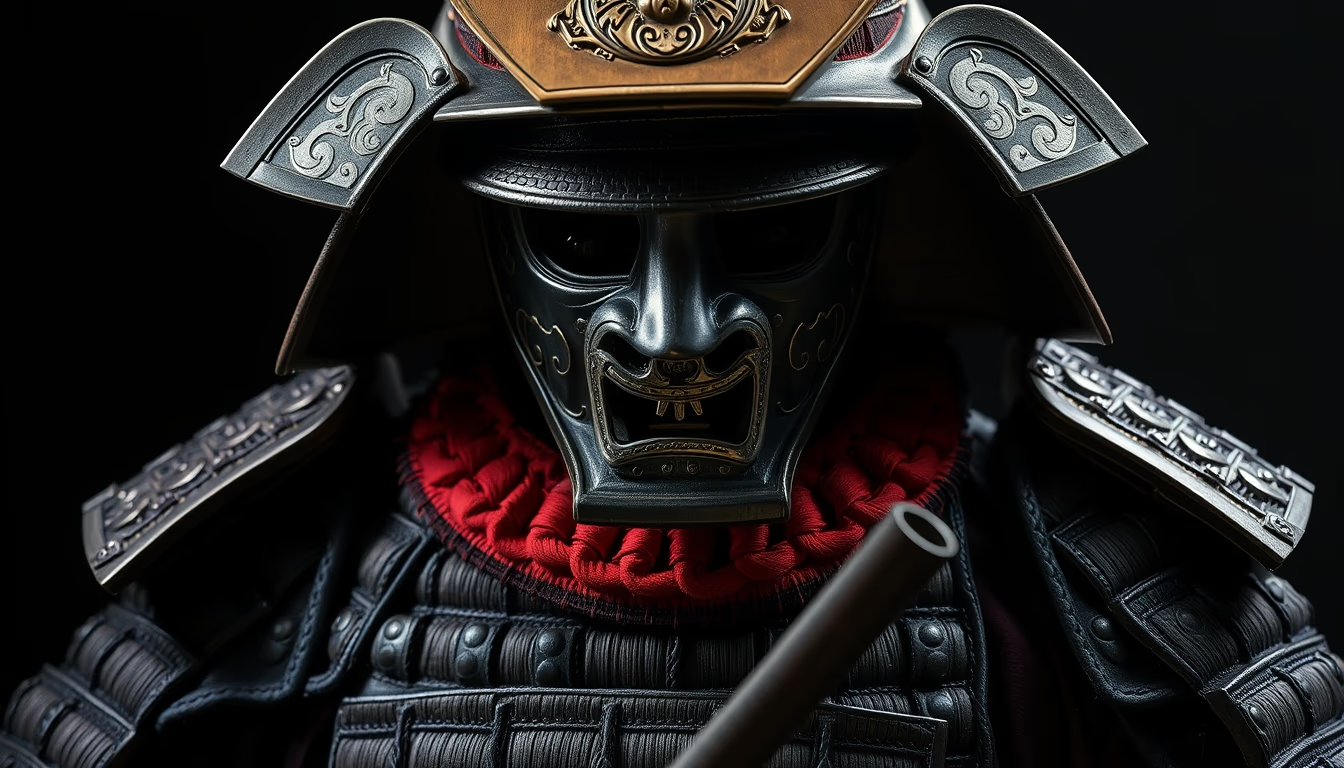
Replicas of Viking helmets, such as the one portrayed in this long-exposure image, are manufactured for educational purposes, historical reenactment, or decoration. They are usually made of steel or polished metal, with details that mimic original pieces, such as face protection and conical finish. However, many replicas include horns, even though this does not correspond to historical reality, because they meet public expectations and the souvenir market. These replicas are popular at medieval fairs, cosplay events, and as decorative items worldwide.
Actual Viking material culture was functional and pragmatic. Helmets were designed to protect in combat, and horns would be a liability, as they could be grabbed or broken easily. Moreover, there is no iconographic evidence in contemporary artifacts, such as Gotland picture stones or tapestries, showing horned helmets. The modern replica is therefore a reinterpretation mixing fact and fiction, reflecting more our view of Vikings than historical reality.
The long-exposure technique used to capture this image, where the camera shutter stays open for several seconds, highlights metallic reflections and details of the replica. This photographic style is common in product or artifact photography, creating a dramatic effect that enhances texture and shine. Thus, the image is not just a record of a replica but a work that plays with light and motion, inviting the viewer to reflect on the thin line between history and imagination.
Frequently Asked Questions
Did Vikings really wear horned helmets?
No. No Viking helmet found in archaeological excavations has horns. This image was created in the 19th century by romantic artists.
What material were original Viking helmets made of?
Original Viking helmets were usually made of iron, conical in shape with a nasal guard. The most famous example, found at Gjermundbu, is iron with steel details.
What are modern Viking helmet replicas used for?
Replicas are used in historical reenactment, decoration, themed events, and as souvenirs. They often include horns to meet popular expectations, though this is not historically accurate.
Direct URL
https://pub-c7d6a6ea828543ac903a74a341ccb2e1.r2.dev/imagens/viking-helmet-replica-long-exposure-p11.avifHow to credit
Include a visible link back to UtilizAí. Copy one of the snippets below:
<a href="https://xn--utiliza-eza.com/en/midia/imagens/viking-helmet-replica-long-exposure-p11">Viking helmet replica</a> by <a href="https://xn--utiliza-eza.com">UtilizAí</a>, licensed under <a href="https://creativecommons.org/licenses/by/4.0/">CC BY 4.0</a>.
[Viking helmet replica](https://xn--utiliza-eza.com/en/midia/imagens/viking-helmet-replica-long-exposure-p11) by [UtilizAí](https://xn--utiliza-eza.com), CC BY 4.0
License: CC-BY-4.0