Sculpture marble white
1344×768 · AVIF · CC BY 4.0
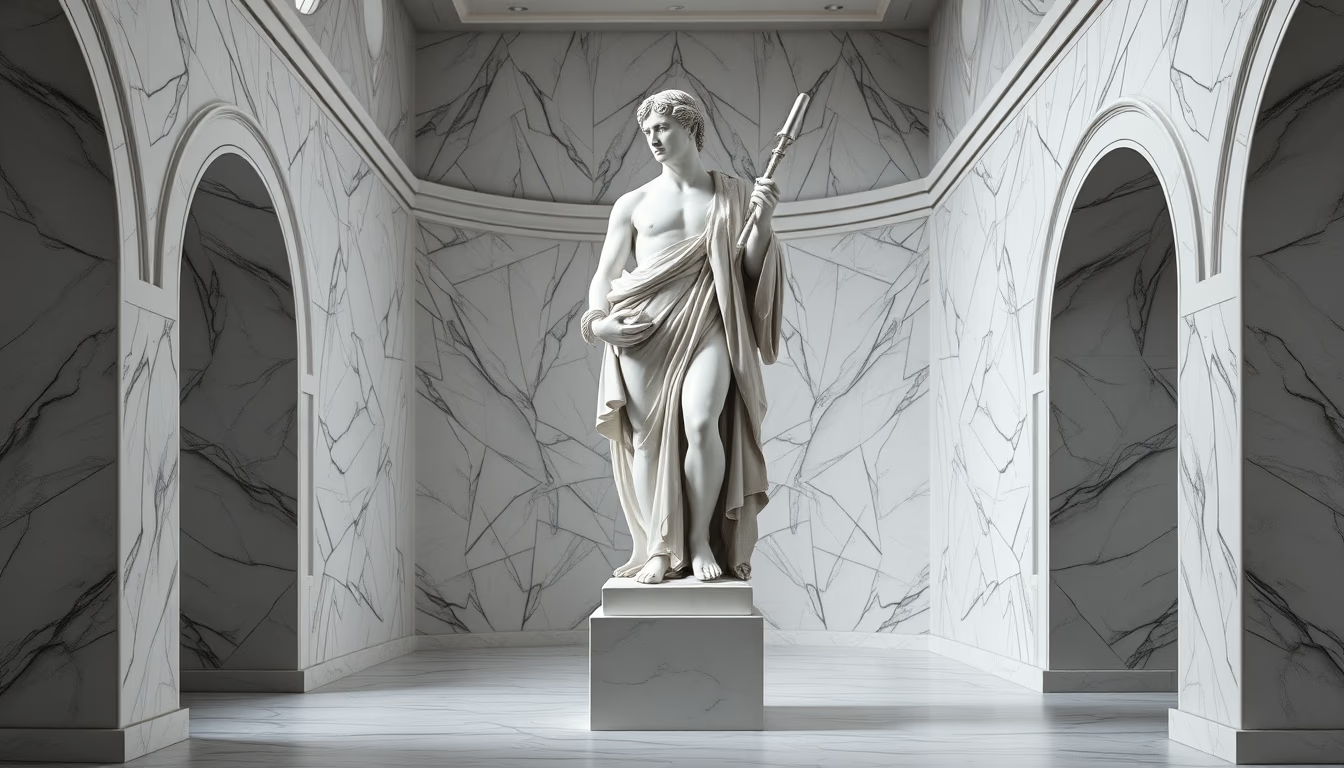
White marble sculpture is one of the oldest and most iconic forms of Western art, found in historical monuments and contemporary works.
About this subject
White marble, especially that quarried in Carrara, Italy, has been prized for millennia for its purity, translucency, and workability. From Ancient Rome, where it was used for statues of emperors and gods, to the Renaissance, when Michelangelo carved masterpieces like David and the Pietà, the material symbolizes artistic excellence. The choice of white marble is not merely aesthetic: its crystalline structure reflects light softly, giving figures an almost lifelike appearance. In architecture, it adorns the facades of Gothic cathedrals, Baroque palaces, and Neoclassical buildings such as the Panthéon in Paris.
Beyond the European tradition, white marble also appears in non-Western contexts. In the Taj Mahal in India, white marble was imported from Rajasthan to veneer the mausoleum, creating one of the most photographed monuments in the world. In Brazil, national white marble from Minas Gerais and Espírito Santo was used in sculptures by Aleijadinho and in public buildings like the Palácio da Alvorada. White marble sculpture faces conservation challenges due to its porosity and sensitivity to pollution, which can cause staining and deterioration. Modern techniques such as laser cleaning and the application of sealants help preserve these works.
Interestingly, white marble was often polychromed in Classical Antiquity, but the colors have been lost over centuries. Recent studies using ultraviolet light have revealed traces of pigments on Greek and Roman statues, indicating that today's monochromatic aesthetic is a result of weathering. In the contemporary art market, white marble sculptures continue to be produced by artists such as Anish Kapoor and Jeff Koons, who explore the contrast between millennia-old tradition and modern language.
Frequently Asked Questions
What is the difference between white marble and other types of marble?
White marble stands out for its mineral purity, composed mainly of calcite or dolomite with low impurity levels that cause color. Its translucency allows light to penetrate slightly, giving depth. Colored marbles, such as green or pink, contain additional minerals (serpentine, hematite) that alter the hue.
Why is white marble so widely used in sculpture?
Its fine, homogeneous grain allows precise detailing, while moderate hardness facilitates carving. The neutral color highlights volumes and shadows, ideal for realistic representation. The material’s durability also contributes to the preservation of works over centuries.
How are outdoor white marble sculptures conserved?
Cleaning should be gentle, using distilled water and soft brushes, avoiding acids. Hydrophobic sealants can be applied to reduce pollutant absorption. Regular monitoring for cracks and protection from acid rain are essential to prevent deterioration.
Direct URL
https://pub-c7d6a6ea828543ac903a74a341ccb2e1.r2.dev/imagens/sculpture-marble-white-architectural-photography-p2.avifHow to credit
Include a visible link back to UtilizAí. Copy one of the snippets below:
<a href="https://xn--utiliza-eza.com/en/midia/imagens/sculpture-marble-white-architectural-photography-p2">Sculpture marble white</a> by <a href="https://xn--utiliza-eza.com">UtilizAí</a>, licensed under <a href="https://creativecommons.org/licenses/by/4.0/">CC BY 4.0</a>.
[Sculpture marble white](https://xn--utiliza-eza.com/en/midia/imagens/sculpture-marble-white-architectural-photography-p2) by [UtilizAí](https://xn--utiliza-eza.com), CC BY 4.0
License: CC-BY-4.0