Rotary dial phone
1344×768 · AVIF · CC BY 4.0
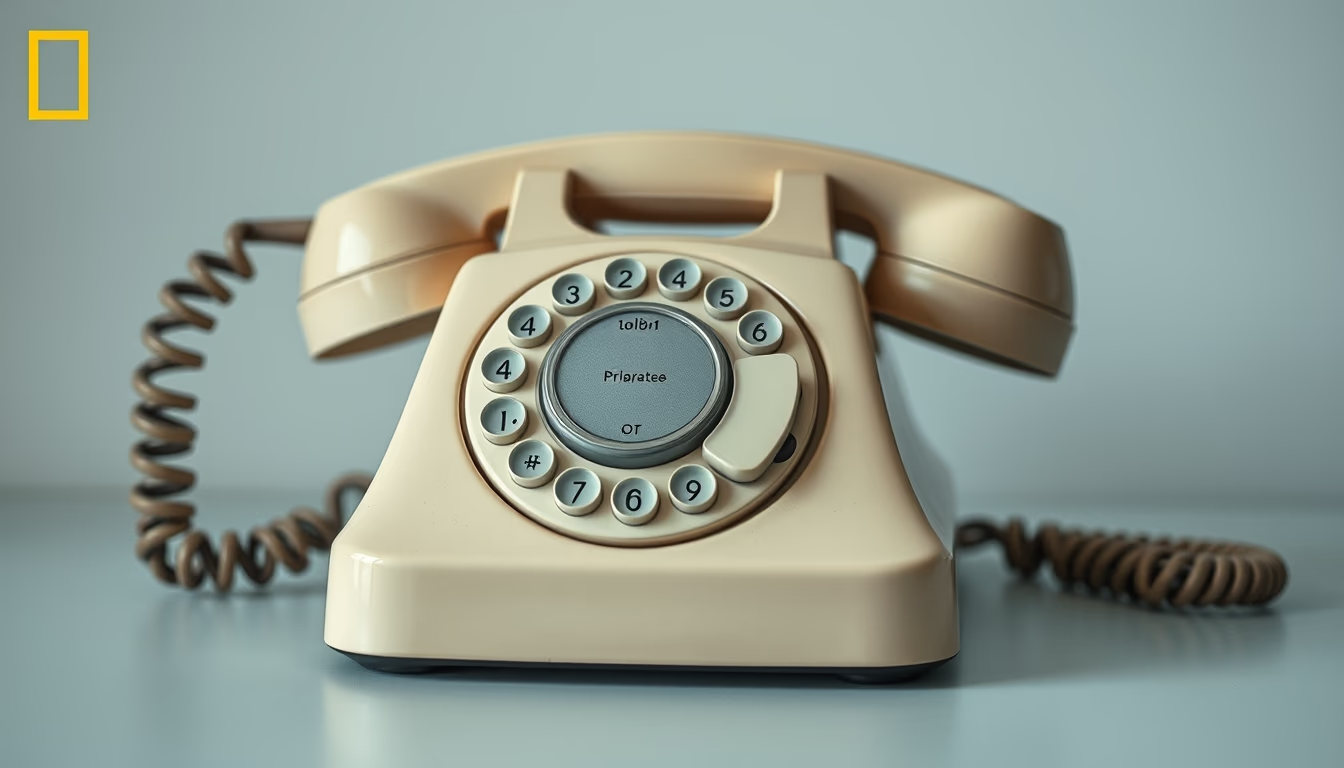
Rotary dial phone, also known as a rotary dial telephone, is an iconic 20th century telecommunications device that revolutionized personal and business communication.
About this subject
The rotary dial phone, invented by Almon Brown Strowger in 1891, used a pulse dialing system. Each digit from 0 to 9 corresponded to a series of electrical pulses sent to the telephone exchange. The spring-loaded rotary mechanism would return the dial to its original position, generating the pulses. This design remained standard until the popularization of DTMF keypads in the 1960s.
Culturally, the rotary dial phone is a symbol of a pre-digital era, appearing in film noir and retro TV series. In Brazil, models from Ericsson and Siemens were common in homes and businesses until the 1990s. Slow dialing required patience and precision, unlike today's quick touches.
Fun fact: the dial had a finger stop to prevent slips. Additionally, numbers were in reverse order (1 near the top, 0 at the end) to ease finger movement. The characteristic clicking sound is still recognized by older generations. Despite obsolescence, vintage designs are valued by collectors and decorators.
Frequently Asked Questions
What is the difference between a rotary dial phone and a push-button phone?
A rotary dial phone uses electrical pulses generated by the dial's rotation, while a push-button phone uses DTMF (Dual-Tone Multi-Frequency) tones. The former is slower and analog, the latter faster and digital.
How does dialing work on a rotary phone?
When you rotate the dial until your finger hits the stop, a spring returns the dial, generating interruptions in the electric current. Each number produces a different number of pulses. For example, the number 1 produces 1 pulse, 2 produces 2, and so on, with 0 producing 10 pulses.
Why are the numbers on the dial arranged in descending order?
The arrangement was designed to minimize dial return time. Lower numbers (1, 2) are placed near the top because they require less rotation, while 0 (10 pulses) is at the end, requiring the most rotation. This balanced the pulse bandwidth.
Direct URL
https://pub-c7d6a6ea828543ac903a74a341ccb2e1.r2.dev/imagens/rotary-dial-phone-national-geographic-style-p7.avifHow to credit
Include a visible link back to UtilizAí. Copy one of the snippets below:
<a href="https://xn--utiliza-eza.com/en/midia/imagens/rotary-dial-phone-national-geographic-style-p7">Rotary dial phone</a> by <a href="https://xn--utiliza-eza.com">UtilizAí</a>, licensed under <a href="https://creativecommons.org/licenses/by/4.0/">CC BY 4.0</a>.
[Rotary dial phone](https://xn--utiliza-eza.com/en/midia/imagens/rotary-dial-phone-national-geographic-style-p7) by [UtilizAí](https://xn--utiliza-eza.com), CC BY 4.0
License: CC-BY-4.0