Rotary dial phone
1344×768 · AVIF · CC BY 4.0
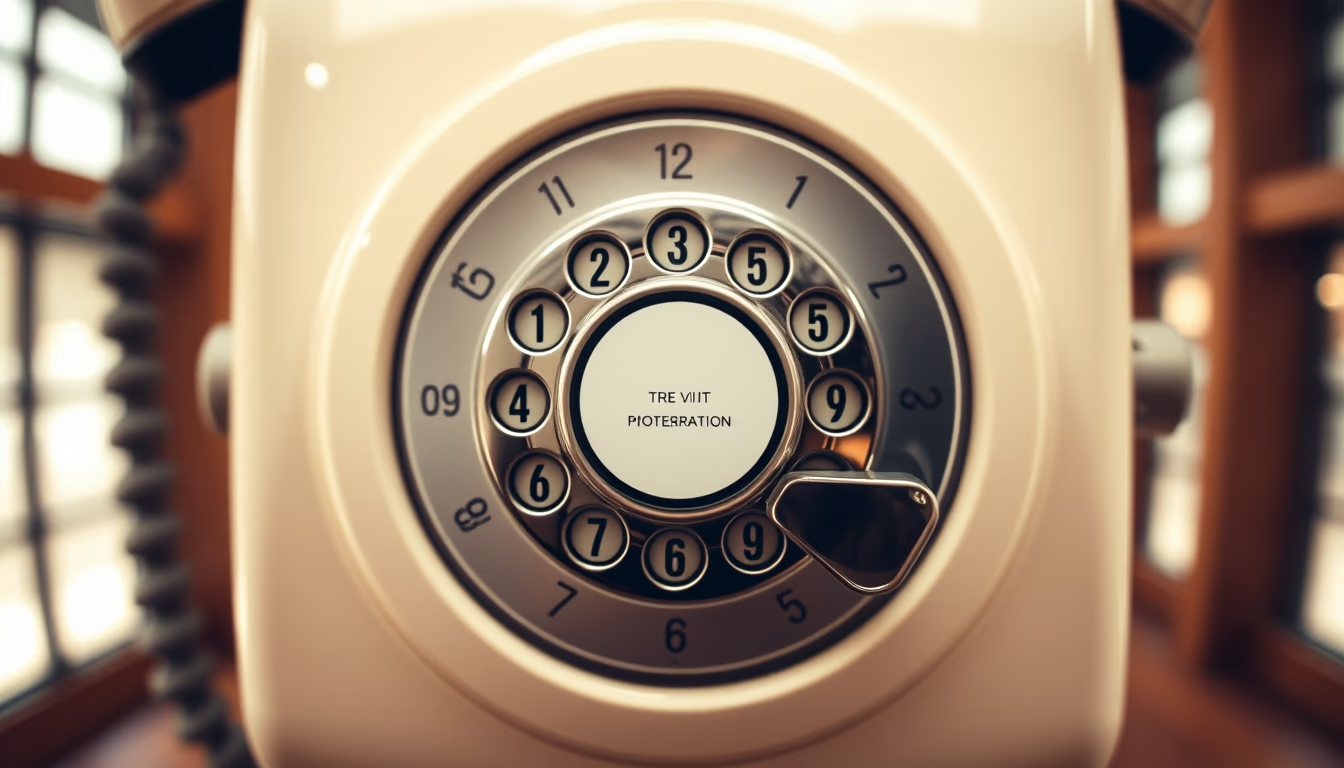
The rotary dial phone, a mid-20th century icon, used pulse dialing generated by a rotating disc to connect calls.
About this subject
The rotary dial phone, a hallmark of mid-20th century telecommunications, operated through a rotating disc that generated electrical pulses to dial numbers. It became the standard home and office phone from the 1920s to the 1980s, especially in Western countries. The mechanism involved inserting a finger into a hole corresponding to a number, rotating the dial until it hit a stop, then releasing; the spring-loaded dial returned, sending a series of pulses, one pulse for digit 1, two for 2, up to ten for 0.
The automatic rotary dial system was invented by Almon Brown Strowger, who patented the first automatic telephone exchange in 1891 to bypass human operators. The iconic finger-wheel design was refined by Western Electric, which introduced the popular Model 500 in 1949. This model featured a sturdy Bakelite or plastic body and a modular design that allowed easy repair. By the 1960s, the Model 2500 added push-button touch-tone dialing as an option, but rotary models remained in use for decades.
Culturally, rotary dial phones represent a slower pace of communication. Dialing a number required deliberate action: a ten-digit call meant ten rotations. This physical interaction made phone calls more ritualistic. In countries like the United States and Brazil, rotary phones were gradually replaced by touch-tone models in the 1980s and 1990s, though some rural areas retained them longer. Today, they are collectible items, often restored for nostalgia or used as props in retro-themed settings.
Technically, the rotary dial used pulse dialing (DP) which was less reliable than later DTMF (dual-tone multi-frequency) signaling. The pulses could be heard as clicks in the handset. The dial also included letters alongside numbers for use in older exchange names (e.g., MUrray Hill 5-9970). The design's ergonomics influenced later consumer products, and its distinct tactile feedback remains a nostalgic memory for many.
Frequently Asked Questions
How does a rotary dial phone work?
You rotate the dial clockwise to a number and release. A spring returns the dial to its original position, breaking the electrical circuit a specific number of times, one for digit 1, two for digit 2, etc. These pulses are sent to the telephone exchange to route the call.
When was the rotary dial phone invented?
The automatic pulse-dialing system was patented by Almon Brown Strowger in 1891. The first practical rotary dial appeared in the early 1900s, and iconic models like the Western Electric 500 became widespread in the 1940s and 1950s.
Why did rotary dial phones become obsolete?
Touch-tone (DTMF) dialing, introduced in the 1960s, was faster, quieter, and more reliable. Telephone exchanges modernized to digital systems, phasing out pulse dialing. By the 1990s, most carriers discontinued support for rotary phones.
Direct URL
https://pub-c7d6a6ea828543ac903a74a341ccb2e1.r2.dev/imagens/rotary-dial-phone-architectural-photography-p9.avifHow to credit
Include a visible link back to UtilizAí. Copy one of the snippets below:
<a href="https://xn--utiliza-eza.com/en/midia/imagens/rotary-dial-phone-architectural-photography-p9">Rotary dial phone</a> by <a href="https://xn--utiliza-eza.com">UtilizAí</a>, licensed under <a href="https://creativecommons.org/licenses/by/4.0/">CC BY 4.0</a>.
[Rotary dial phone](https://xn--utiliza-eza.com/en/midia/imagens/rotary-dial-phone-architectural-photography-p9) by [UtilizAí](https://xn--utiliza-eza.com), CC BY 4.0
License: CC-BY-4.0