Roman scroll papyrus
1344×768 · AVIF · CC BY 4.0
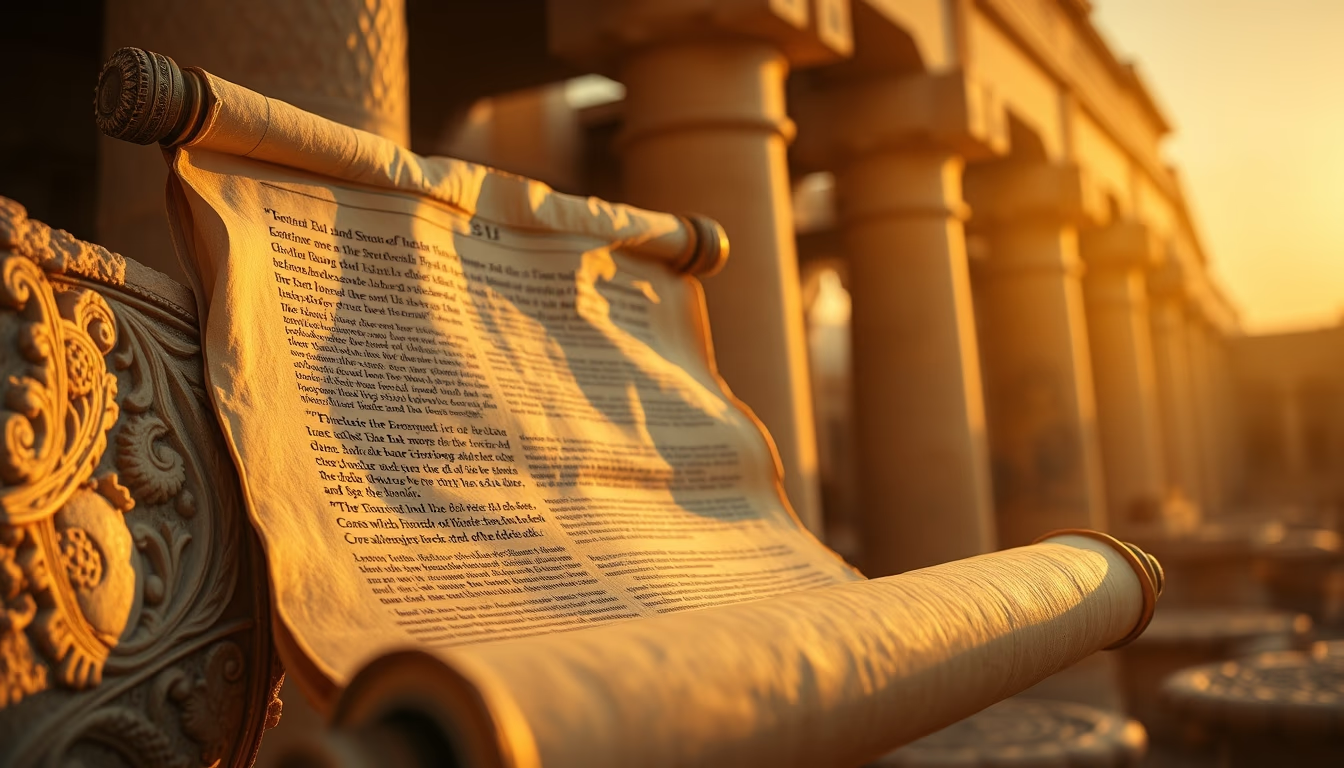
Roman papyrus scrolls were writing rolls made from the Cyperus papyrus plant, widely used in the Roman Empire for documents, literature, and administration.
About this subject
Papyrus was the primary writing material in the ancient Mediterranean world, and the Romans adopted it extensively for public records, correspondence, and literary works. Despite competition from parchment, papyrus remained the standard for administrative documents and books until the Late Empire.
The manufacture of papyrus involved harvesting stems of the Cyperus papyrus plant, which grew in the marshes of Egypt and Sicily. The stems were peeled and cut into thin strips, arranged in overlapping layers with perpendicular orientations, pressed, and dried in the sun. The result was a sturdy yet flexible sheet, which was glued to others to form rolls up to 10 meters long.
One of the most important surviving collections is the Herculaneum Papyri, carbonized by the eruption of Vesuvius in 79 AD. These rolls were discovered in the 18th century in a Roman library and remain a challenge for modern archaeology, being read with X-ray techniques and artificial intelligence. Other finds include the Vindolanda tablets in Britain, which record daily life of Roman soldiers.
Culturally, the papyrus roll (volumen) was read by unrolling with both hands, with text arranged in parallel columns. Production depended heavily on Egypt, where the plant grew along the Nile. With the rise of Christianity and preference for the parchment codex, use of papyrus declined from the 4th century onward, but its legacy endures in the classical texts that survived through copies and archaeological discoveries.
Frequently Asked Questions
How did the Romans manufacture papyrus rolls?
They harvested stems of the Cyperus papyrus plant, cut them into thin strips, arranged them in two perpendicular layers, pressed and dried them in the sun, forming a sheet that was glued to others to create long rolls.
Where have famous preserved Roman papyri been found?
The most famous are the Herculaneum Papyri, carbonized by the eruption of Vesuvius in 79 AD, and also military papyri at Vindolanda (in present-day England).
Why was papyrus replaced by parchment?
Papyrus was fragile and difficult to produce outside Egypt. Parchment made from animal skin was more durable, allowed writing on both sides, and was better suited for the codex book format, becoming standard in Late Antiquity.
Direct URL
https://pub-c7d6a6ea828543ac903a74a341ccb2e1.r2.dev/imagens/roman-scroll-papyrus-travel-photography-p7.avifHow to credit
Include a visible link back to UtilizAí. Copy one of the snippets below:
<a href="https://xn--utiliza-eza.com/en/midia/imagens/roman-scroll-papyrus-travel-photography-p7">Roman scroll papyrus</a> by <a href="https://xn--utiliza-eza.com">UtilizAí</a>, licensed under <a href="https://creativecommons.org/licenses/by/4.0/">CC BY 4.0</a>.
[Roman scroll papyrus](https://xn--utiliza-eza.com/en/midia/imagens/roman-scroll-papyrus-travel-photography-p7) by [UtilizAí](https://xn--utiliza-eza.com), CC BY 4.0
License: CC-BY-4.0