Roman scroll papyrus
1344×768 · AVIF · CC BY 4.0
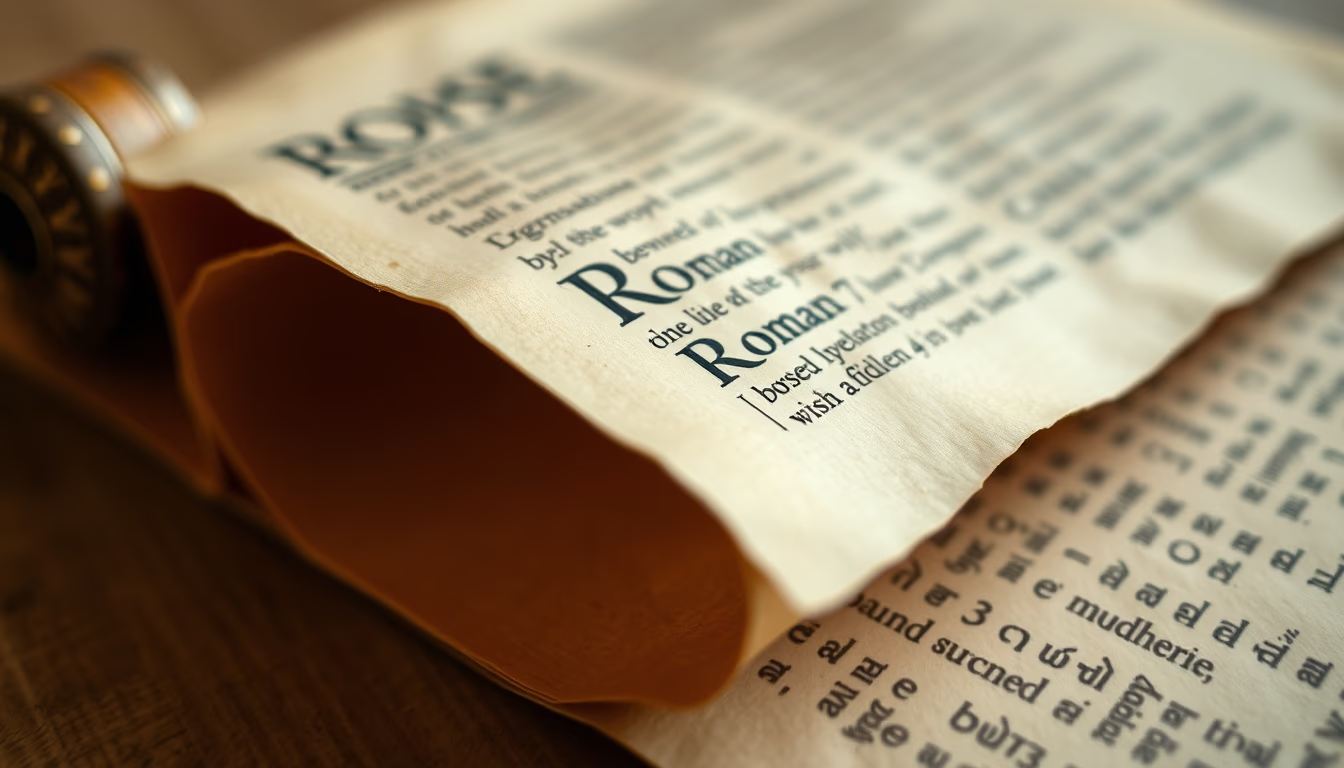
Macro close-up of a Roman papyrus scroll, a writing medium used in Classical Antiquity for literary and administrative texts.
About this subject
The papyrus scroll, or volumen, was the dominant book format in the Greco-Roman world for over a thousand years. Made from the Cyperus papyrus plant cultivated mainly in Egypt, sheets were glued together to form long strips that could reach dozens of meters. The smooth surface allowed writing with a reed pen (calamus) and ink made from soot or sepia. Text was arranged in vertical columns (paginae) and read by unrolling the scroll horizontally. Production was labor intensive: harvesting, cutting into thin strips, pressing, and manual polishing. In Rome, papyrus scrolls were used for everything from Virgil's poems to tax records. Private libraries, such as the Villa of the Papyri in Herculaneum, could contain thousands of volumes. Unfortunately, papyrus is extremely vulnerable to humidity and fire. The eruption of Vesuvius in 79 AD carbonized hundreds of scrolls at the Villa of the Papyri, paradoxically preserving them. Today, multispectral imaging techniques allow scholars to read these fragile texts without unrolling them. Roman papyrus provides a direct window into the intellectual and administrative life of the Empire.
Frequently Asked Questions
How was a Roman papyrus scroll made?
Papyrus was made from the stem of the Cyperus papyrus plant, cut into thin strips, arranged in overlapping layers, pressed, and dried in the sun. Finally, the surface was polished with a smooth stone and the sheets glued together to form a scroll.
Why are many Roman papyri damaged?
Papyrus is an organic material that rots in humidity and burns easily. Most papyri survived only in exceptionally dry conditions (such as in Egypt) or carbonized (such as in Herculaneum).
What are the Herculaneum Papyri?
They are approximately 1,800 carbonized papyrus scrolls found in the Villa of the Papyri in Herculaneum, buried by the eruption of Vesuvius in 79 AD. They form the only preserved library from Antiquity and contain Epicurean philosophical texts, mainly by Philodemus of Gadara.
Direct URL
https://pub-c7d6a6ea828543ac903a74a341ccb2e1.r2.dev/imagens/roman-scroll-papyrus-macro-closeup-p2.avifHow to credit
Include a visible link back to UtilizAí. Copy one of the snippets below:
<a href="https://xn--utiliza-eza.com/en/midia/imagens/roman-scroll-papyrus-macro-closeup-p2">Roman scroll papyrus</a> by <a href="https://xn--utiliza-eza.com">UtilizAí</a>, licensed under <a href="https://creativecommons.org/licenses/by/4.0/">CC BY 4.0</a>.
[Roman scroll papyrus](https://xn--utiliza-eza.com/en/midia/imagens/roman-scroll-papyrus-macro-closeup-p2) by [UtilizAí](https://xn--utiliza-eza.com), CC BY 4.0
License: CC-BY-4.0