Roman scroll papyrus
1344×768 · AVIF · CC BY 4.0
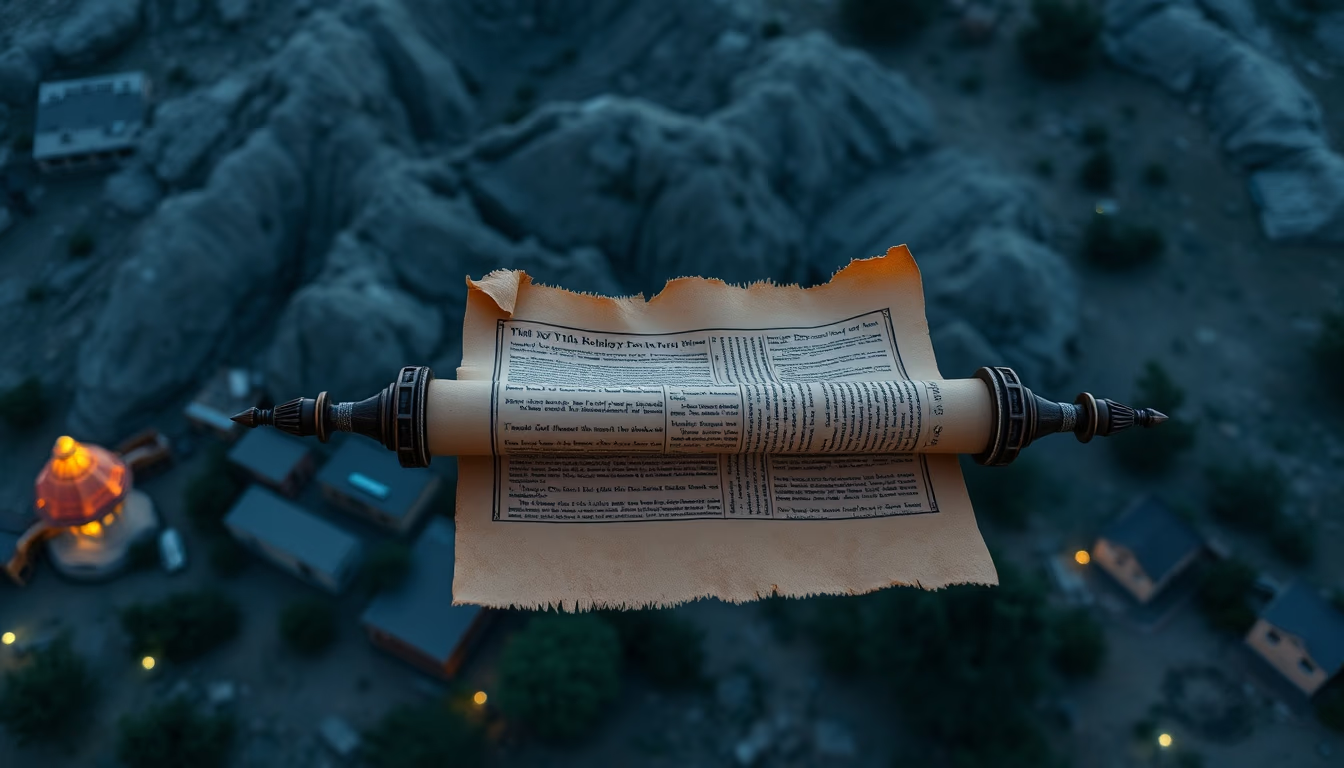
Roman papyrus scrolls are historical documents preserved in rolls, revealing details of administration, culture, and daily life in the Roman Empire.
About this subject
Rolled papyrus was the primary writing medium in the Roman world, especially before the codex gained popularity. Made from the Cyperus papyrus plant cultivated mainly in Egypt, these scrolls could reach up to 10 meters in length, rolled around a wooden or ivory rod. The manufacturing process involved cutting the stem into strips, layering them perpendicularly, pressing, and drying in the sun to create a surface suitable for ink made from soot and gum arabic.
Surviving examples are concentrated in arid regions like Egypt and the Villa of the Papyri in Herculaneum, buried by the eruption of Mount Vesuvius in 79 AD. This villa housed a library of about 1,800 scrolls, many containing Epicurean philosophy. The Herculaneum papyri are carbonized and extremely fragile, but modern technologies like CT scanning allow virtual unwrapping and reading. Other significant finds include the Oxyrhynchus Papyri from Egypt, rich in administrative documents, letters, and literary fragments.
Writing was typically arranged in columns (vertical pages), and reading involved unrolling with the right hand while rolling with the left. Roman scrolls often had a title slip (sillybos) attached to the outside and were stored in boxes or shelves (scrinia). Despite their fragility, thousands of fragments survive, offering insights into Roman law, imperial bureaucracy, private life, and lost works by authors such as Epicurus and Seneca the Elder.
Interestingly, the word "volume" derives from the Latin "volumen" (roll), and the practice of rolling papyrus influenced the structure of early books. Today, institutions like the British Museum and the Egyptian Museum of Turin hold major collections. Digital preservation and AI-assisted reconstruction of fragmented texts continue to expand our understanding of life in the Roman Empire, proving that these scrolls are time capsules still guarding secrets.
Frequently Asked Questions
How were Roman papyrus scrolls produced?
Roman papyrus scrolls were made from the stem of the Cyperus papyrus plant, cut into thin strips and layered perpendicularly, then pressed and dried in the sun. The resulting surface was smoothed and used for writing with ink made from soot and gum arabic.
Where were the most famous Roman papyri found?
The most famous papyri come from two main sites: the Villa of the Papyri in Herculaneum, buried by Vesuvius in AD 79, and the city of Oxyrhynchus in Egypt, which yielded thousands of documentary and literary fragments.
Why are the Herculaneum papyri important for the study of ancient philosophy?
The Herculaneum papyri primarily contain works of the Epicurean school, including texts by the philosopher Philodemus of Gadara. They are the main direct source for Epicurean philosophy, as many works of that school were lost on other media.
Direct URL
https://pub-c7d6a6ea828543ac903a74a341ccb2e1.r2.dev/imagens/roman-scroll-papyrus-aerial-drone-shot-p1.avifHow to credit
Include a visible link back to UtilizAí. Copy one of the snippets below:
<a href="https://xn--utiliza-eza.com/en/midia/imagens/roman-scroll-papyrus-aerial-drone-shot-p1">Roman scroll papyrus</a> by <a href="https://xn--utiliza-eza.com">UtilizAí</a>, licensed under <a href="https://creativecommons.org/licenses/by/4.0/">CC BY 4.0</a>.
[Roman scroll papyrus](https://xn--utiliza-eza.com/en/midia/imagens/roman-scroll-papyrus-aerial-drone-shot-p1) by [UtilizAí](https://xn--utiliza-eza.com), CC BY 4.0
License: CC-BY-4.0