Robotic prosthesis hand
1344×768 · AVIF · CC BY 4.0
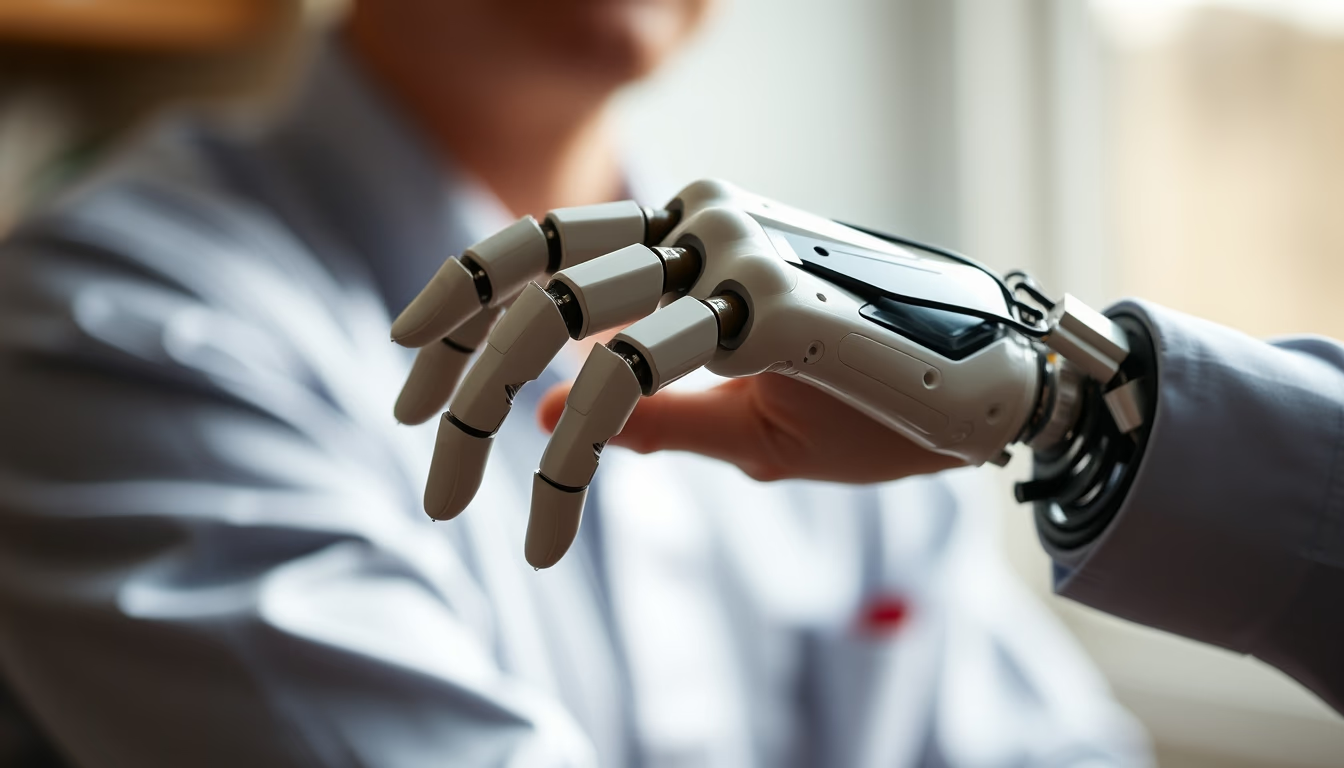
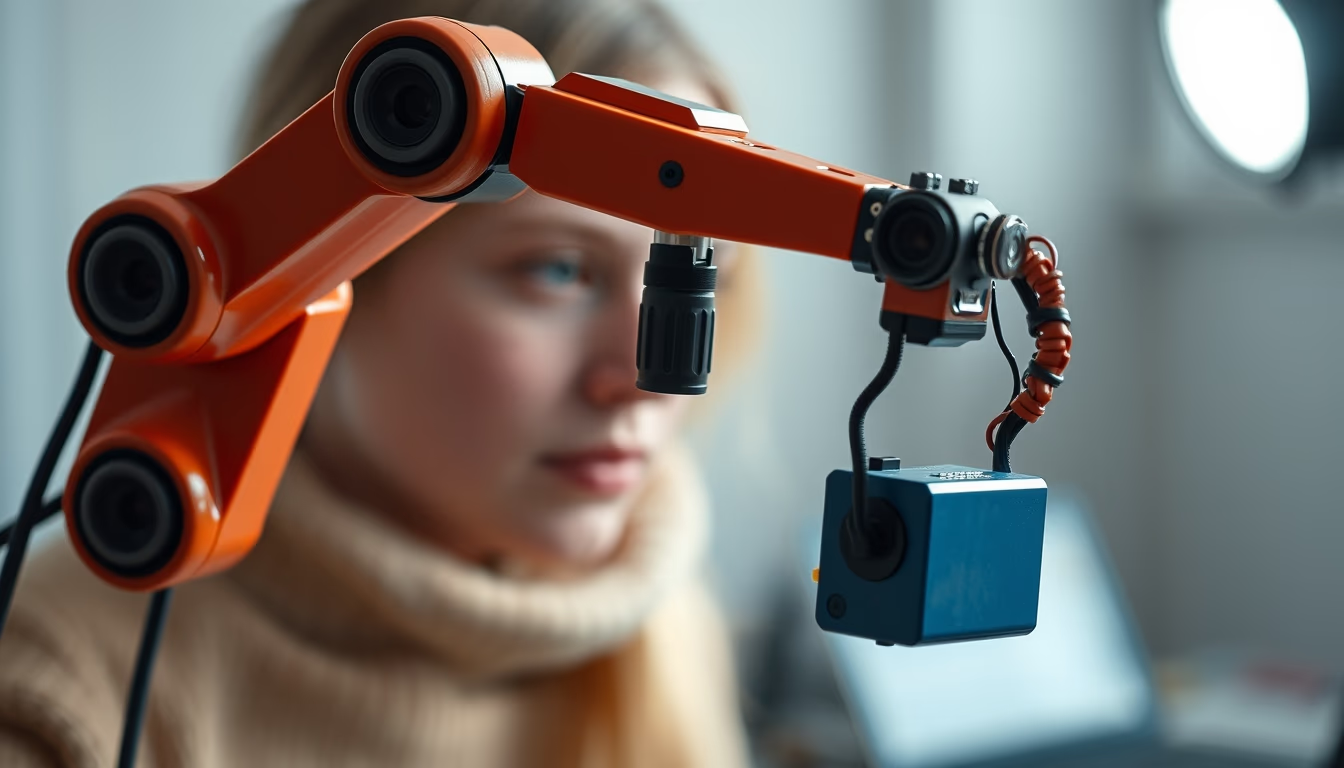
Robotic prosthetic hands represent a breakthrough in bionics, combining sensors and actuators to restore natural movements for amputees.
About this subject
Robotic prosthetic hands have evolved from simple mechanical hooks to high-tech myoelectric devices. These prosthetics capture electrical signals from the user's residual muscles through surface electrodes, interpreting muscle contractions as commands to open or close the hand, rotate the wrist, or perform precise grips. Modern developments include systems like the i-limb by Touch Bionics, launched in 2007, which was the first prosthetic hand with individually motorized fingers, enabling more natural and functional movements.
Another milestone is the BeBionic hand by Ottobock, which offers 14 different grip patterns, such as precision pinch, lateral key grip, and power grip. These devices are made with lightweight materials like aluminum and carbon fiber to reduce weight. Advanced control uses machine learning algorithms to adapt to the user's movement patterns, improving accuracy over time. Additionally, recent research into direct neural interfaces, such as the LUKE robotic arm developed by DEKA Research and funded by DARPA, aims to connect the prosthesis directly to the nerves of the residual limb, providing sensory feedback of touch and temperature.
Culturally, robotic prosthetic hands have gained prominence in media and literature, such as the character Luke Skywalker in Star Wars or athlete Oscar Pistorius, known for his running prosthetics. However, access remains limited due to high costs and the need for specialized follow-up. Open-source initiatives like the Open Bionics project seek to democratize the technology by using 3D printing and shared designs to reduce costs. The future points toward even greater integration with the human body, including thought control and realistic tactile sensations.
Frequently Asked Questions
How does a robotic prosthetic hand work?
It captures myoelectric signals from the arm muscles through electrodes. These signals are processed by a microcontroller that activates actuators to move the fingers and wrist, enabling various grip patterns.
What is the difference between myoelectric and mechanical prosthetics?
Mechanical prosthetics are controlled by cables and body movements, while myoelectric ones use electricity generated by muscles to power motors, offering greater strength and precision.
Is it possible to feel touch with a robotic hand?
Still experimental, some direct neural interfaces and tactile sensors allow users to feel pressure and temperature. Current commercial devices, like the i-limb, do not provide full sensory feedback.
Direct URL
https://pub-c7d6a6ea828543ac903a74a341ccb2e1.r2.dev/imagens/robotic-prosthesis-hand-documentary-photography-p9.avifHow to credit
Include a visible link back to UtilizAí. Copy one of the snippets below:
<a href="https://xn--utiliza-eza.com/en/midia/imagens/robotic-prosthesis-hand-documentary-photography-p9">Robotic prosthesis hand</a> by <a href="https://xn--utiliza-eza.com">UtilizAí</a>, licensed under <a href="https://creativecommons.org/licenses/by/4.0/">CC BY 4.0</a>.
[Robotic prosthesis hand](https://xn--utiliza-eza.com/en/midia/imagens/robotic-prosthesis-hand-documentary-photography-p9) by [UtilizAí](https://xn--utiliza-eza.com), CC BY 4.0
License: CC-BY-4.0