Robotic prosthesis hand
1344×768 · AVIF · CC BY 4.0
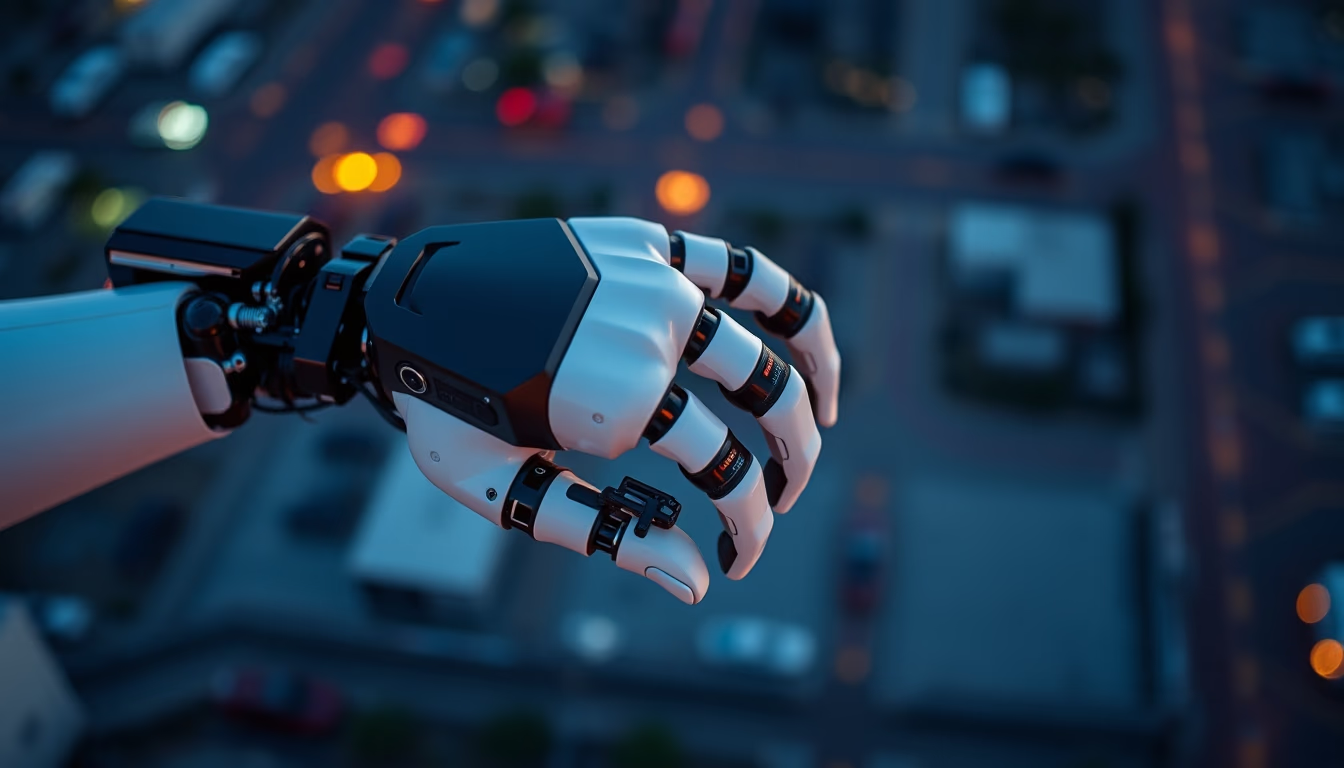
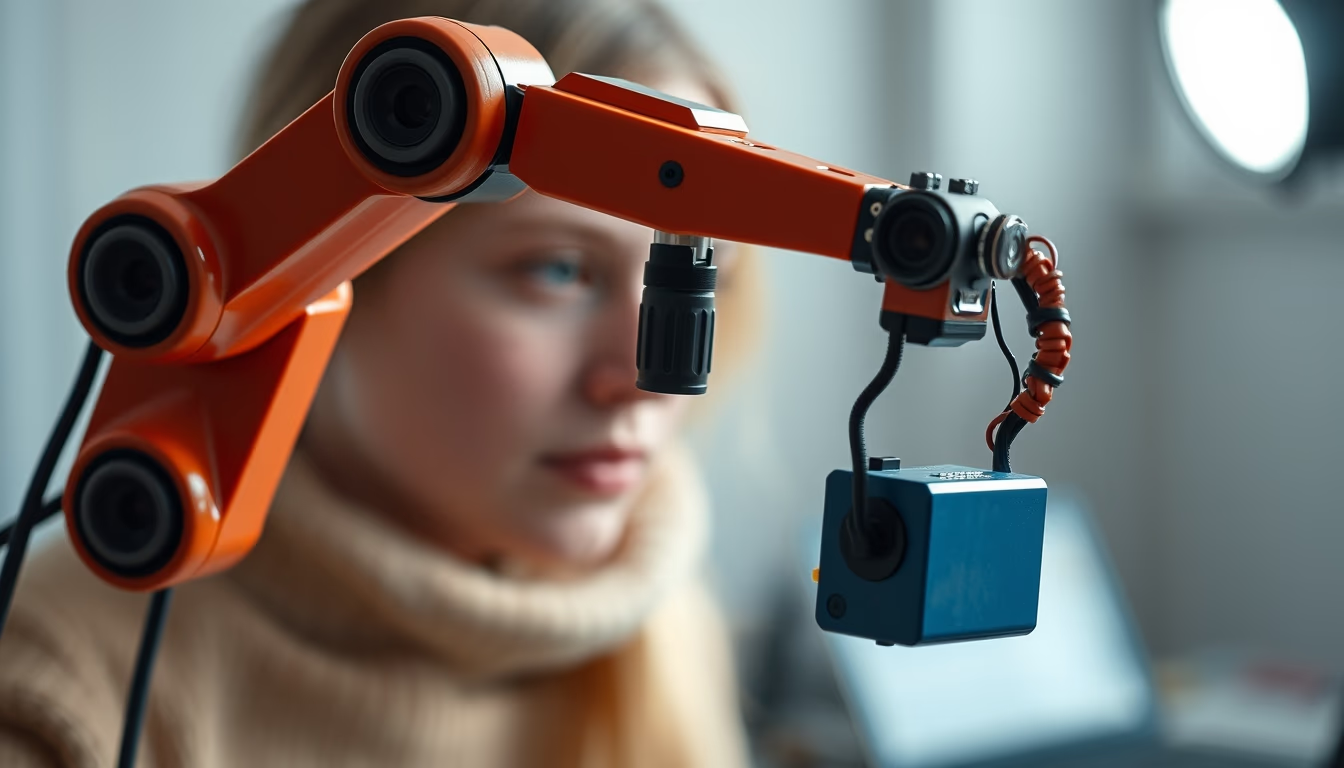
Robotic hand prosthesis combines biomedical engineering and artificial intelligence to restore natural movements in amputees.
About this subject
Robotic hand prostheses represent a significant advancement in rehabilitation medicine. Unlike traditional passive prostheses, these devices use myoelectric sensors that capture electrical signals from the user's residual muscles. These signals are processed by artificial intelligence algorithms that interpret movement intent and trigger miniature motors in the fingers, enabling precise grips such as pinch, fist, and isolated index finger. The technology is based on lightweight robotics and biomimetics, using materials like silicone and carbon fiber to mimic the texture and flexibility of human skin and bone.
One well-known model is the BeBionic hand by Ottobock, offering 14 programmable grip patterns. Another is the i-limb by Touch Bionics, which allows individual finger movement. The cost of these prostheses ranges from 50,000 to 150,000 reais, depending on customization. Lithium-ion batteries provide a full day of autonomy with moderate use, rechargeable overnight.
The importance goes beyond functionality: the psychological impact is enormous, restoring self-esteem and the ability to perform daily tasks like writing, cooking, and buttoning shirts. Clinical studies show that 80% of users report improved quality of life after adaptation. In Brazil, the public health system offers basic prostheses, but robotic ones are mostly accessible only through private insurance or via lawsuits.
The future includes integration with virtual reality for training, tactile sensors that transmit touch sensation, and direct neural connection via cortical implants. Robotics in prosthetics is moving toward an increasingly natural human-machine interface.
Frequently Asked Questions
How does a robotic hand prosthesis work?
It captures electrical signals from the arm muscles via electrodes, processes these signals with artificial intelligence, and activates motors to move the fingers. The user learns to contract specific muscles to generate commands.
How long does the battery of a robotic hand prosthesis last?
The lithium-ion battery lasts about 18 to 24 hours of moderate use. Full recharge takes 2 to 4 hours, depending on the model.
Who can use a robotic hand prosthesis?
People with hand or forearm amputation, provided they have enough healthy muscle to generate signals. A medical and physiotherapeutic evaluation is required to indicate the appropriate model.
Direct URL
https://pub-c7d6a6ea828543ac903a74a341ccb2e1.r2.dev/imagens/robotic-prosthesis-hand-aerial-drone-shot-p12.avifHow to credit
Include a visible link back to UtilizAí. Copy one of the snippets below:
<a href="https://xn--utiliza-eza.com/en/midia/imagens/robotic-prosthesis-hand-aerial-drone-shot-p12">Robotic prosthesis hand</a> by <a href="https://xn--utiliza-eza.com">UtilizAí</a>, licensed under <a href="https://creativecommons.org/licenses/by/4.0/">CC BY 4.0</a>.
[Robotic prosthesis hand](https://xn--utiliza-eza.com/en/midia/imagens/robotic-prosthesis-hand-aerial-drone-shot-p12) by [UtilizAí](https://xn--utiliza-eza.com), CC BY 4.0
License: CC-BY-4.0