Robotic exoskeleton
1344×768 · AVIF · CC BY 4.0
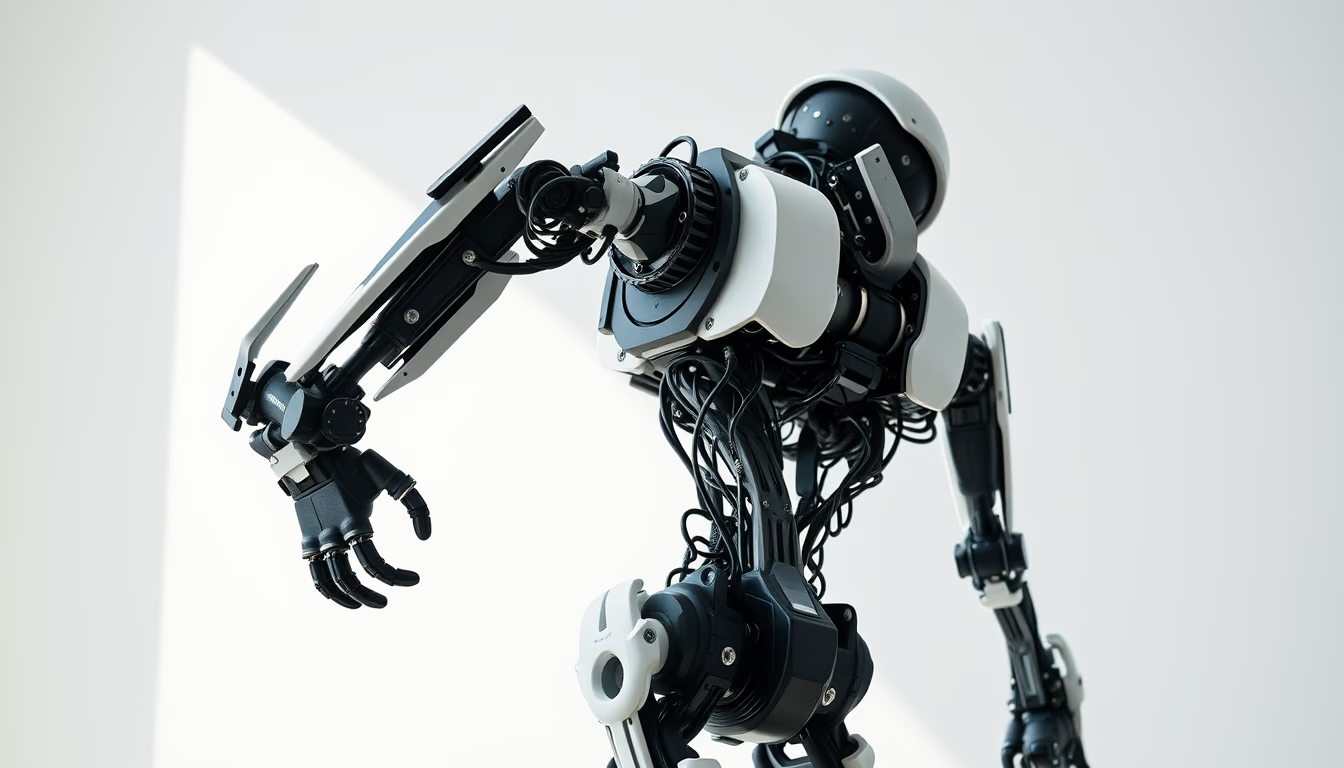
Robotic exoskeletons are wearable devices that enhance human strength and endurance, with applications in rehabilitation and industry.
About this subject
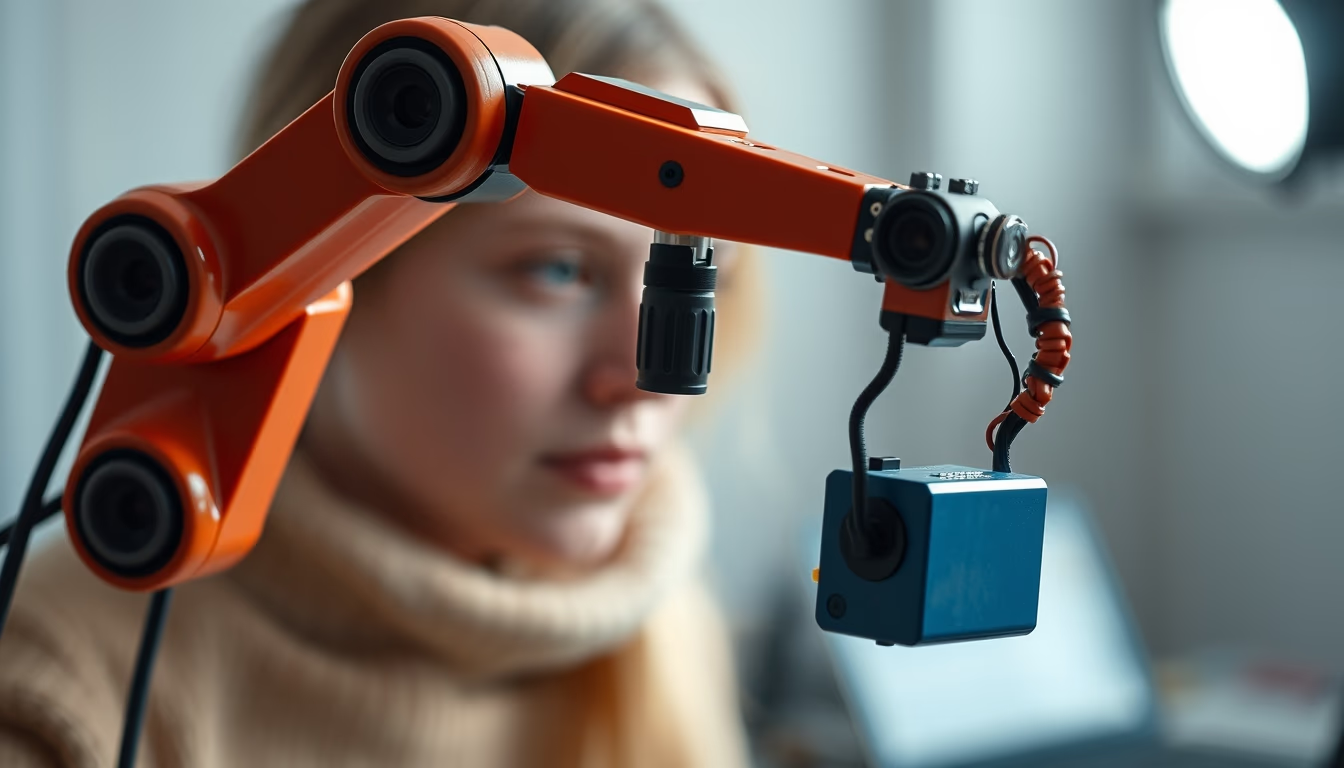
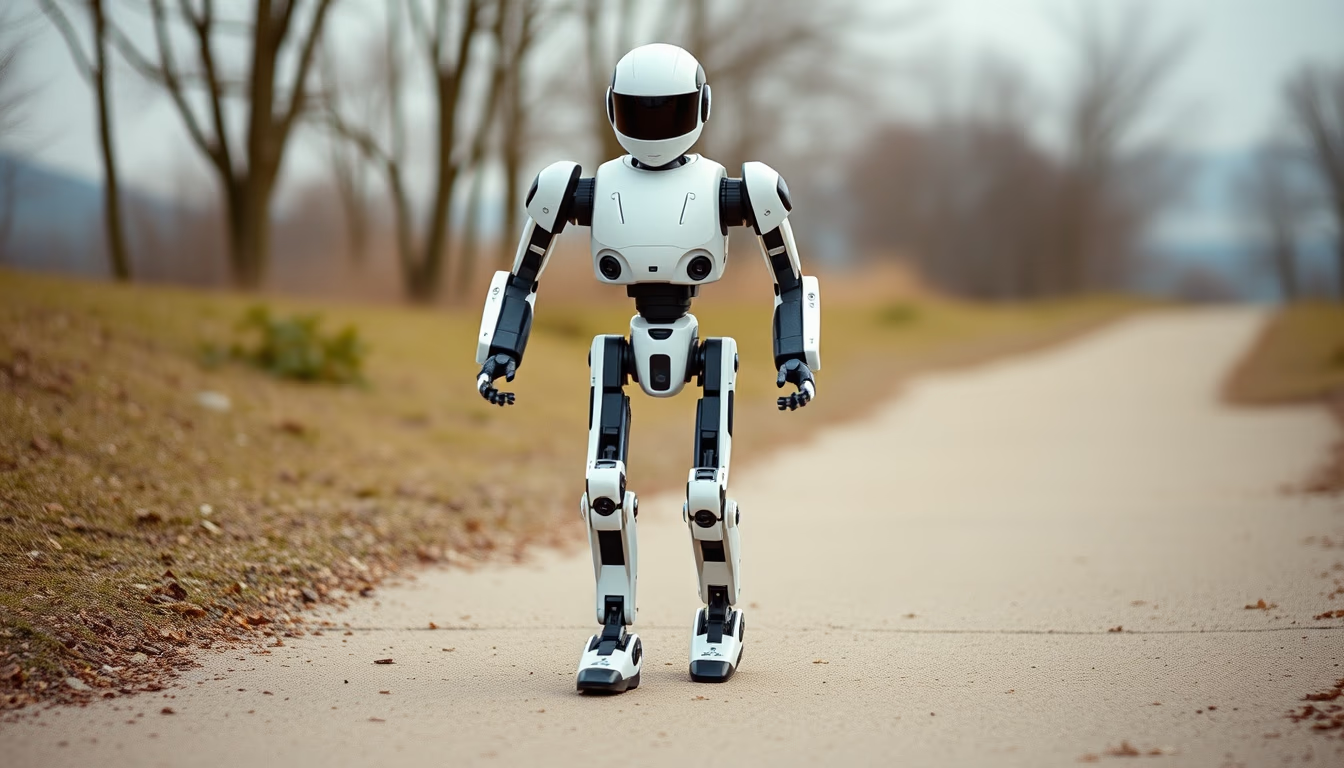
Robotic exoskeletons combine sensors, actuators, and artificial intelligence to assist or augment human movement. These wearable devices are designed to align with the user's body, transferring loads and reducing muscle effort. They can be passive, using springs and counterweights, or active, with motors controlled by algorithms that detect movement intention. In rehabilitation, they are used for gait training in patients with spinal cord injury or stroke, promoting neuroplasticity and motor recovery. In industry, models like the Hyundai Vest Exoskeleton reduce fatigue for workers performing overhead tasks or lifting parts.
The concept dates back to the 1960s with General Electric's Hardiman, a bulky hydraulic system prone to instability. Advances in composite materials, lithium batteries, and brushless motors have made modern models lighter and more efficient. Companies such as ReWalk Robotics, Ekso Bionics, and Cyberdyne commercialize versions for clinical and military use. The ReWalk Personal costs around US 70,000 and enables paraplegics to stand and walk with crutches. The military Talos exoskeleton by DARPA aims to enhance soldier endurance in the field.
The global exoskeleton market is projected to reach US 6.4 billion by 2030, driven by population aging and industrial automation. Technical challenges include battery life, prolonged comfort, and adaptation to different body types. New research explores neural interfaces for more intuitive control and haptic feedback systems. Integration with digital twins and IoT enables real-time effort monitoring and posture correction, reducing occupational injuries.
Frequently Asked Questions
What is a robotic exoskeleton used for?
It enhances strength or assists movement in applications such as motor rehabilitation, industrial fatigue reduction, and military load support.
How much does an exoskeleton cost?
Prices range from US$40,000 to over US$100,000 depending on complexity and purpose. Rehabilitation models average around US$70,000.
Do exoskeletons replace wheelchairs?
Not entirely; they are alternatives for gait training in controlled settings but do not suit all patients with mobility impairments.
Direct URL
https://pub-c7d6a6ea828543ac903a74a341ccb2e1.r2.dev/imagens/robotic-exoskeleton-minimalist-composition-p7.avifHow to credit
Include a visible link back to UtilizAí. Copy one of the snippets below:
<a href="https://xn--utiliza-eza.com/en/midia/imagens/robotic-exoskeleton-minimalist-composition-p7">Robotic exoskeleton</a> by <a href="https://xn--utiliza-eza.com">UtilizAí</a>, licensed under <a href="https://creativecommons.org/licenses/by/4.0/">CC BY 4.0</a>.
[Robotic exoskeleton](https://xn--utiliza-eza.com/en/midia/imagens/robotic-exoskeleton-minimalist-composition-p7) by [UtilizAí](https://xn--utiliza-eza.com), CC BY 4.0
License: CC-BY-4.0