Robotic exoskeleton
1344×768 · AVIF · CC BY 4.0
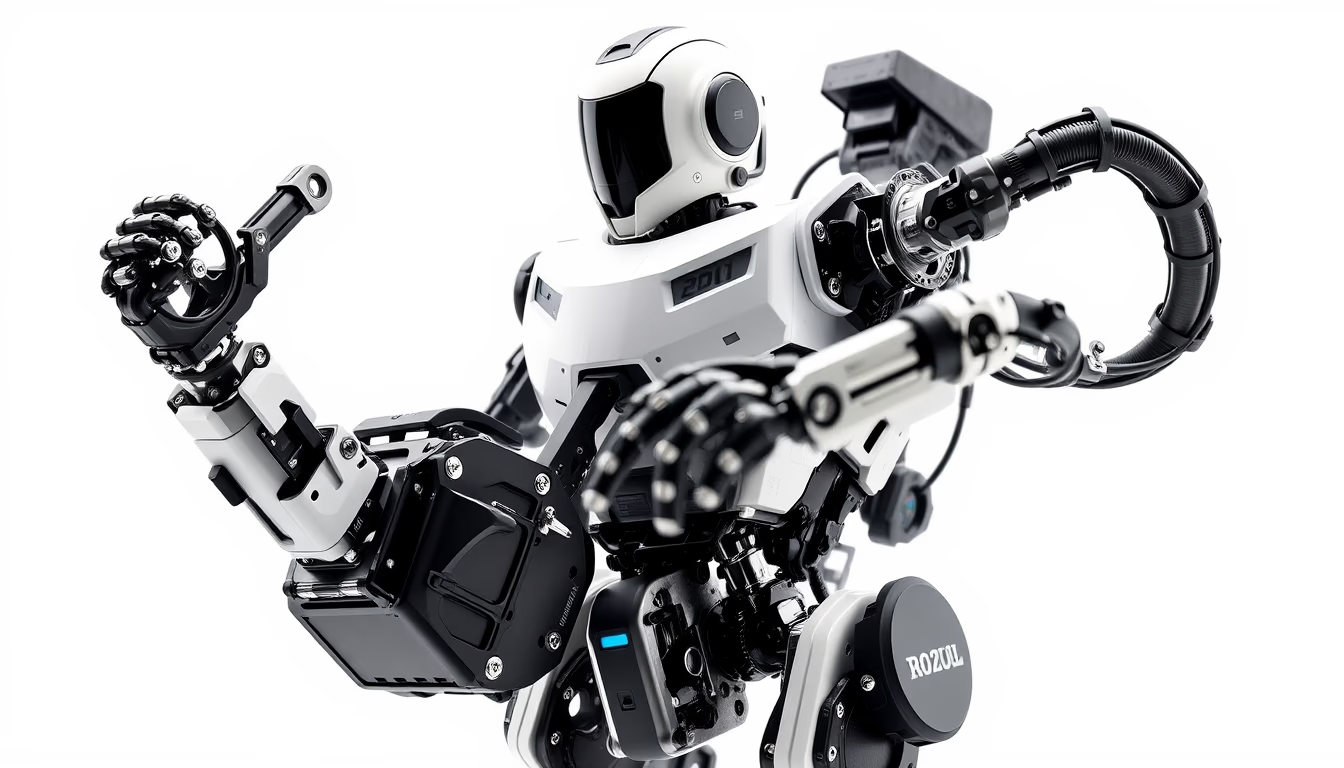
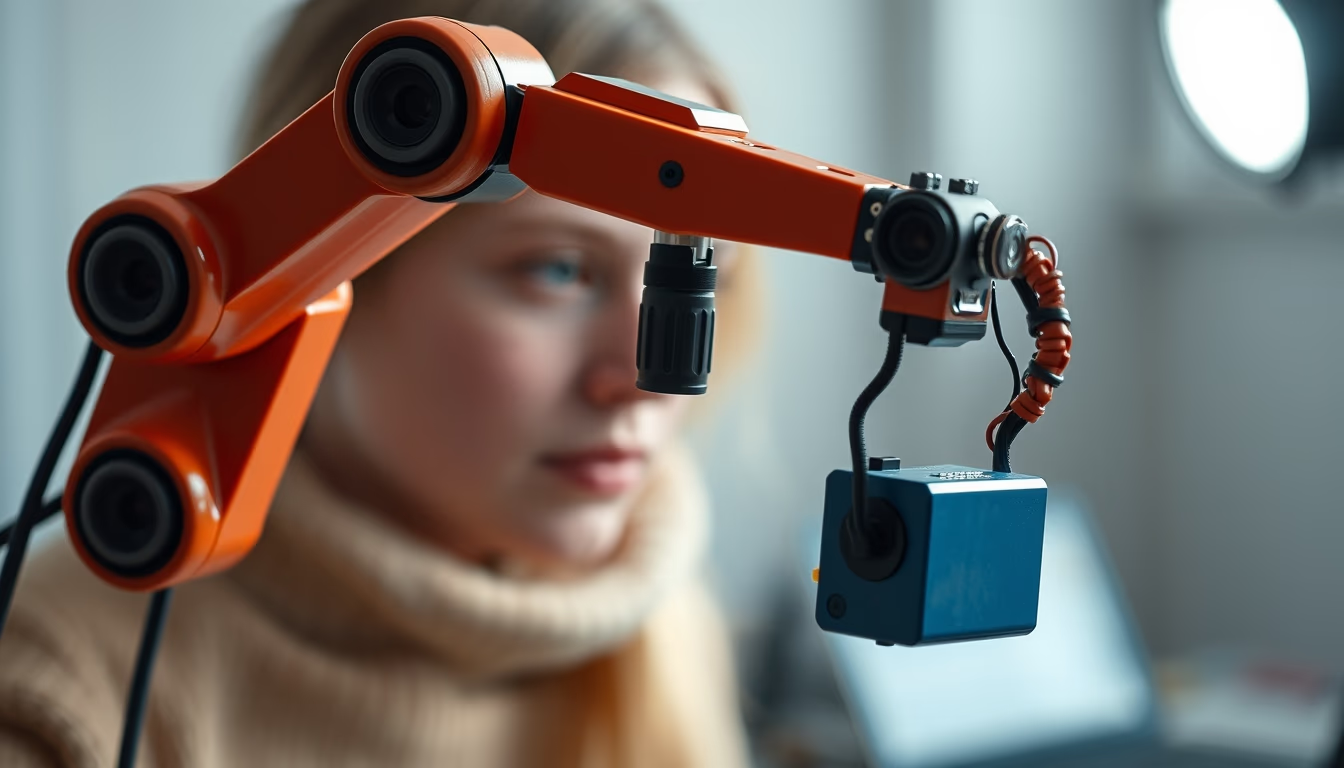
Robotic exoskeletons are wearable devices that enhance human strength, used in medical rehabilitation and heavy industry.
About this subject
Robotic exoskeletons are external mechanical structures worn like a suit, equipped with actuators, sensors, and control systems. They are divided into two main types: passive exoskeletons, which store and release mechanical energy without motors, and active ones, which use electric or hydraulic motors to generate torque. Active models are more common in applications requiring significant strength enhancement, such as rehabilitation for spinal cord injury patients or assistance for workers performing repetitive tasks.
In healthcare, companies like Ekso Bionics and ReWalk Robotics have developed exoskeletons that enable paraplegics to walk again. These devices use balance sensors and pre-programmed gait patterns to coordinate leg movements. In industry, Hyundai and SuitX have created models aimed at reducing physical strain on assembly lines, preventing musculoskeletal injuries. The military sector also invests in exoskeletons to increase soldiers' load-carrying capacity, such as the US Army's Talos project.
Key technological challenges include battery life, weight, and user adaptation control. Modern exoskeletons employ artificial intelligence to learn the user's movement patterns, making interaction more natural. Recent innovations, such as soft exoskeletons made from fabrics and cables, promise lighter and more comfortable devices. Additionally, brain-machine interfaces are being tested for direct thought control, expanding potential for individuals with total paralysis.
The global robotic exoskeleton market is growing rapidly, projected to exceed $6 billion by 2030. Cost remains a barrier, ranging from $10,000 to $150,000 for medical models, but mass production and technological advances should reduce prices in coming years. Regulation is also evolving, with the FDA classifying some exoskeletons as Class II medical devices.
Frequently Asked Questions
How does a robotic exoskeleton work?
A robotic exoskeleton combines motors, sensors, and a control system to detect user movements and amplify force or provide support. Torque and joint angle sensors send data to a computer that triggers actuators at the right moment, synchronizing movements.
What are the main uses of exoskeletons?
Exoskeletons are primarily used in medical rehabilitation to help patients with spinal cord injuries walk, in industry to reduce strain from repetitive tasks, and in the military to increase soldiers' load-carrying capacity.
How much does a robotic exoskeleton cost?
Prices vary widely: medical models like ReWalk cost between $50,000 and $100,000, while simpler industrial exoskeletons can start at around $10,000. The cost is expected to decrease with mass production.
Direct URL
https://pub-c7d6a6ea828543ac903a74a341ccb2e1.r2.dev/imagens/robotic-exoskeleton-commercial-product-photography-p10.avifHow to credit
Include a visible link back to UtilizAí. Copy one of the snippets below:
<a href="https://xn--utiliza-eza.com/en/midia/imagens/robotic-exoskeleton-commercial-product-photography-p10">Robotic exoskeleton</a> by <a href="https://xn--utiliza-eza.com">UtilizAí</a>, licensed under <a href="https://creativecommons.org/licenses/by/4.0/">CC BY 4.0</a>.
[Robotic exoskeleton](https://xn--utiliza-eza.com/en/midia/imagens/robotic-exoskeleton-commercial-product-photography-p10) by [UtilizAí](https://xn--utiliza-eza.com), CC BY 4.0
License: CC-BY-4.0