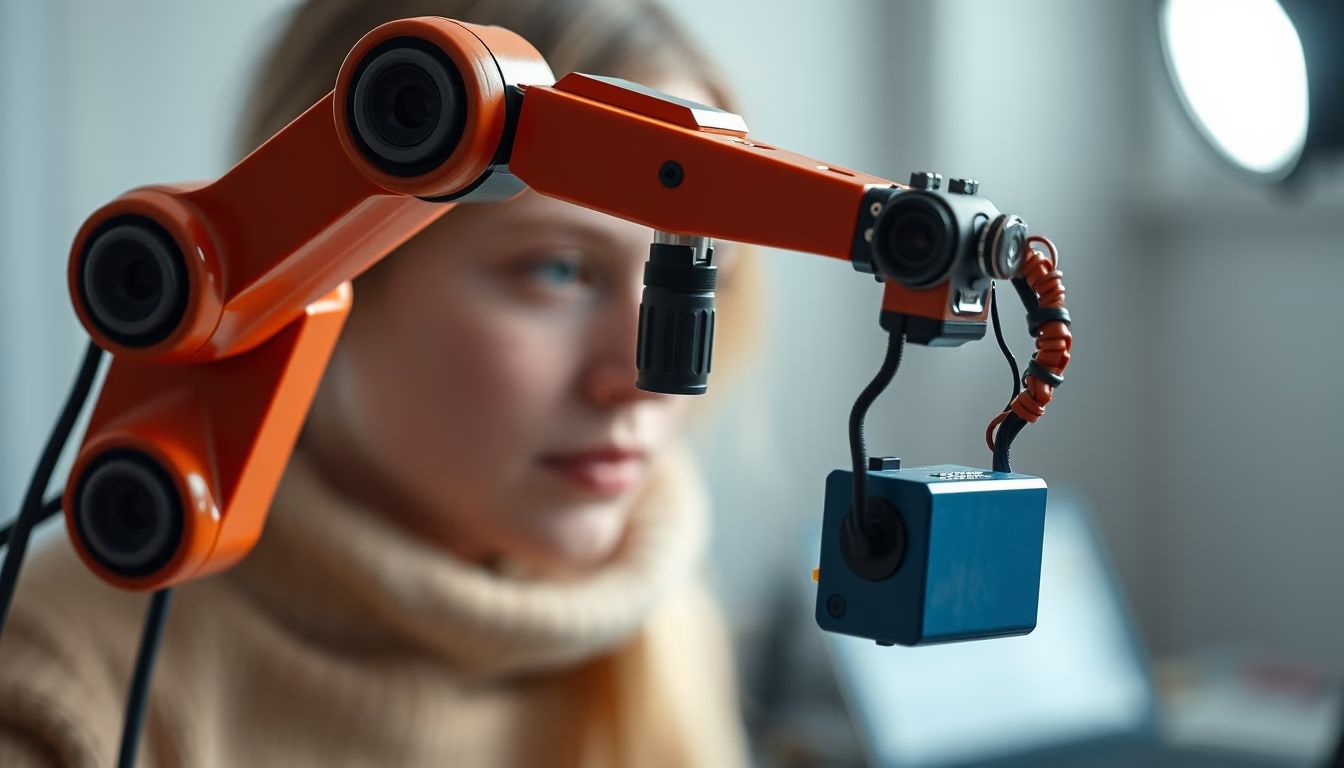
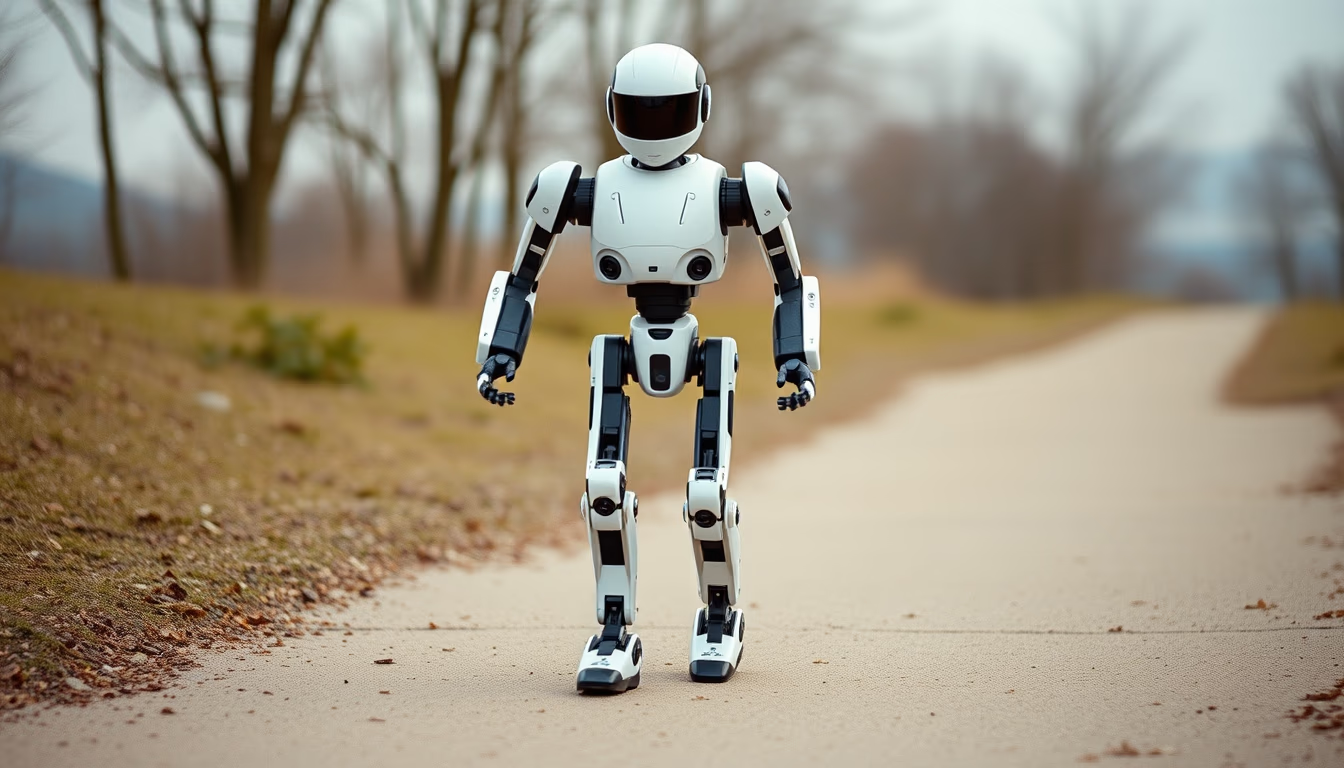
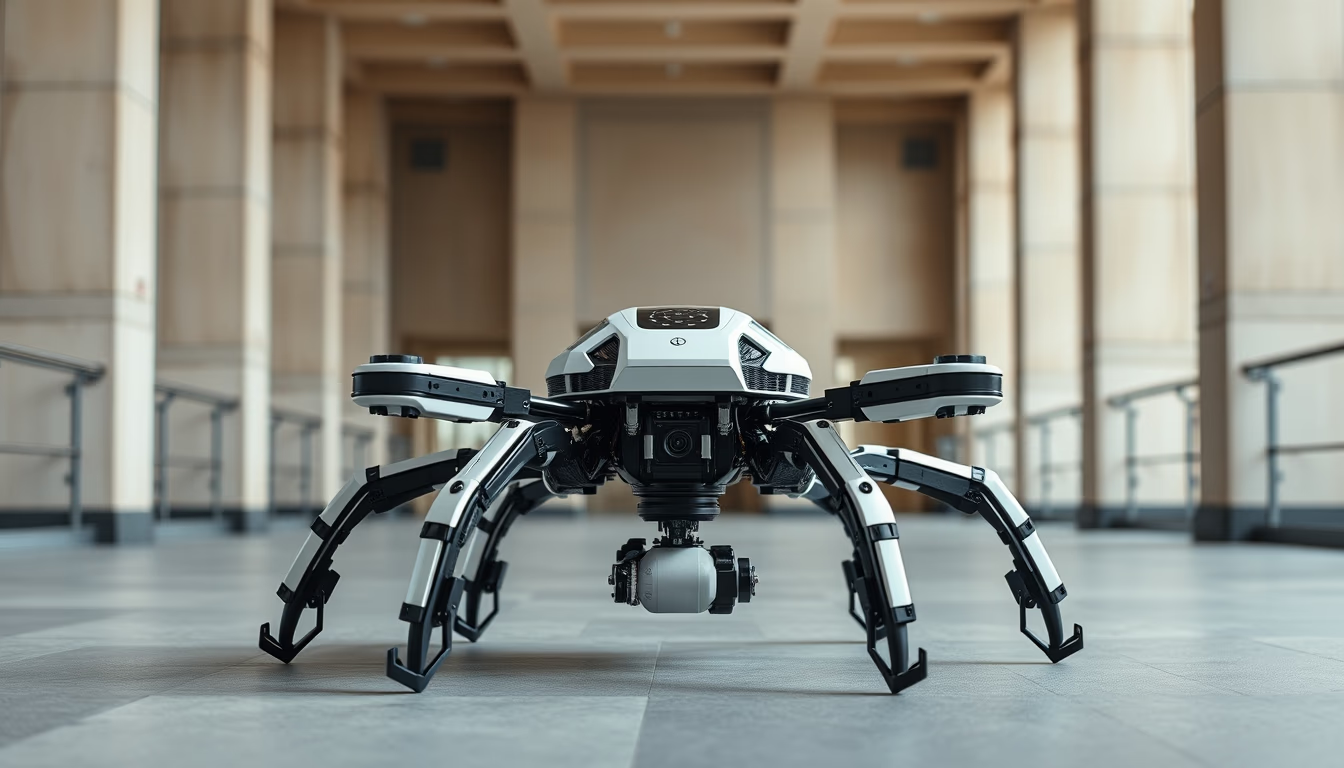
Robotic exoskeleton
1344×768 · AVIF · CC BY 4.0

Robotic exoskeletons are wearable devices that enhance human strength and endurance, with applications in medical rehabilitation, industry, and military.
About this subject
Robotic exoskeletons are wearable mechanical structures, typically equipped with actuators, sensors, and control systems, that enhance or restore the user's physical abilities. Unlike prosthetics, which replace limbs, exoskeletons work in parallel with the human body, providing extra torque at joints to assist movement. The first prototypes appeared in the 1960s in the United States (Hardiman by General Electric), but only in the last two decades has the technology matured enough for commercial use.
Today, exoskeletons are classified into three broad categories: medical, industrial, and military. In the medical field, devices such as ReWalk and EksoGT enable paraplegics to walk again, while upper-limb exoskeletons assist stroke patients in rehabilitation. Regulatory bodies like the FDA have cleared several models for clinical use. In industry, companies such as Ford and Boeing test both passive and active exoskeletons to reduce worker fatigue during repetitive tasks like lifting and welding. Military projects, including the U.S. TALOS suit, aim to increase soldier load capacity and protection, though many remain experimental.
Technically, major challenges include battery autonomy, component weight, and adaptive control to human motion. Modern exoskeletons use brushless DC motors, PID controllers, and intention-detection algorithms based on force sensors or EMG. Research groups at institutions like MIT, the University of Tsukuba (HAL exoskeleton), and the Brazilian ITA and USP are advancing the field. The global exoskeleton market was valued at about $400 million in 2022 and is projected to grow at a 40% CAGR until 2030, driven by aging populations and industrial automation. Costs remain high: medical models range from $40,000 to $150,000, limiting widespread adoption.
Frequently Asked Questions
What is the difference between a robotic exoskeleton and a prosthesis?
Exoskeletons are wearable devices that assist or enhance body movements, working in parallel with the skeleton, whereas prosthetics replace missing limbs.
Can anyone use a robotic exoskeleton?
No. Medical exoskeletons require prescription and assessment by a specialist for specific conditions such as spinal cord injury or stroke rehabilitation. There are also weight and height restrictions.
How much does a robotic exoskeleton cost?
Prices vary widely: passive industrial models can cost a few thousand dollars, while active medical exoskeletons range from $40,000 to $150,000. Rental and financing options are available in some regions.
Direct URL
https://pub-c7d6a6ea828543ac903a74a341ccb2e1.r2.dev/imagens/robotic-exoskeleton-cinematic-wide-shot-p3.avifHow to credit
Include a visible link back to UtilizAí. Copy one of the snippets below:
<a href="https://xn--utiliza-eza.com/en/midia/imagens/robotic-exoskeleton-cinematic-wide-shot-p3">Robotic exoskeleton</a> by <a href="https://xn--utiliza-eza.com">UtilizAí</a>, licensed under <a href="https://creativecommons.org/licenses/by/4.0/">CC BY 4.0</a>.
[Robotic exoskeleton](https://xn--utiliza-eza.com/en/midia/imagens/robotic-exoskeleton-cinematic-wide-shot-p3) by [UtilizAí](https://xn--utiliza-eza.com), CC BY 4.0
License: CC-BY-4.0