Robot arm assembling car
1344×768 · AVIF · CC BY 4.0

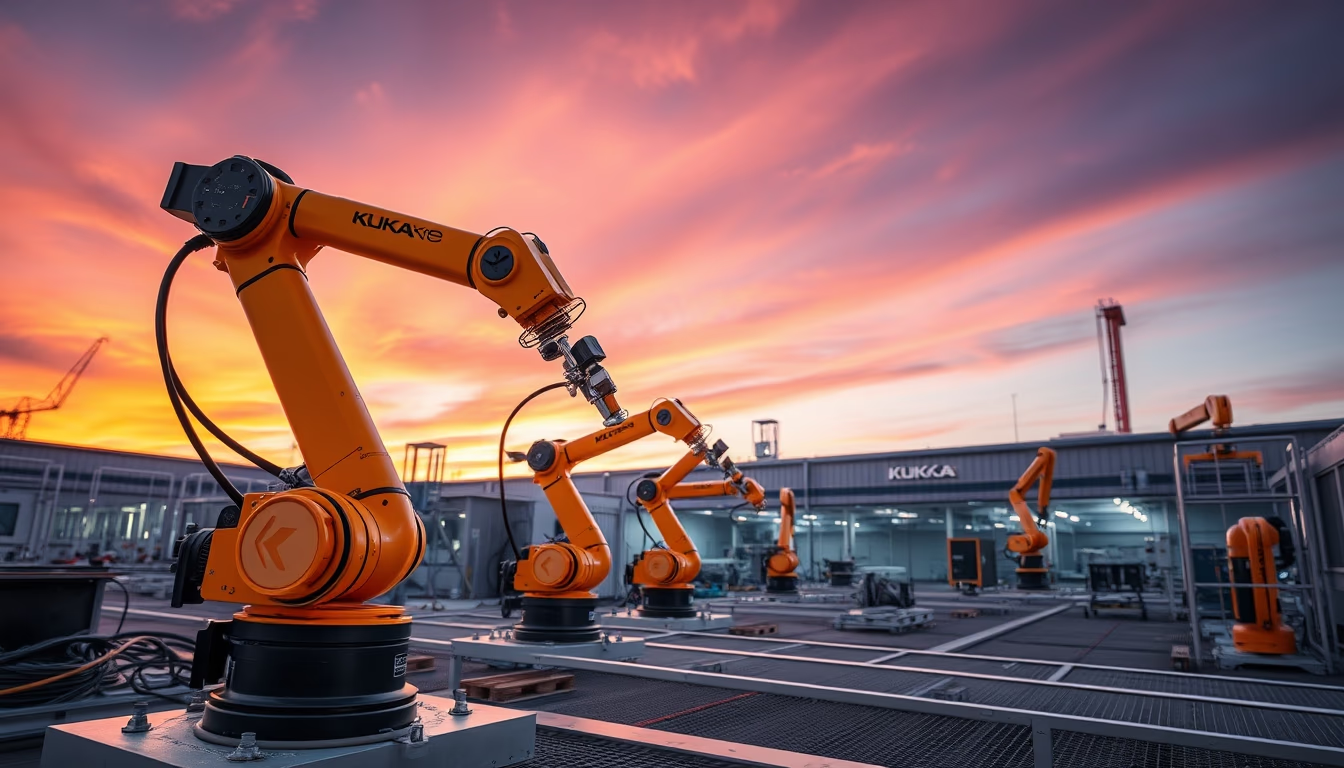
Robotic arms perform car assembly in automated production lines, transforming the automotive industry with precision and efficiency.
About this subject
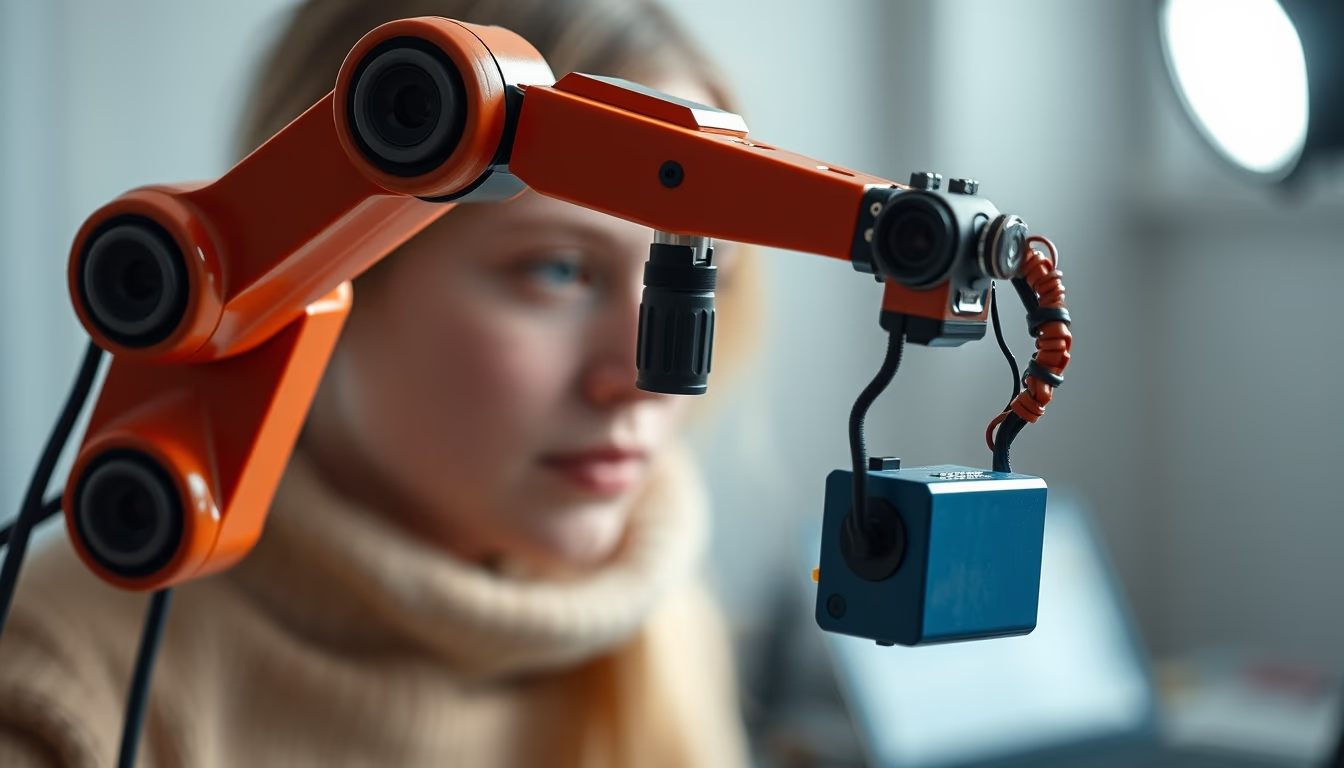
Robotic arms are key components in vehicle assembly, performing tasks such as welding, painting, and component installation with high precision. Since the introduction of Unimate at General Motors in 1961, industrial robotics has evolved dramatically. Today, robots like those from KUKA or FANUC operate 24/7 in factories worldwide. They can handle heavy parts with repeatability as tight as 0.02 millimeters, surpassing human capability in monotonous and dangerous tasks.
Car assembly involves hundreds of steps, and robots collaborate at specific stations. For instance, in body welding, multiple arms work simultaneously to join metal sheets with millimeter accuracy. In painting, robots with sensors ensure uniform coating, reducing waste. The current trend is integration with artificial intelligence, allowing robots to adapt to different car models without manual reconfiguration.
The efficiency brought by robots has reduced vehicle assembly time from weeks to hours. Factories like Tesla's in Fremont use hundreds of robots to produce thousands of cars per week. Moreover, safety has dramatically improved: worker accidents decreased by eliminating repetitive tasks and exposure to toxic substances. However, automation also raises employment concerns, requiring professional retraining.
Interestingly, the tilt-shift style used in factory photographs gives a miniature model feel, highlighting the scale and organization of production lines. This visual technique helps understand the complexity and synchronization of automated processes.
Frequently Asked Questions
What was the first robotic arm used in car assembly?
The Unimate, installed at General Motors in 1961, was the first industrial robot, used for welding and material handling.
How many cars can a robotic arm assemble per hour?
A single robot does not assemble an entire car; but in an automated line, a vehicle can be assembled in about 20 hours, with dozens of robots working in parallel.
Have robots completely replaced human workers in car assembly?
Not entirely. Many tasks still require human supervision, and the industry is moving towards human-robot collaboration (cobots) for complex tasks.
Direct URL
https://pub-c7d6a6ea828543ac903a74a341ccb2e1.r2.dev/imagens/robot-arm-assembling-car-tilt-shift-miniature-p12.avifHow to credit
Include a visible link back to UtilizAí. Copy one of the snippets below:
<a href="https://xn--utiliza-eza.com/en/midia/imagens/robot-arm-assembling-car-tilt-shift-miniature-p12">Robot arm assembling car</a> by <a href="https://xn--utiliza-eza.com">UtilizAí</a>, licensed under <a href="https://creativecommons.org/licenses/by/4.0/">CC BY 4.0</a>.
[Robot arm assembling car](https://xn--utiliza-eza.com/en/midia/imagens/robot-arm-assembling-car-tilt-shift-miniature-p12) by [UtilizAí](https://xn--utiliza-eza.com), CC BY 4.0
License: CC-BY-4.0