Robot arm assembling car
1344×768 · AVIF · CC BY 4.0
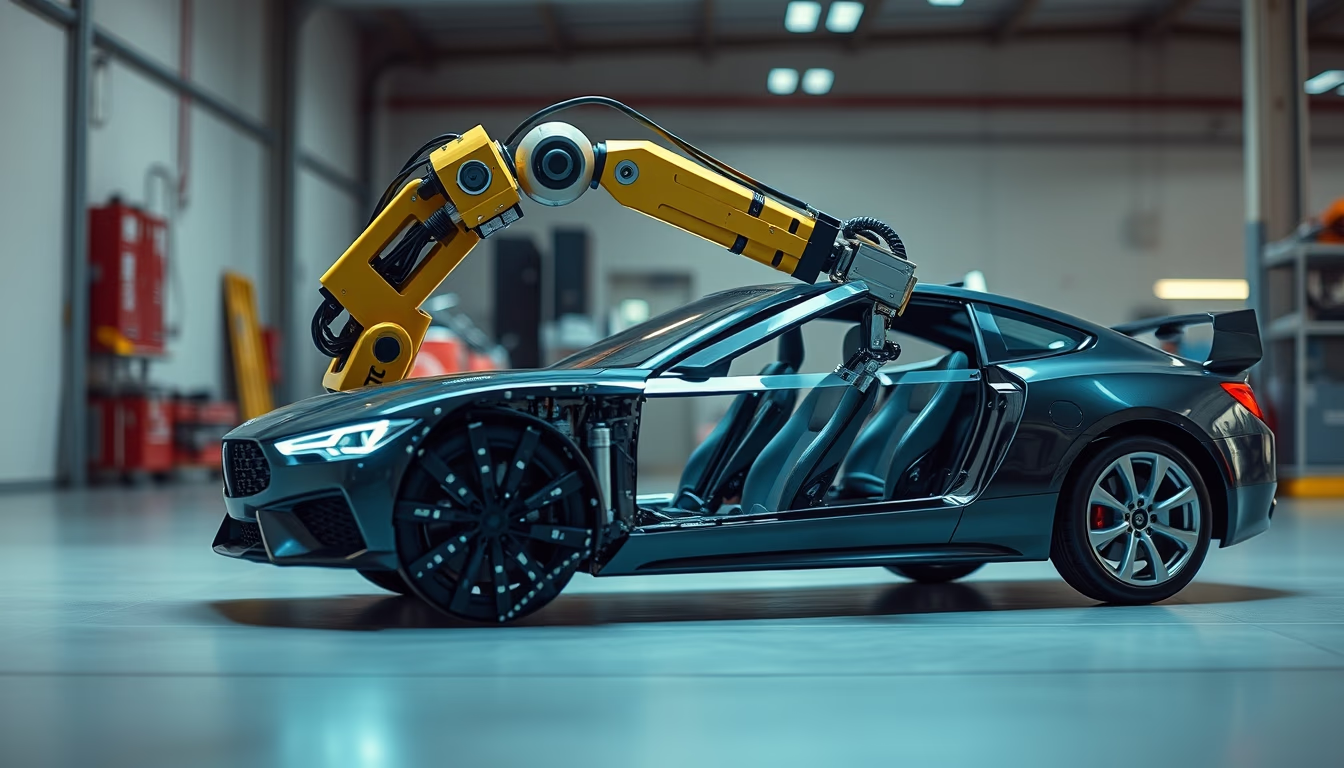
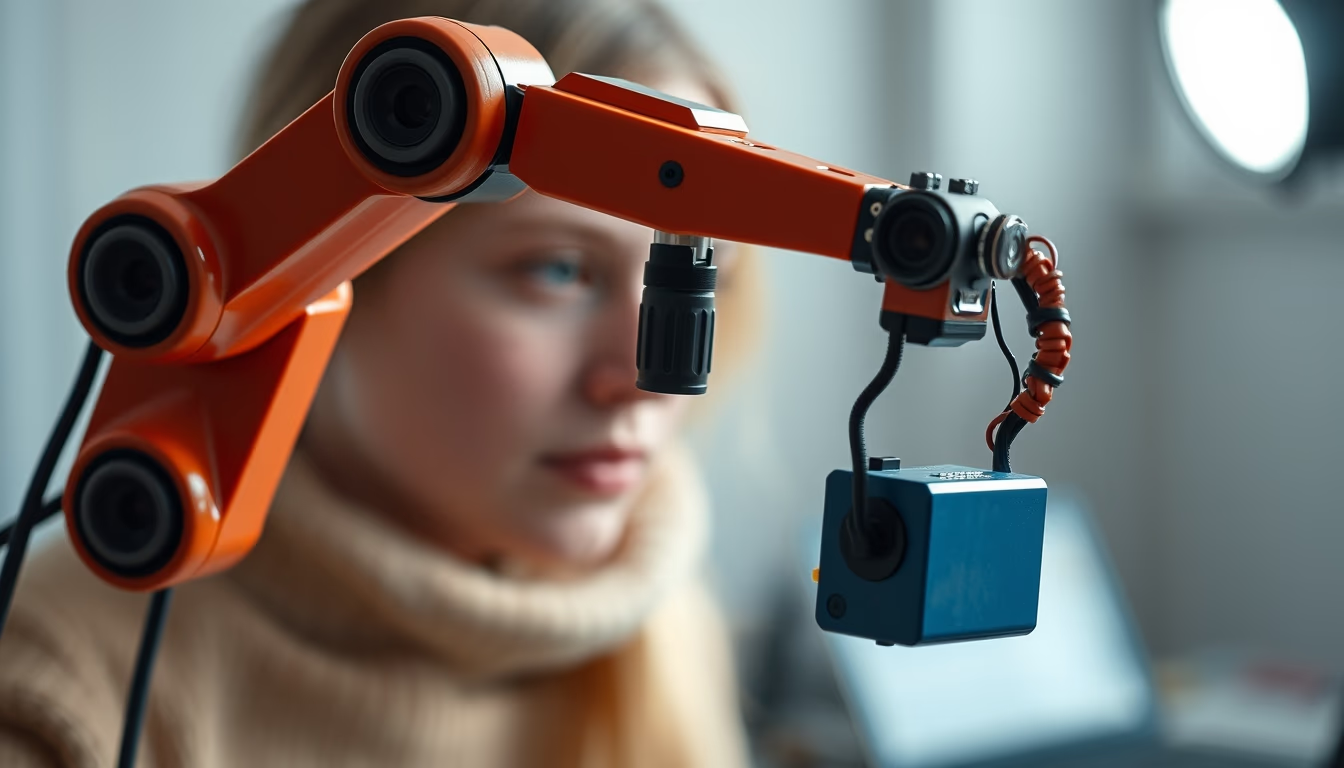
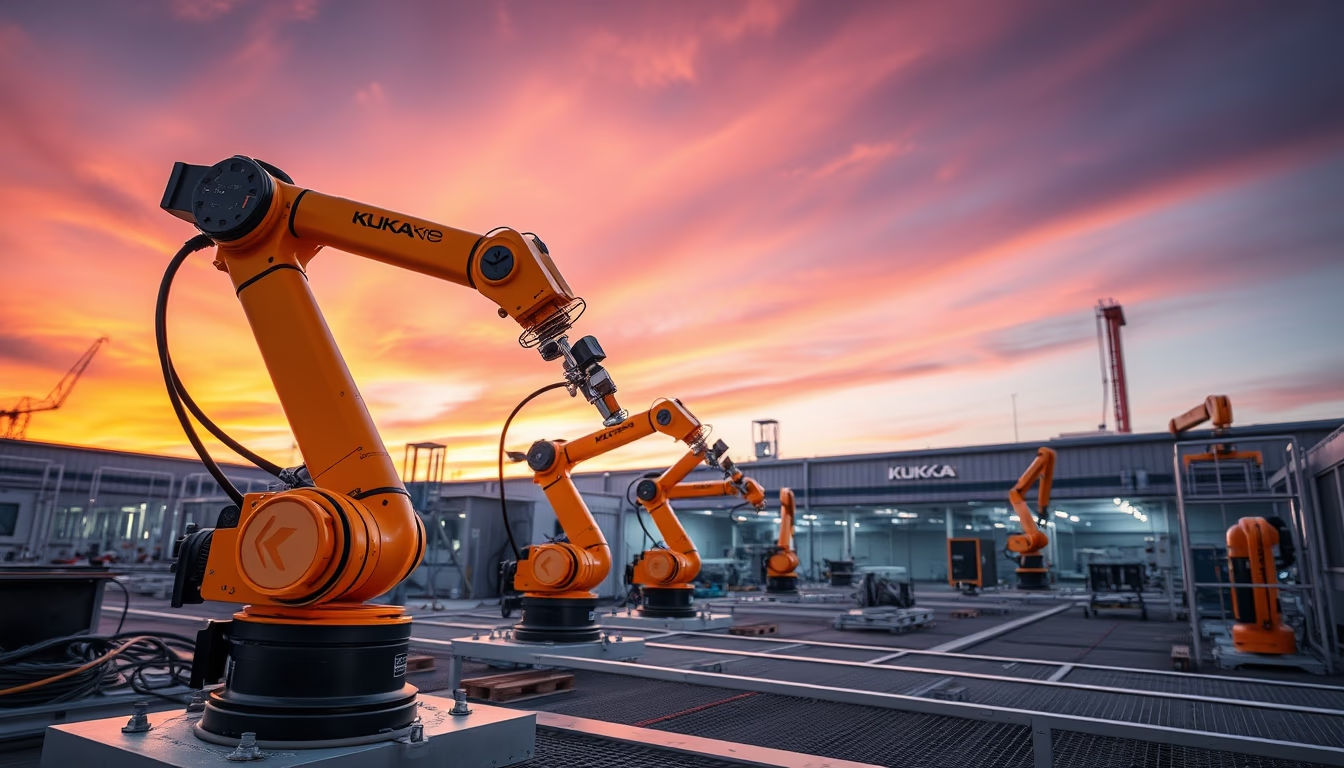
Robot arms perform car assembly with millimeter precision, transforming the automotive industry since the 1960s.
About this subject
Robot arms are essential components in vehicle assembly lines, handling tasks such as welding, painting, part fitting, and material handling. The first industrial robot, Unimate, was installed at a General Motors plant in 1961 to perform repetitive and hazardous jobs. Since then, robotics has evolved into six-axis articulated systems capable of executing complex movements with repeatability as precise as 0.02 mm.
In modern automotive manufacturing, robots from brands like Kuka or Fanuc are programmed to work in synchronized production cells. They reduce cycle times, enhance worker safety by taking over ergonomically challenging tasks, and ensure consistent quality. Assembling a car can involve hundreds of robots across different stages, from body pressing to interior panel installation.
A notable example is the use of robotic arms for spot welding on steel or aluminum structures. A typical car body has around 4,000 to 5,000 weld points, all performed by robots with greater speed and precision than human workers. Additionally, collaborative robots (cobots) are being introduced to work alongside operators, equipped with force and vision sensors for safe interaction.
Current trends include the integration of artificial intelligence and machine learning to optimize trajectories and predict failures. Companies like Tesla and BMW already use autonomous robots that adapt to different vehicle models without manual reconfiguration. This advancement reduces costs and accelerates production, supporting the feasibility of electric and customized vehicles.
Frequently Asked Questions
How many robots are used in assembling a modern car?
A car factory can have from 200 to over 1,000 robots, depending on the model's complexity and automation level. Electric vehicles, for instance, often require fewer robots for body welding but more for battery assembly.
What is the typical precision of a robot arm on an assembly line?
Positioning repeatability ranges from 0.02 mm to 0.1 mm, depending on the model and application. For welding, precision is critical to ensure the vehicle's structural integrity.
Are robots completely replacing human workers?
Not entirely. Robots handle repetitive and dangerous tasks, but humans are still needed for supervision, programming, maintenance, and jobs requiring flexibility and decision-making. The trend is human-machine collaboration.
Direct URL
https://pub-c7d6a6ea828543ac903a74a341ccb2e1.r2.dev/imagens/robot-arm-assembling-car-lo-fi-disposable-camera-p7.avifHow to credit
Include a visible link back to UtilizAí. Copy one of the snippets below:
<a href="https://xn--utiliza-eza.com/en/midia/imagens/robot-arm-assembling-car-lo-fi-disposable-camera-p7">Robot arm assembling car</a> by <a href="https://xn--utiliza-eza.com">UtilizAí</a>, licensed under <a href="https://creativecommons.org/licenses/by/4.0/">CC BY 4.0</a>.
[Robot arm assembling car](https://xn--utiliza-eza.com/en/midia/imagens/robot-arm-assembling-car-lo-fi-disposable-camera-p7) by [UtilizAí](https://xn--utiliza-eza.com), CC BY 4.0
License: CC-BY-4.0