Quadruped robot dog
1344×768 · AVIF · CC BY 4.0
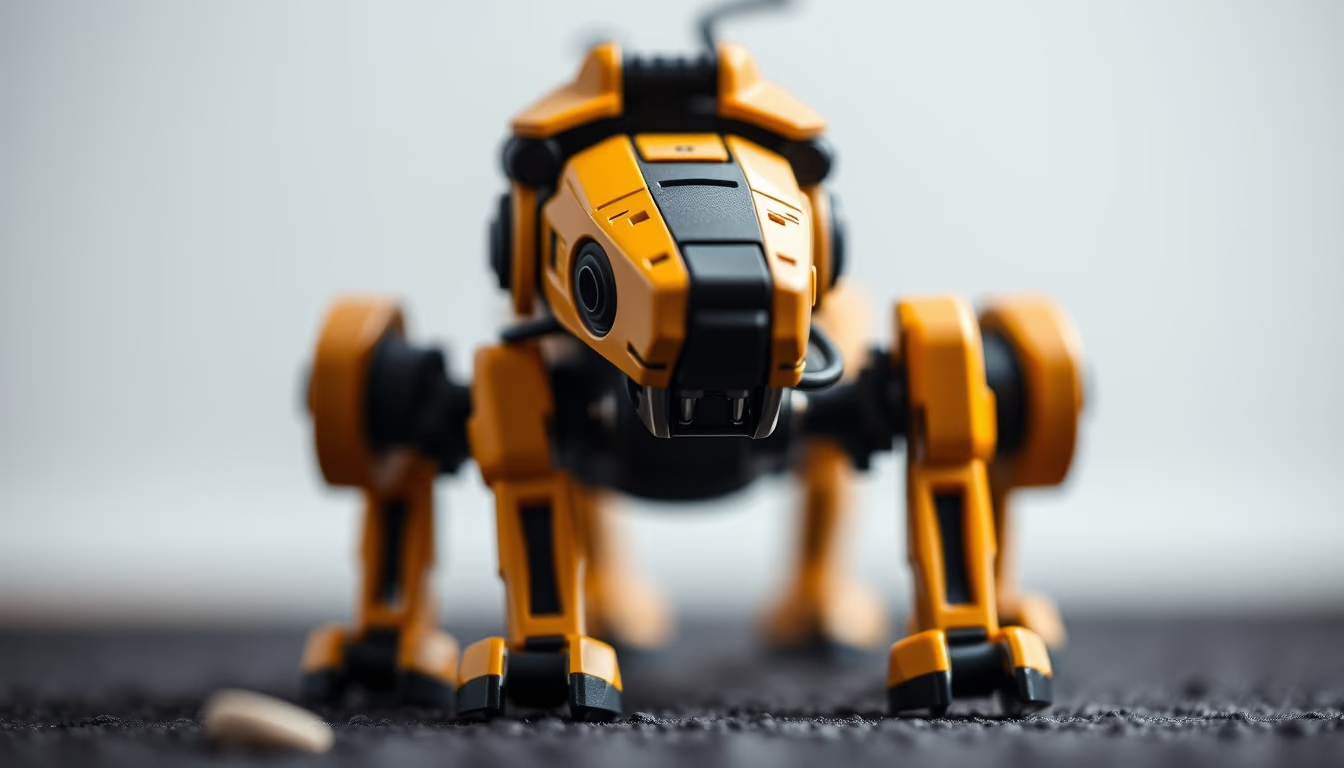
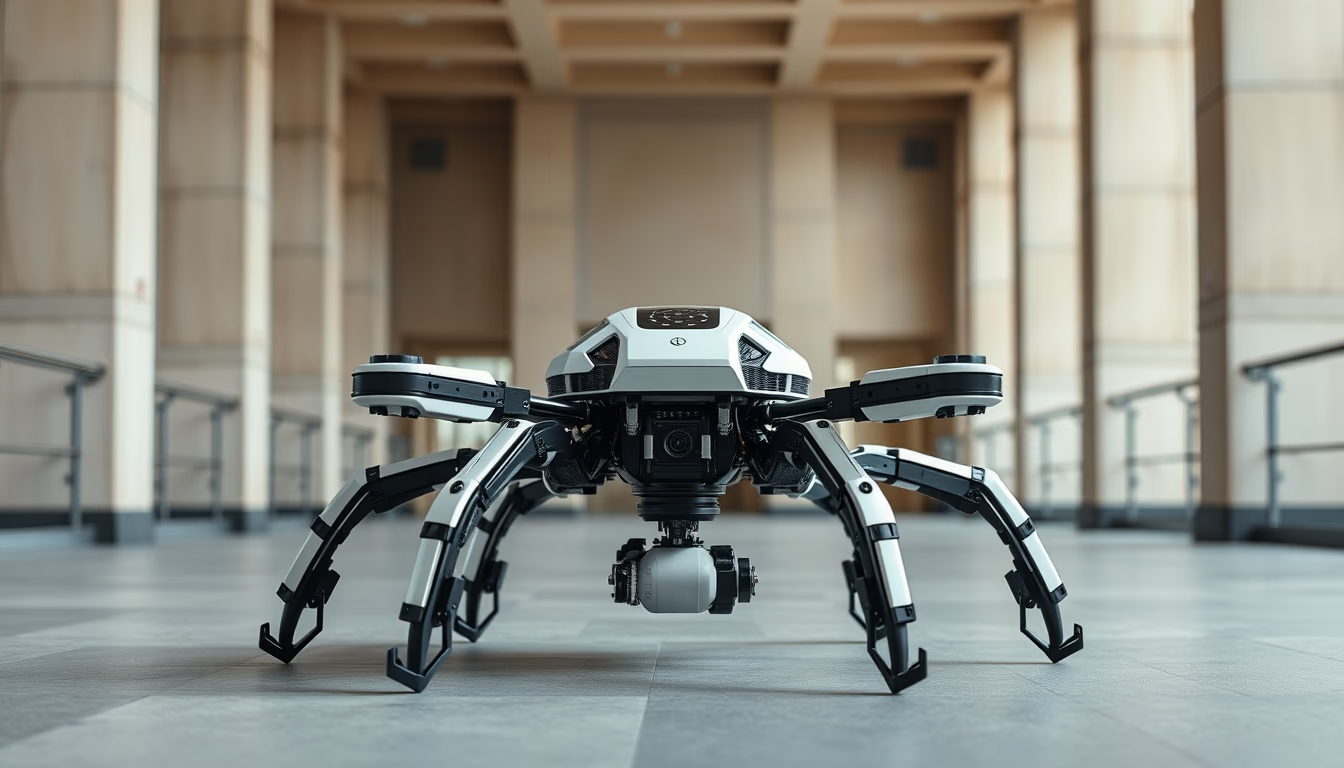
A quadruped robot dog, such as Boston Dynamics' Spot, is used for industrial inspection and search-and-rescue, combining sensors and AI for locomotion on rough terrain.
About this subject
Quadruped robots designed as dogs, popularized by Boston Dynamics' Spot, represent a major advancement in mobile robotics. Unlike wheeled or tracked robots, these devices use articulated legs for locomotion, enabling them to navigate uneven terrain, stairs, and obstacles that would be impassable for conventional vehicles. Development began with military projects like BigDog in the 2000s, but today their applications have expanded to civilian fields.
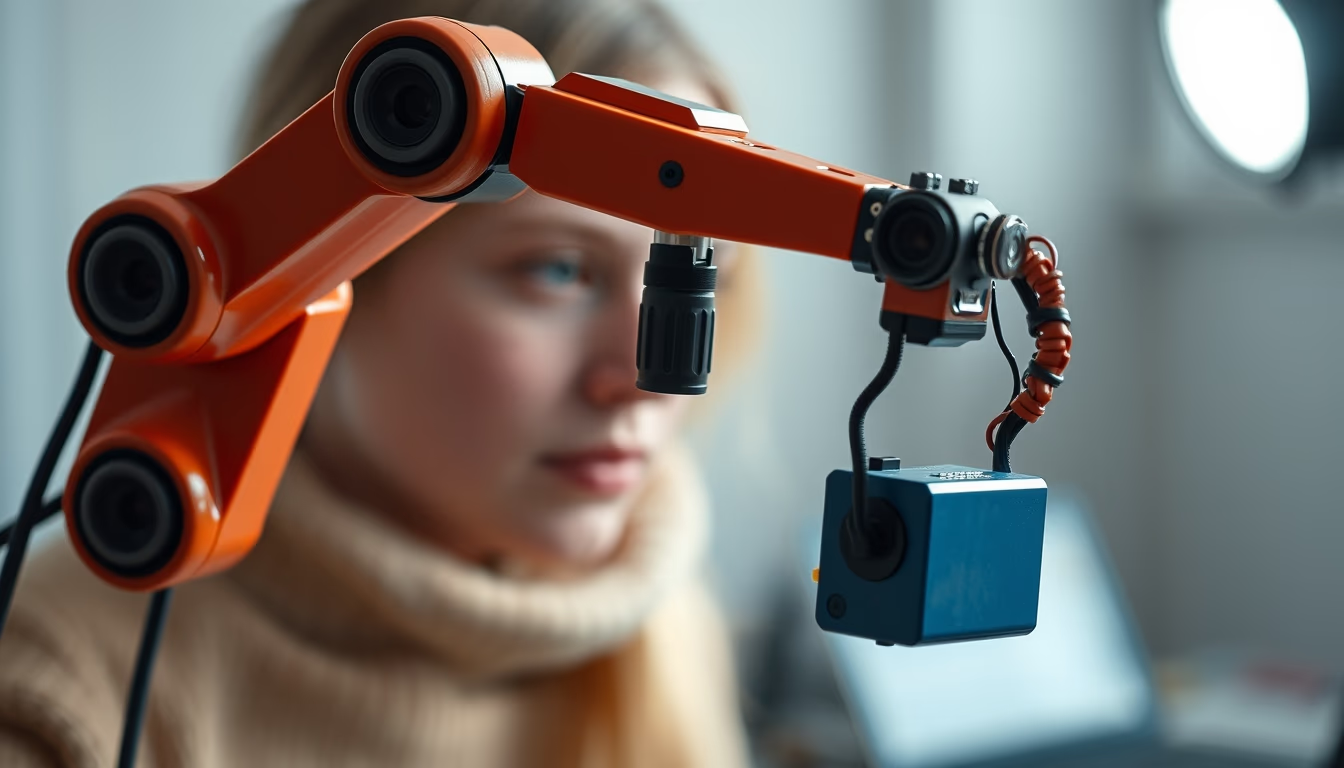
A typical quadruped robot is equipped with multiple sensors, such as 3D cameras, inertial measurement units (IMUs), and joint encoders, feeding control algorithms and artificial intelligence. This combination allows the robot to maintain dynamic balance even when pushed or walking on slippery surfaces. Companies like Unitree and ANYbotics also produce similar models, competing in cost and performance. The macro closeup of the image highlights construction details such as electric actuators, sensors, and lightweight alloy structures, which are crucial for agility and robustness.
In practice, quadruped robots are used for pipeline inspection on oil platforms, construction site monitoring, underground mine mapping, and even search-and-rescue missions. For instance, Spot has been deployed by the New York Police Department in hostage situations and by NASA to simulate planetary exploration. Additionally, these robots are becoming development platforms for research in robotic locomotion, artificial intelligence, and human-robot interaction, with open-source code and APIs that encourage innovation.
Interestingly, the canine design is not merely aesthetic: the quadruped form provides stability and redundancy, allowing the robot to continue operating even if one leg fails. The term 'macro closeup' in the tag suggests the image focuses on specific components like motors and joints, which are high-precision mechanical designs. Market demand for these robots grows annually, with estimates exceeding $1 billion by 2027, driven by industrial automation and the need for operations in hazardous environments.
Frequently Asked Questions
What is a quadruped robot dog?
It is a robot with four legs that mimics a dog's locomotion, designed to move over rough terrain using sensors and artificial intelligence. Famous examples include Boston Dynamics' Spot and Unitree's Go1.
What are quadruped robots used for?
They are used for industrial inspections, construction monitoring, search-and-rescue, mining mapping, and even entertainment. Their ability to climb stairs and navigate narrow spaces makes them useful in hazardous environments for humans.
How does a robot dog maintain balance?
It uses sensors like gyroscopes, accelerometers, and cameras to detect its position and terrain. Real-time control algorithms adjust the motors of each leg to maintain stability, even when pushed or on uneven surfaces.
Direct URL
https://pub-c7d6a6ea828543ac903a74a341ccb2e1.r2.dev/imagens/quadruped-robot-dog-macro-closeup-p11.avifHow to credit
Include a visible link back to UtilizAí. Copy one of the snippets below:
<a href="https://xn--utiliza-eza.com/en/midia/imagens/quadruped-robot-dog-macro-closeup-p11">Quadruped robot dog</a> by <a href="https://xn--utiliza-eza.com">UtilizAí</a>, licensed under <a href="https://creativecommons.org/licenses/by/4.0/">CC BY 4.0</a>.
[Quadruped robot dog](https://xn--utiliza-eza.com/en/midia/imagens/quadruped-robot-dog-macro-closeup-p11) by [UtilizAí](https://xn--utiliza-eza.com), CC BY 4.0
License: CC-BY-4.0