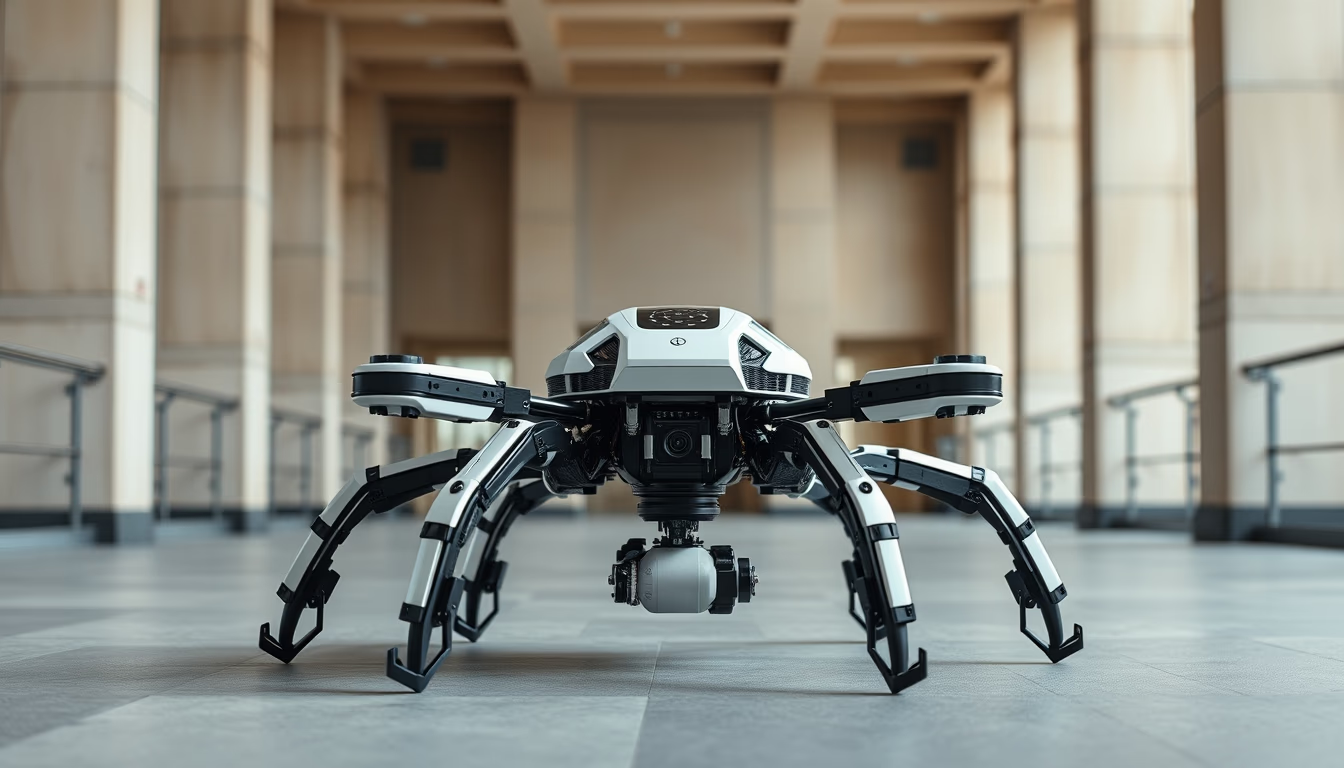
Pick and place robot
1344×768 · AVIF · CC BY 4.0

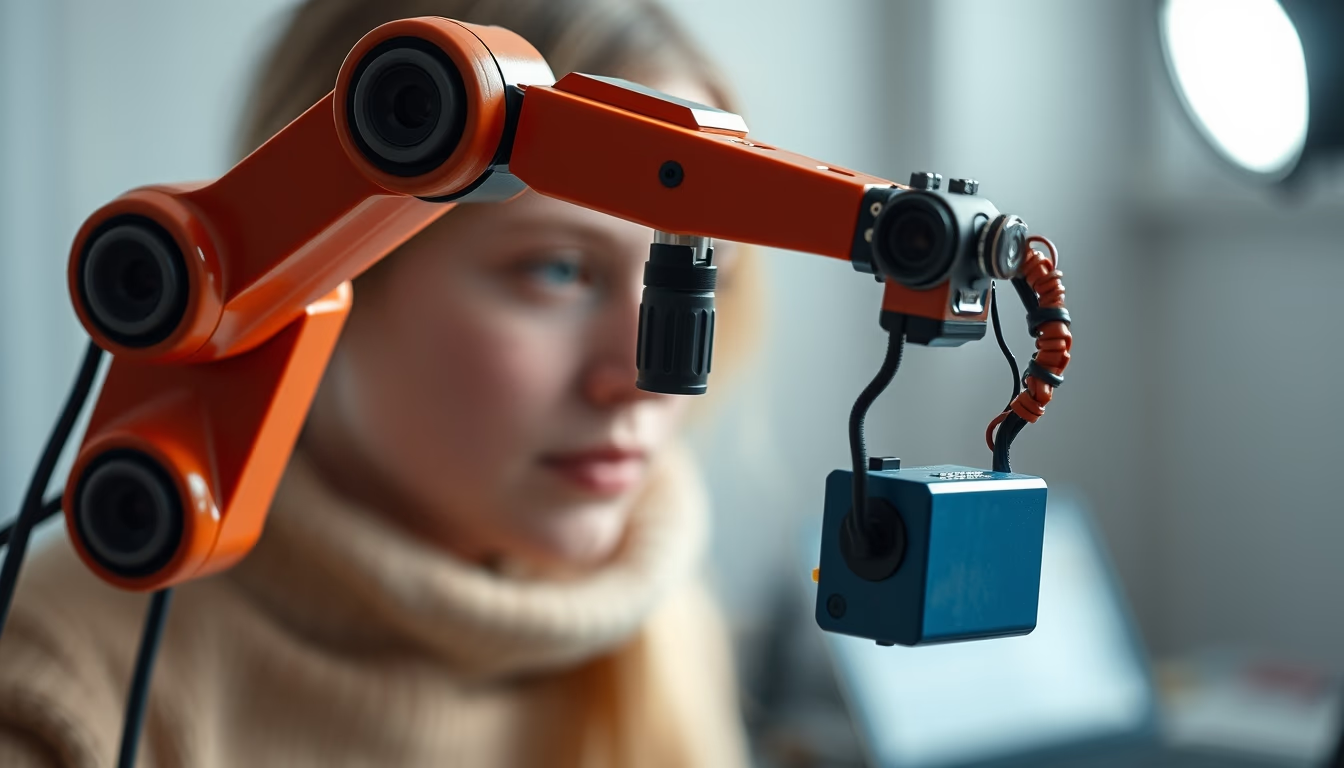
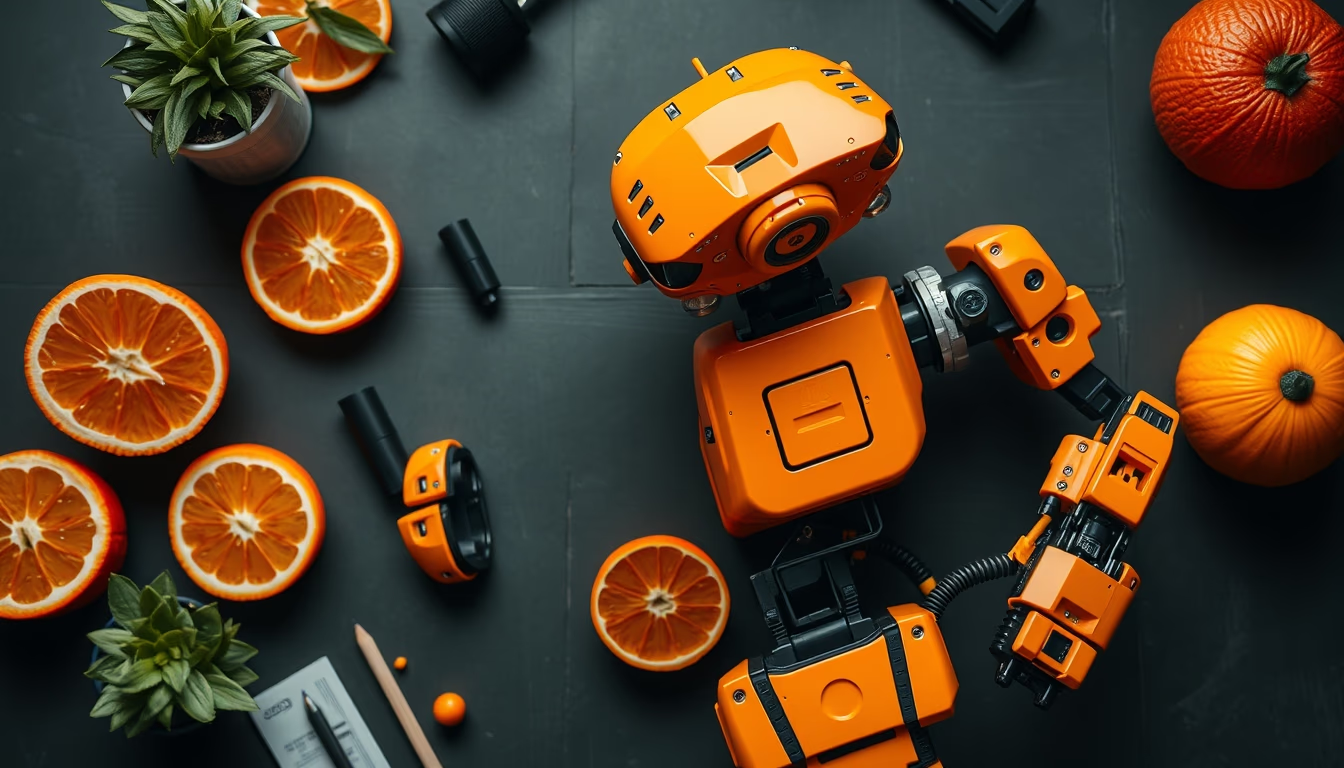
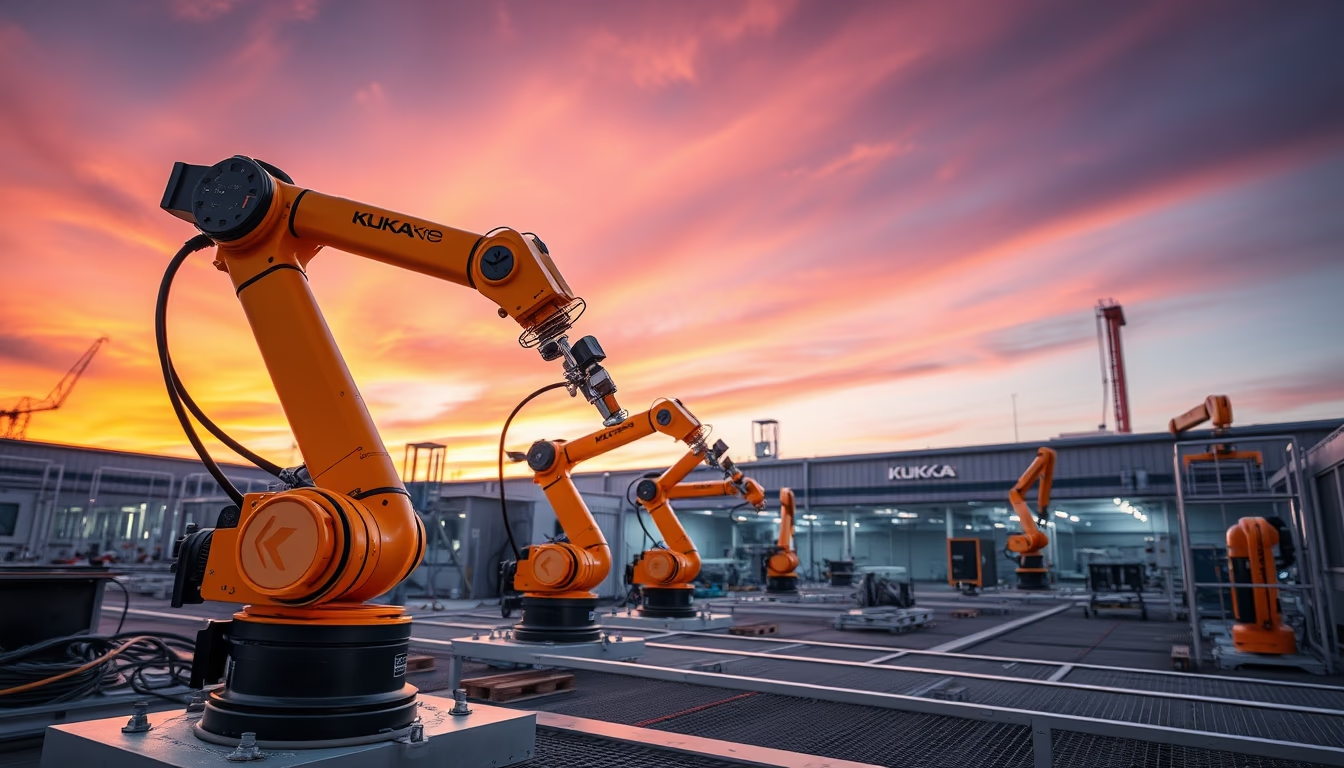
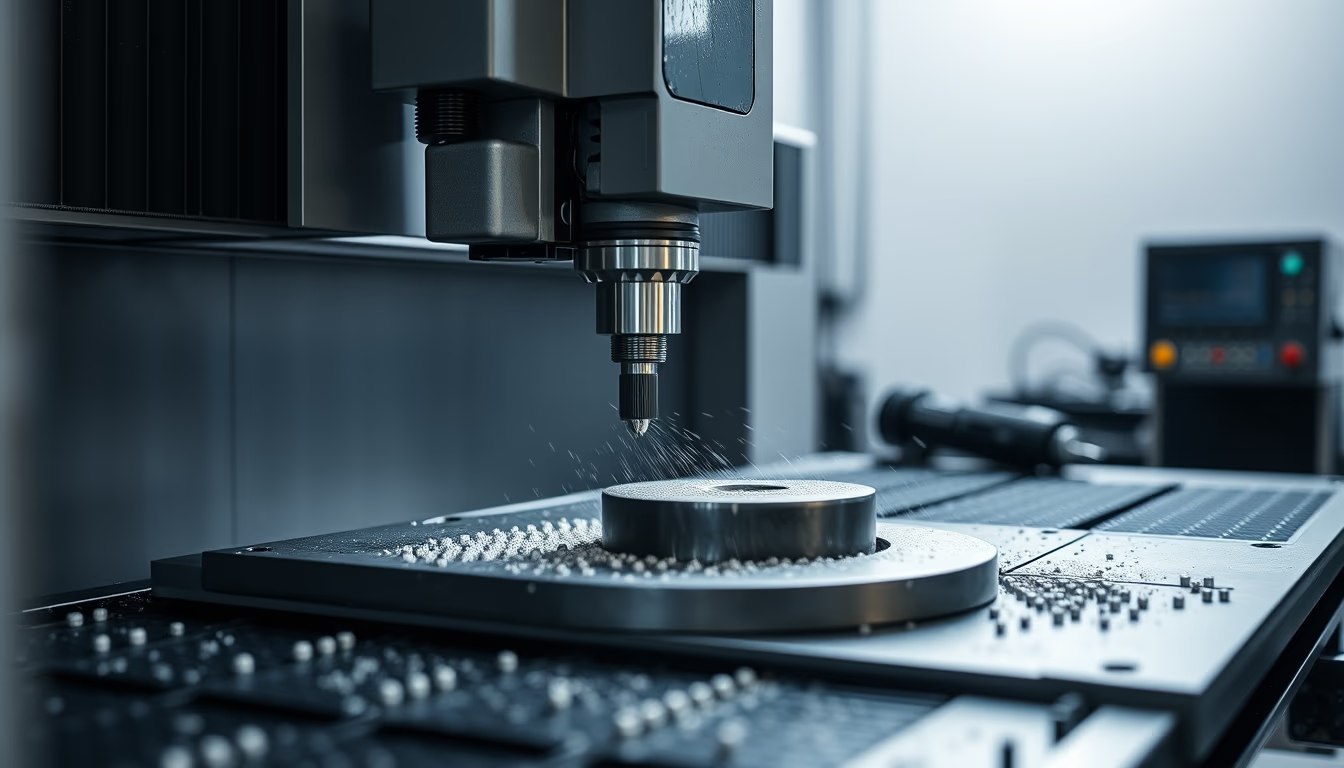
A pick and place robot is a high-speed industrial manipulator used to move objects from one point to another with precision.
About this subject
Pick and place robots are a category of industrial manipulators designed to move objects quickly and precisely. They are widely used in assembly lines, packaging, electronics, and food processing. These robots typically feature SCARA (Selective Compliance Assembly Robot Arm) or delta configurations, offering high speed and repeatability. A typical model can achieve up to 200 cycles per minute with a repeatability of 0.02 mm.
The invention of pick and place robots dates back to the 1970s, when the automotive industry began automating repetitive processes. Since then, they have evolved to integrate computer vision and force sensors, allowing them to handle fragile or irregular objects without damage. In electronics, they are essential for printed circuit board assembly, placing tiny components at high speed. In the food sector, they handle items like cookies, chocolates, and fruits, maintaining hygiene and efficiency.
A technical curiosity: pick and place robots can be classified by their drive type, electric (servo-motors) or pneumatic. Electric ones offer greater control and flexibility, while pneumatic ones are simpler and cheaper but less precise. The choice depends on the application: for high speeds and light loads, pneumatic is common; for precision and varying loads, electric is preferred. Moreover, many modern systems use trajectory optimization algorithms to reduce cycle time and mechanical wear.
Culturally, the pick and place robot symbolizes the automation of repetitive tasks that once required intense human labor. Its diffusion accelerated from the 1990s with falling electronics prices and mass production demands. Companies like ABB, Fanuc, Epson, and Universal Robots dominate the market, offering from compact arms for small businesses to integrated systems in smart factories (Industry 4.0). In Brazil, adoption grows mainly in the automotive and consumer goods sectors, driven by tax incentives and the need for competitiveness.
Frequently Asked Questions
What is the difference between a pick and place robot and a common industrial robot?
Pick and place robots are optimized for fast, repetitive pick-and-place movements, while common industrial robots (e.g., 6-axis) are more versatile for tasks like welding, painting, and machining. Pick and place prioritize speed and precision in short cycles.
Which sectors most commonly use pick and place robots?
The main sectors are electronics (PCB assembly), food and beverage (packaging), pharmaceutical (drug handling), and automotive (component assembly). They are also common in logistics for sorting and packaging.
Can a pick and place robot be programmed without advanced knowledge?
Yes, many modern models feature intuitive interfaces, teach pendants, and simplified programming software. Some even allow programming by demonstration, where the operator manually moves the arm to teach the points.
Direct URL
https://pub-c7d6a6ea828543ac903a74a341ccb2e1.r2.dev/imagens/pick-and-place-robot-studio-still-life-p7.avifHow to credit
Include a visible link back to UtilizAí. Copy one of the snippets below:
<a href="https://xn--utiliza-eza.com/en/midia/imagens/pick-and-place-robot-studio-still-life-p7">Pick and place robot</a> by <a href="https://xn--utiliza-eza.com">UtilizAí</a>, licensed under <a href="https://creativecommons.org/licenses/by/4.0/">CC BY 4.0</a>.
[Pick and place robot](https://xn--utiliza-eza.com/en/midia/imagens/pick-and-place-robot-studio-still-life-p7) by [UtilizAí](https://xn--utiliza-eza.com), CC BY 4.0
License: CC-BY-4.0