Pick and place robot
1344×768 · AVIF · CC BY 4.0

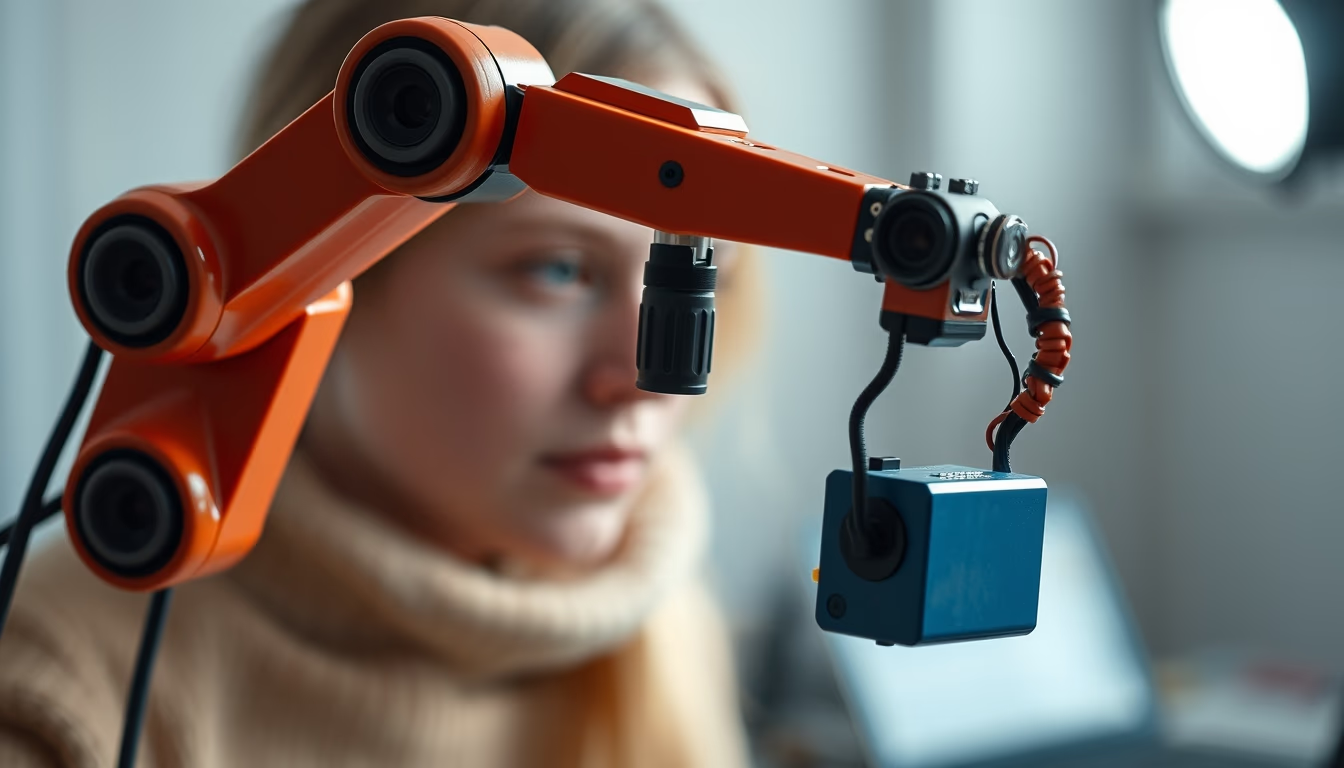
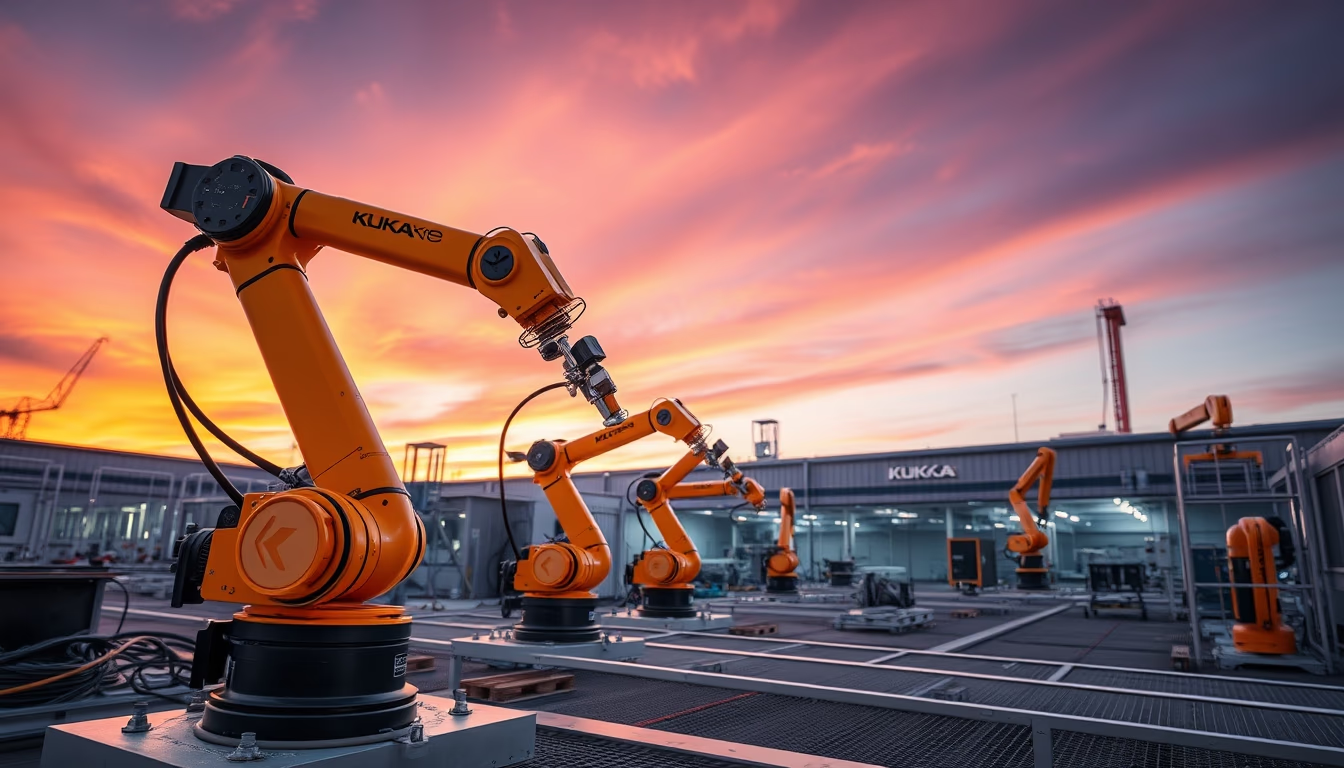
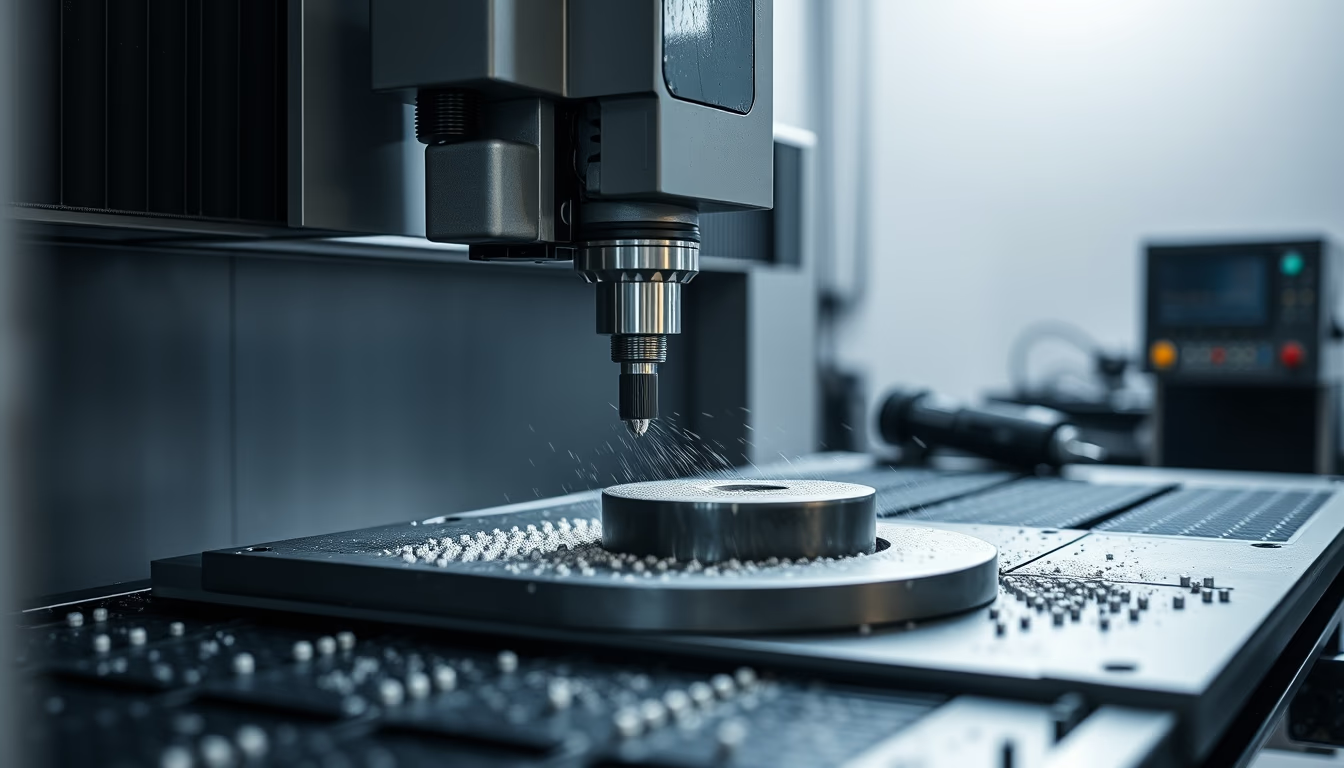
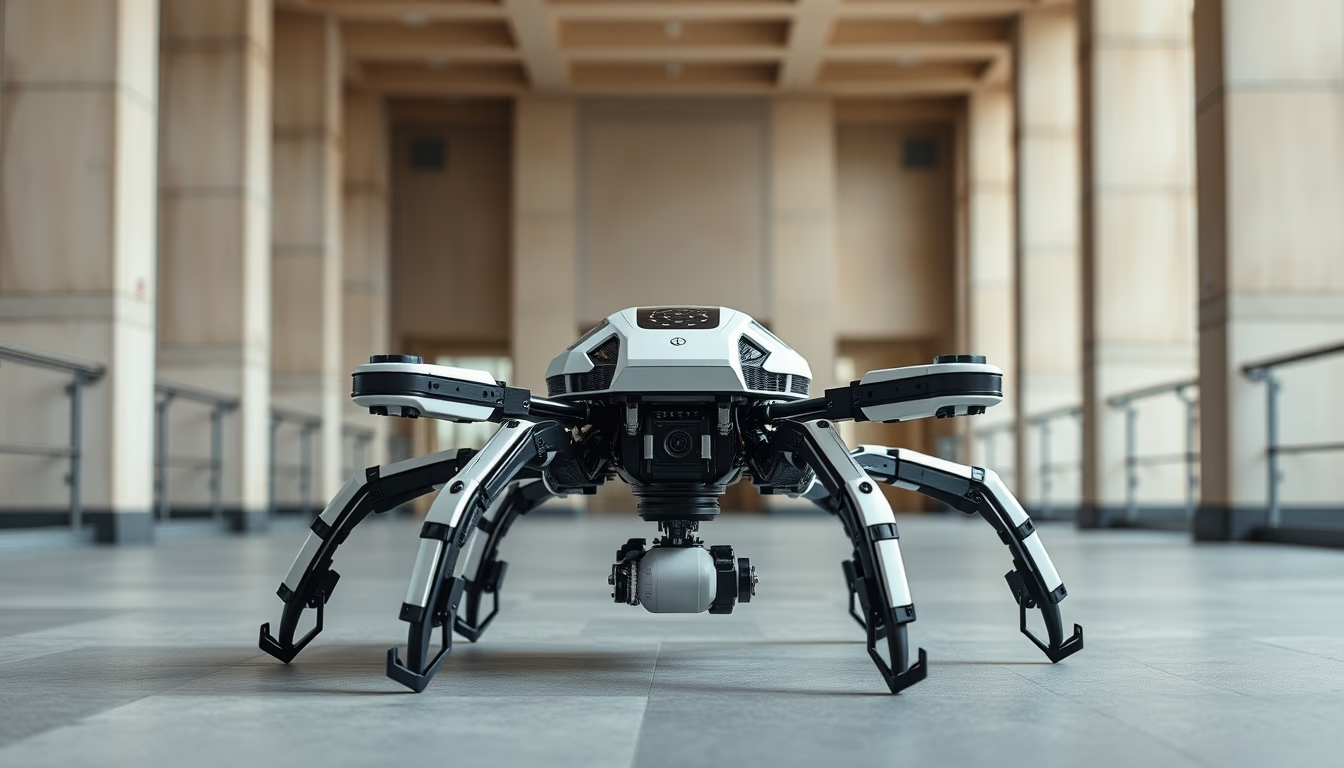
Pick and place robots automate object movement in industrial production lines with high speed and precision.
About this subject
Pick and place robots are industrial automation devices designed to grasp objects from one location and place them at another with speed and accuracy. They are widely used in sectors such as electronics, packaging, pharmaceuticals, and food, where repeatability and efficiency are critical. The origin of these robots dates back to the 1960s with the development of programmable manipulators, but they gained popularity in the 1980s due to advances in servo control and sensors.
There are several mechanical configurations for pick and place robots, each suited to different applications. Cartesian (gantry) robots move along linear axes, offering high rigidity and precision for heavy loads. SCARA robots have articulated arms in the horizontal plane, ideal for electronic component assembly. Delta robots are known for their exceptional speed, capable of up to 200 picks per minute, and are common in the food industry for packaging products. More recently, collaborative robots (cobots) for pick and place have been developed to work alongside humans without safety cages, increasing flexibility.
Integration with computer vision systems allows these robots to autonomously identify and handle objects even in random positions. Data from 2023 indicate the global pick and place robot market is growing at over 10% annually, driven by Industry 4.0 and the demand for automating repetitive tasks. In Brazil, adoption is significant in the automotive and electronics sectors, with companies like Bosch and Embraer using these solutions to boost productivity. Programming is typically done via teach pendant or offline software, enabling quick task changes.
Interestingly, the term pick and place extends beyond industrial robotics: large gantry systems in ports and warehouses also apply the principle, but at much larger scales and capacities. Typical precision of these robots is around 0.01 mm, while payload capacity ranges from a few grams to dozens of kilograms. Preventive maintenance includes lubrication of guides and inspection of end-effectors, which can be pneumatic, electric, or vacuum-driven depending on the object being handled.
Frequently Asked Questions
What is the difference between Cartesian, SCARA, and delta pick and place robots?
Cartesian robots move along linear axes (X, Y, Z) and offer high precision and rigidity for heavier loads. SCARA robots have articulated arms in the horizontal plane, ideal for electronic component assembly. Delta robots use a parallel linkage structure for ultra-fast movements, commonly used in the food industry for packaging.
What are typical applications of pick and place robots in Brazil?
In Brazil, these robots are widely used in the automotive industry for part assembly, in electronics for inserting components into circuit boards, and in pharmaceuticals for drug packaging. They are also increasingly adopted in distribution centers for item picking in warehouses.
How does computer vision improve pick and place robots?
Computer vision enables the robot to autonomously identify the position and orientation of objects, eliminating the need for exact guides or feeders. This increases flexibility to handle random or misaligned parts, reducing setup costs and time.
Direct URL
https://pub-c7d6a6ea828543ac903a74a341ccb2e1.r2.dev/imagens/pick-and-place-robot-documentary-photography-p12.avifHow to credit
Include a visible link back to UtilizAí. Copy one of the snippets below:
<a href="https://xn--utiliza-eza.com/en/midia/imagens/pick-and-place-robot-documentary-photography-p12">Pick and place robot</a> by <a href="https://xn--utiliza-eza.com">UtilizAí</a>, licensed under <a href="https://creativecommons.org/licenses/by/4.0/">CC BY 4.0</a>.
[Pick and place robot](https://xn--utiliza-eza.com/en/midia/imagens/pick-and-place-robot-documentary-photography-p12) by [UtilizAí](https://xn--utiliza-eza.com), CC BY 4.0
License: CC-BY-4.0