Particle physics detector
1344×768 · AVIF · CC BY 4.0
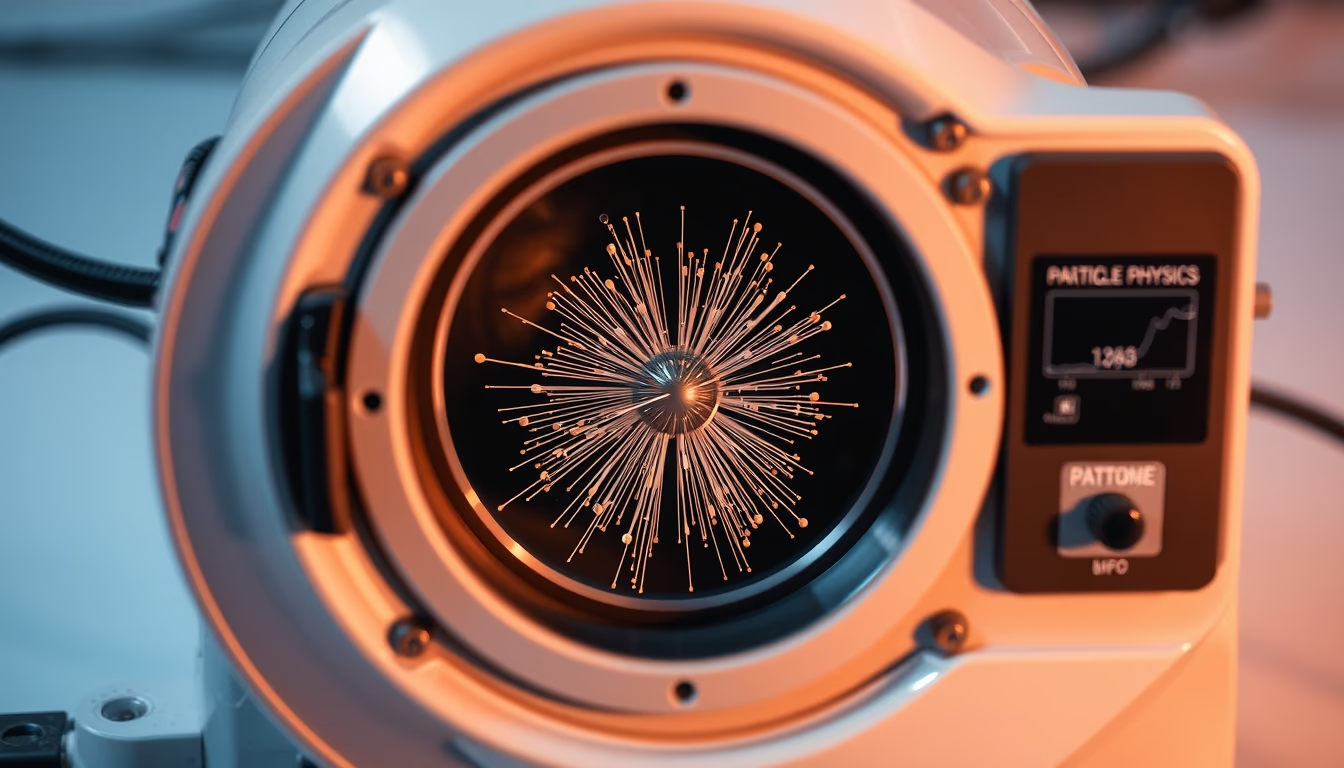
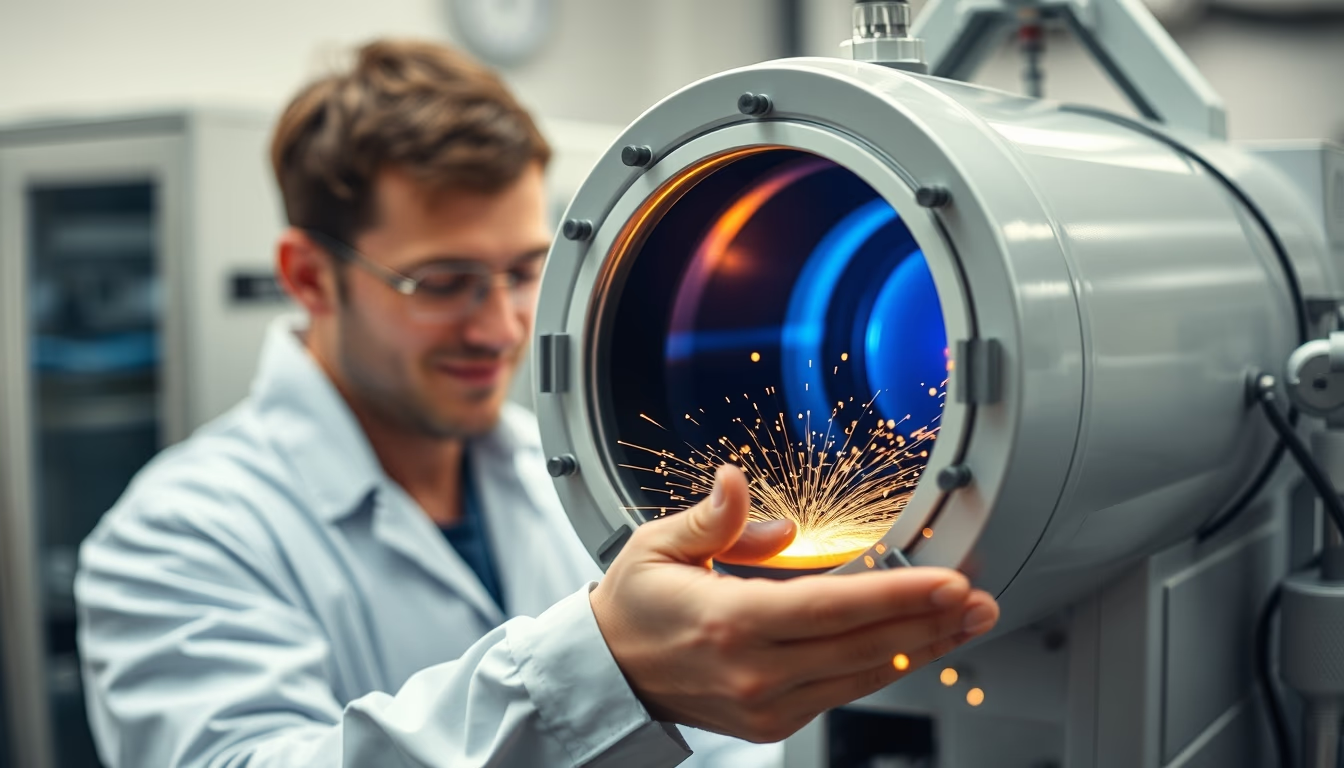
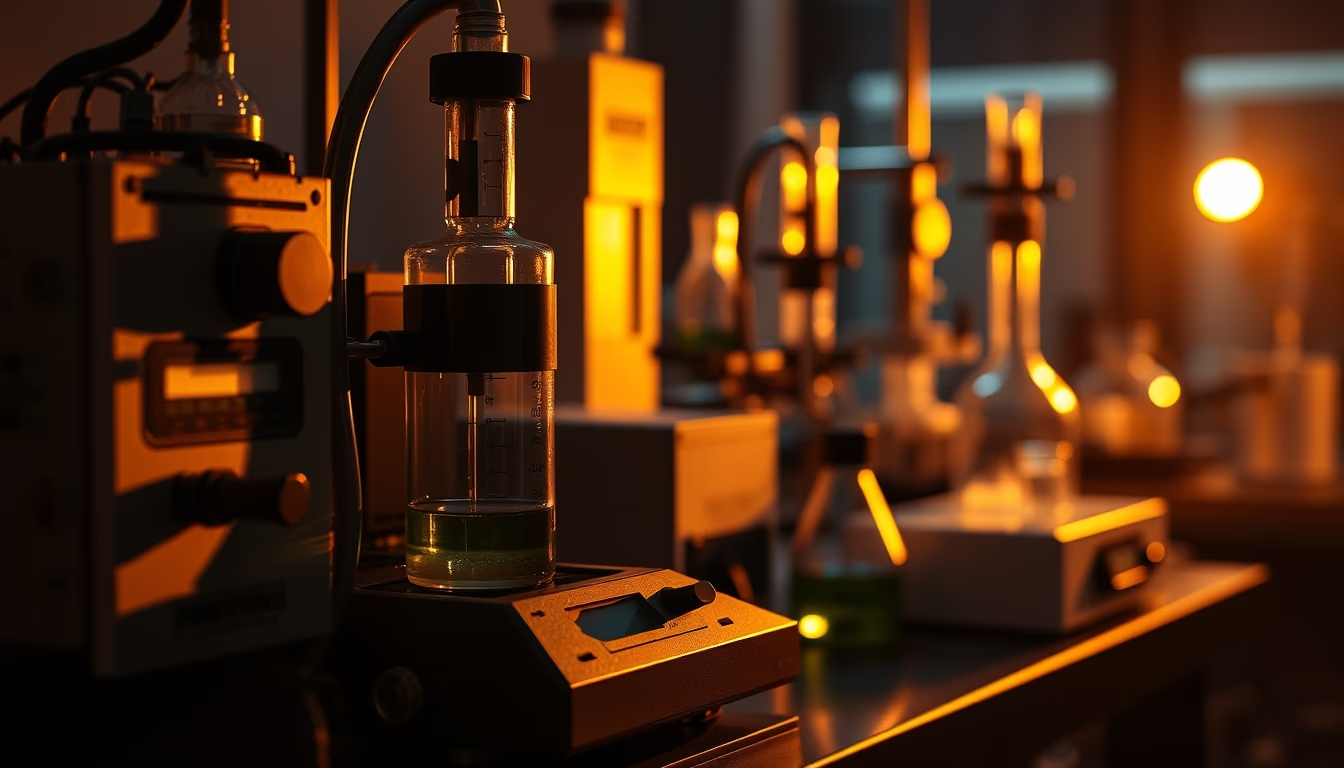
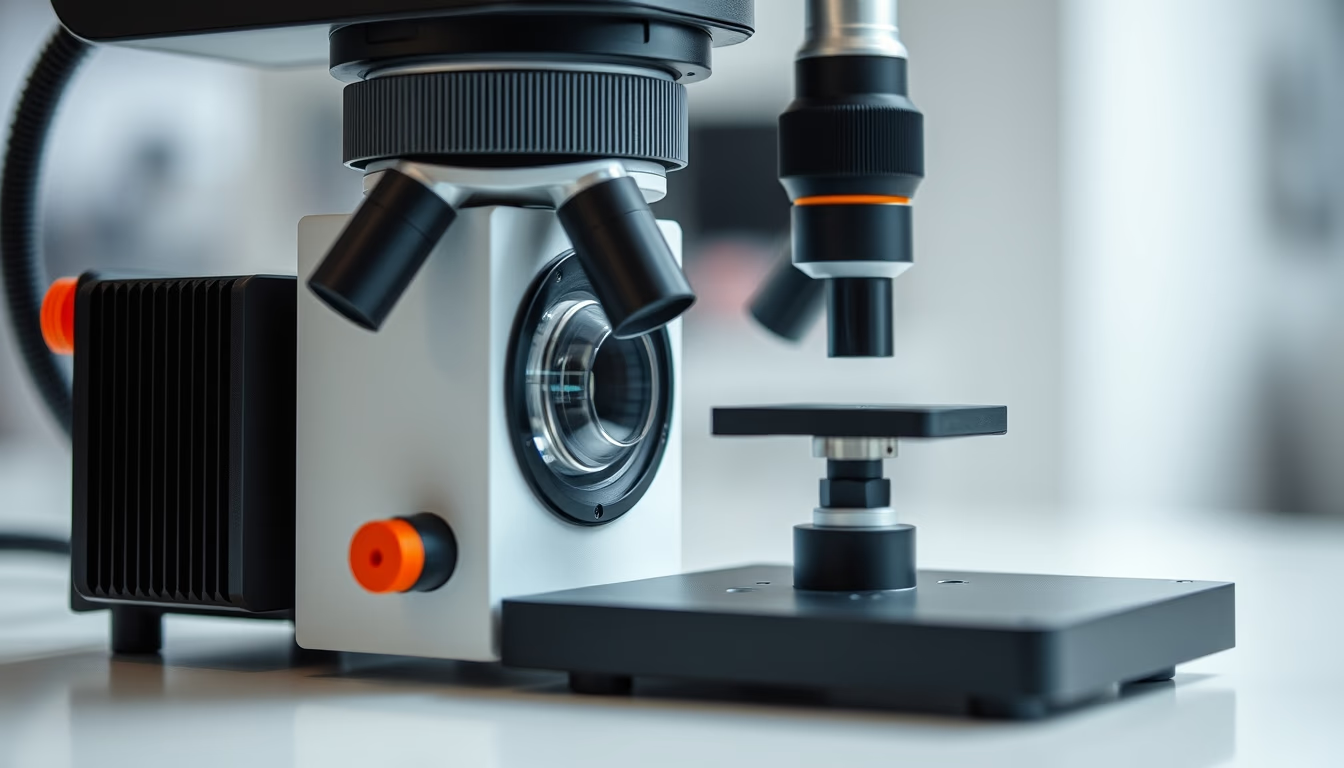
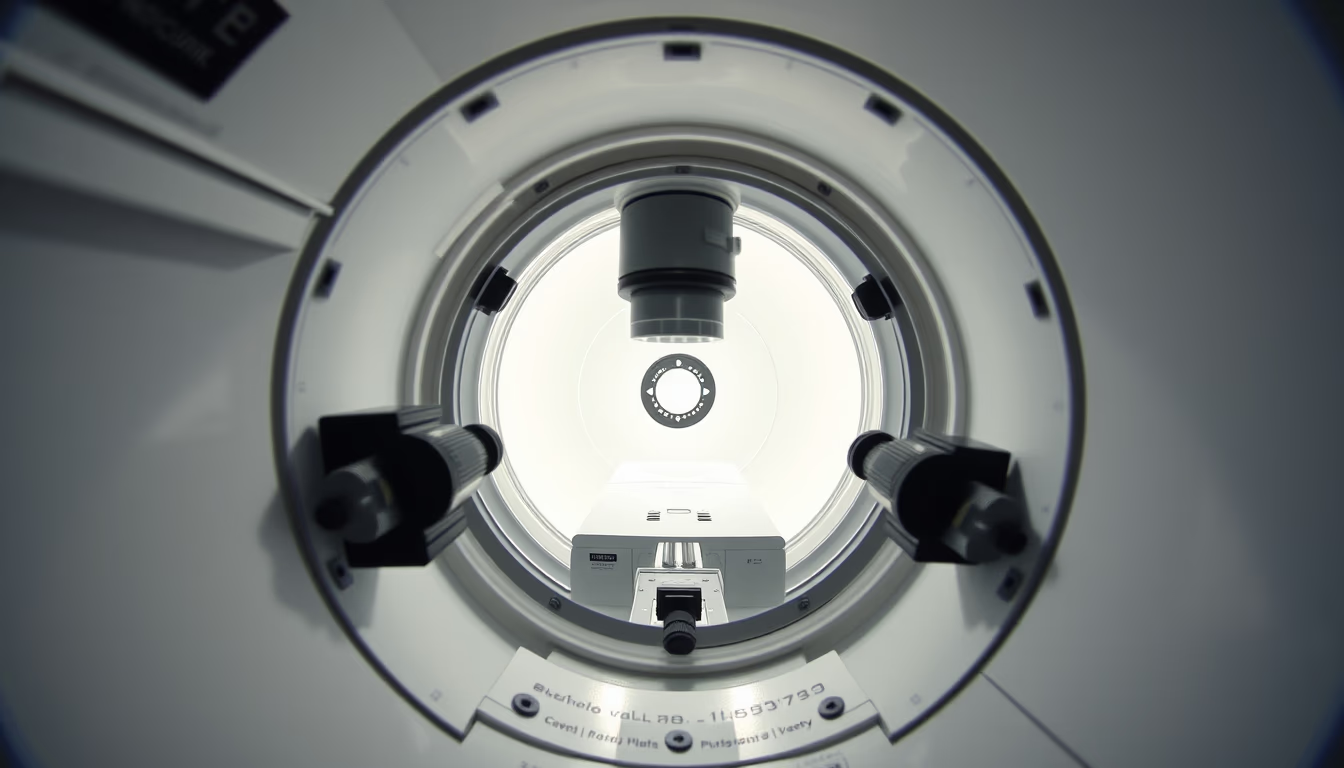
Particle physics detectors are sophisticated scientific instruments that record the traces of subatomic collisions, enabling discoveries such as the Higgs boson.
About this subject
Particle physics detectors are complex structures built around collision points in accelerators, such as the Large Hadron Collider (LHC) at CERN, straddling the French-Swiss border. These machines are technological marvels, composed of multiple layers of specialized materials that capture different aspects of particles generated in proton collisions at speeds close to light. Each layer has a specific function: trackers to measure momentum, calorimeters to measure energy, and muon chambers for particles that penetrate almost everything. The LHC, for instance, houses four major detectors: ATLAS, CMS, ALICE, and LHCb, each with distinct scientific goals. ATLAS and CMS were instrumental in confirming the Higgs boson in 2012, a milestone that earned François Englert and Peter Higgs the Nobel Prize. Beyond discoveries, these detectors generate immense amounts of data: about 30 petabytes per year, processed by a global distributed computing network called the Worldwide LHC Computing Grid. Constructing a single detector can take a decade and involves thousands of scientists and engineers from dozens of countries. The required precision is so high that detectors can locate particles with micrometer resolution and identify events within nanoseconds. These instruments not only deepen theoretical knowledge but also yield technological innovations applied in medicine, such as positron emission tomography (PET) and sensors for X-ray imaging.
Frequently Asked Questions
What is a particle detector?
It is a device used in experimental physics to observe and record subatomic particles resulting from high-energy collisions, enabling the study of matter properties and fundamental forces.
How does a detector like ATLAS work?
ATLAS has concentric layers of subdetectors: an inner tracker, electromagnetic and hadronic calorimeters, and a muon spectrometer. Each layer identifies different particles by their energy and trajectory signatures.
Why is the LHC important for science?
The LHC recreates conditions similar to the early universe, tests the Standard Model of particle physics, and searches for new particles or phenomena such as dark matter and extra dimensions.
Direct URL
https://pub-c7d6a6ea828543ac903a74a341ccb2e1.r2.dev/imagens/particle-physics-detector-magazine-editorial-fresh4.avifHow to credit
Include a visible link back to UtilizAí. Copy one of the snippets below:
<a href="https://xn--utiliza-eza.com/en/midia/imagens/particle-physics-detector-magazine-editorial-fresh4">Particle physics detector</a> by <a href="https://xn--utiliza-eza.com">UtilizAí</a>, licensed under <a href="https://creativecommons.org/licenses/by/4.0/">CC BY 4.0</a>.
[Particle physics detector](https://xn--utiliza-eza.com/en/midia/imagens/particle-physics-detector-magazine-editorial-fresh4) by [UtilizAí](https://xn--utiliza-eza.com), CC BY 4.0
License: CC-BY-4.0