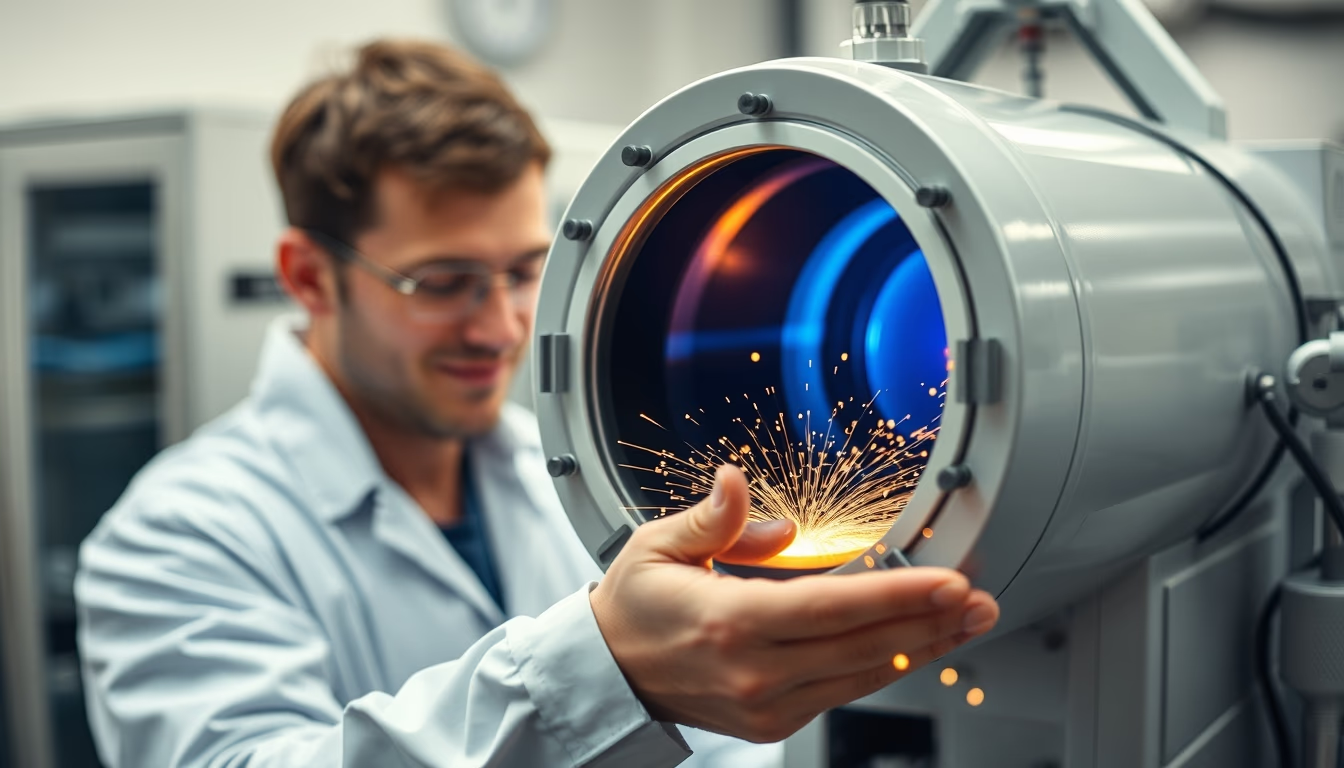
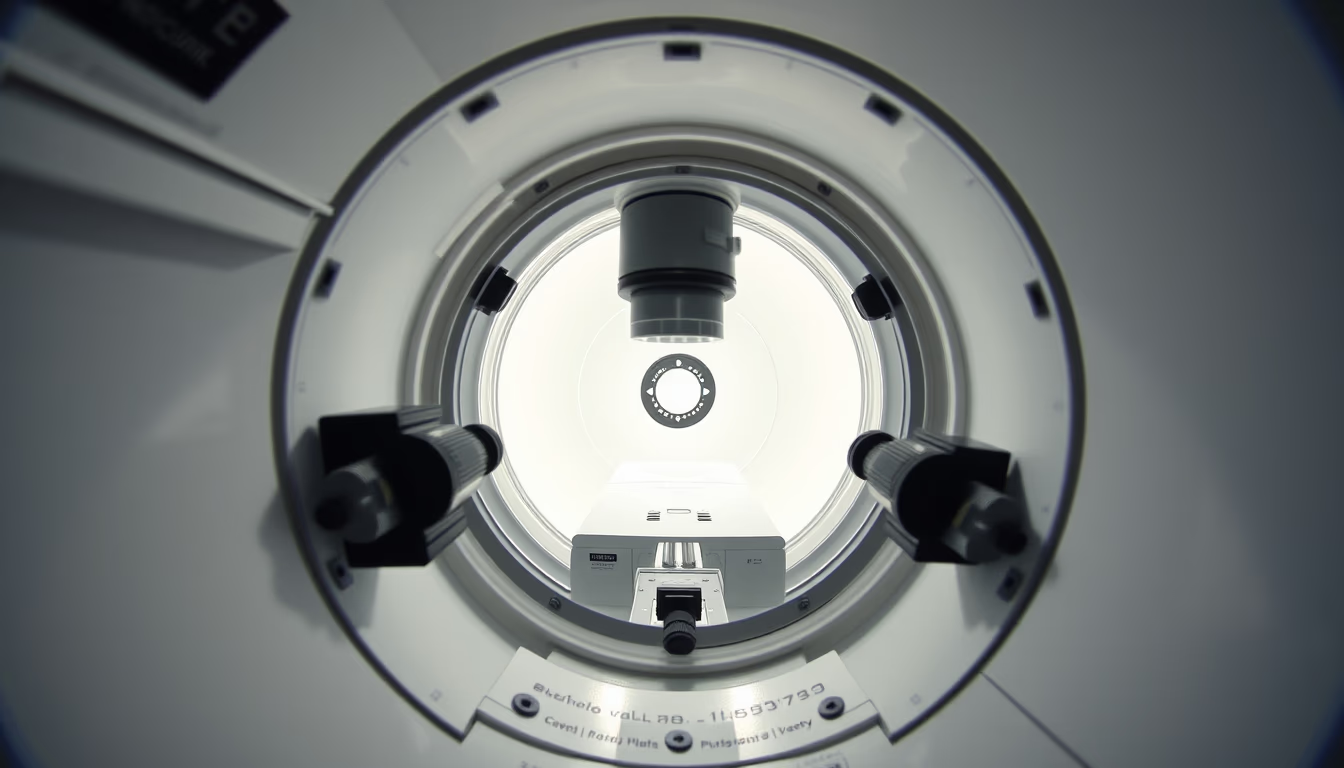
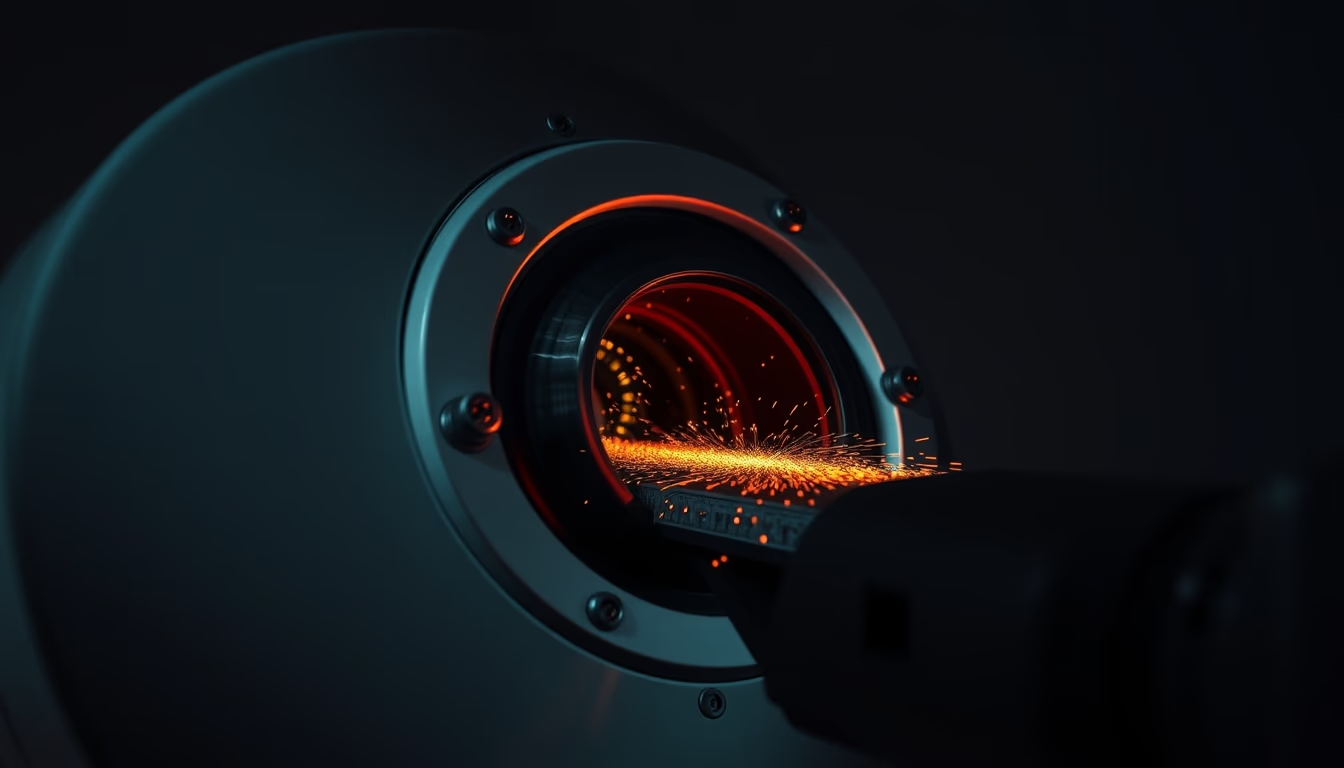
Mass spectrometer device
1344×768 · AVIF · CC BY 4.0
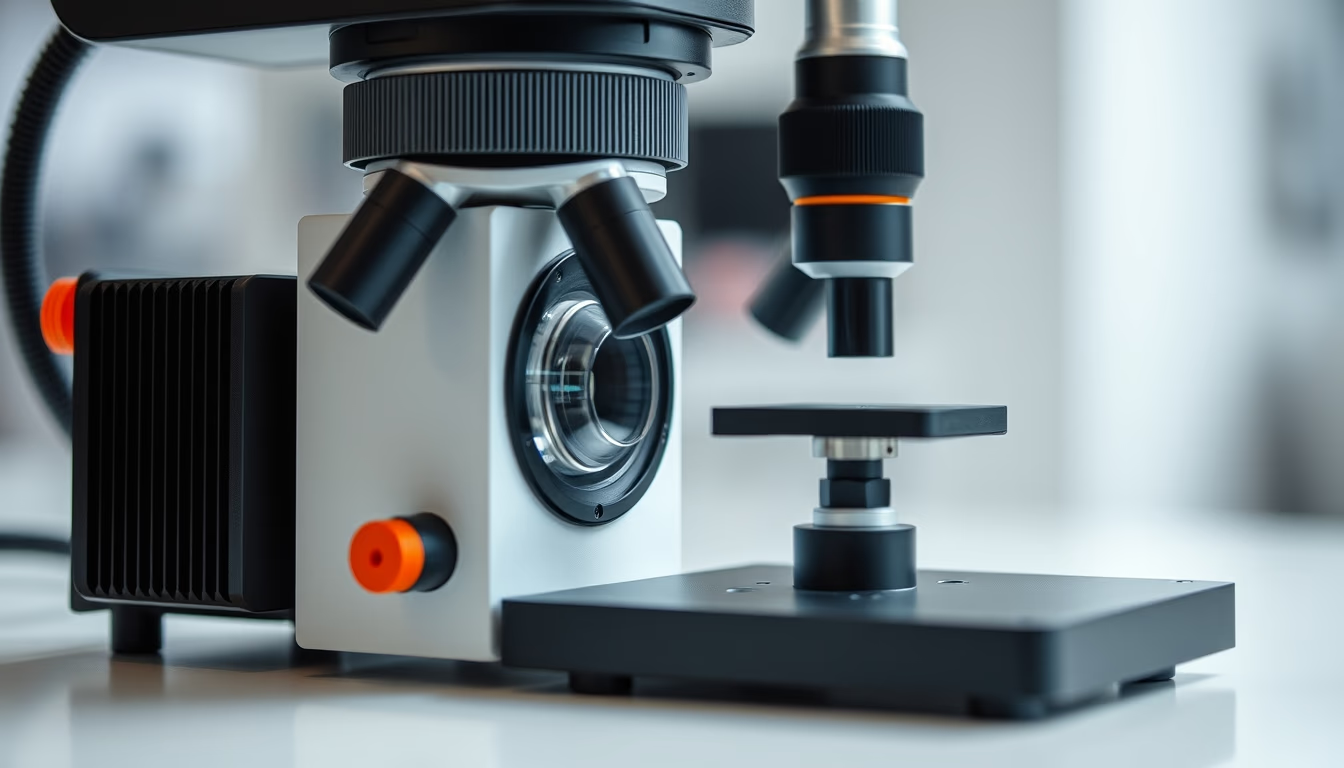
Mass spectrometer analyzes ions to identify chemical compounds with high precision.
About this subject
A mass spectrometer is a scientific instrument that measures the mass-to-charge ratio of ions, allowing for the identification and quantification of molecules in a sample. Its principle involves ionizing the substance, separating ions by mass using electric or magnetic fields, and detecting them to generate a mass spectrum. This equipment is essential in fields such as chemistry, biology, medicine, and forensic science.
Various ionization techniques exist, such as MALDI and ESI, each suited for different sample types. Common analyzers include quadrupole, time-of-flight (TOF), and Orbitrap, offering different resolutions and mass ranges. Mass spectrometry is often coupled with liquid or gas chromatography (LC-MS, GC-MS) to separate complex mixtures prior to analysis.
The instrument's importance is immense. It is used in identifying proteins and metabolites in biomedical research, detecting drugs and doping, analyzing environmental pollutants, and characterizing materials. In the pharmaceutical industry, mass spectrometry is crucial for drug development and quality control. In forensic science, it helps identify substances at crime scenes.
Historically, the first mass spectrometer was built by J.J. Thomson in 1912, who discovered stable isotopes of neon. Since then, technology has evolved dramatically, with modern instruments capable of detecting masses with an accuracy of 0.001 Da. A curiosity: the mass spectrometer aboard NASA's Curiosity rover on Mars, called SAM, analyzes Martian soil samples for organic compounds.
Frequently Asked Questions
What is a mass spectrometer and what is it used for?
It is an instrument that measures the mass of ions, allowing identification of chemical compounds. It is used for analyzing proteins, metabolites, drugs, pollutants, and more, in research labs, hospitals, and industries.
What are the main ionization techniques in mass spectrometry?
The main ones are MALDI (for large molecules like proteins) and ESI (for polar molecules). Others include APCI, EI, and CI, each with specific applications.
What is the difference between a quadrupole and a time-of-flight mass spectrometer?
The quadrupole uses oscillating electric fields to filter ions, being compact and fast. The TOF measures the time ions take to travel a tube, offering high resolution and wide mass range.
Direct URL
https://pub-c7d6a6ea828543ac903a74a341ccb2e1.r2.dev/imagens/mass-spectrometer-device-tilt-shift-miniature-fresh17.avifHow to credit
Include a visible link back to UtilizAí. Copy one of the snippets below:
<a href="https://xn--utiliza-eza.com/en/midia/imagens/mass-spectrometer-device-tilt-shift-miniature-fresh17">Mass spectrometer device</a> by <a href="https://xn--utiliza-eza.com">UtilizAí</a>, licensed under <a href="https://creativecommons.org/licenses/by/4.0/">CC BY 4.0</a>.
[Mass spectrometer device](https://xn--utiliza-eza.com/en/midia/imagens/mass-spectrometer-device-tilt-shift-miniature-fresh17) by [UtilizAí](https://xn--utiliza-eza.com), CC BY 4.0
License: CC-BY-4.0