Particle physics detector
1344×768 · AVIF · CC BY 4.0
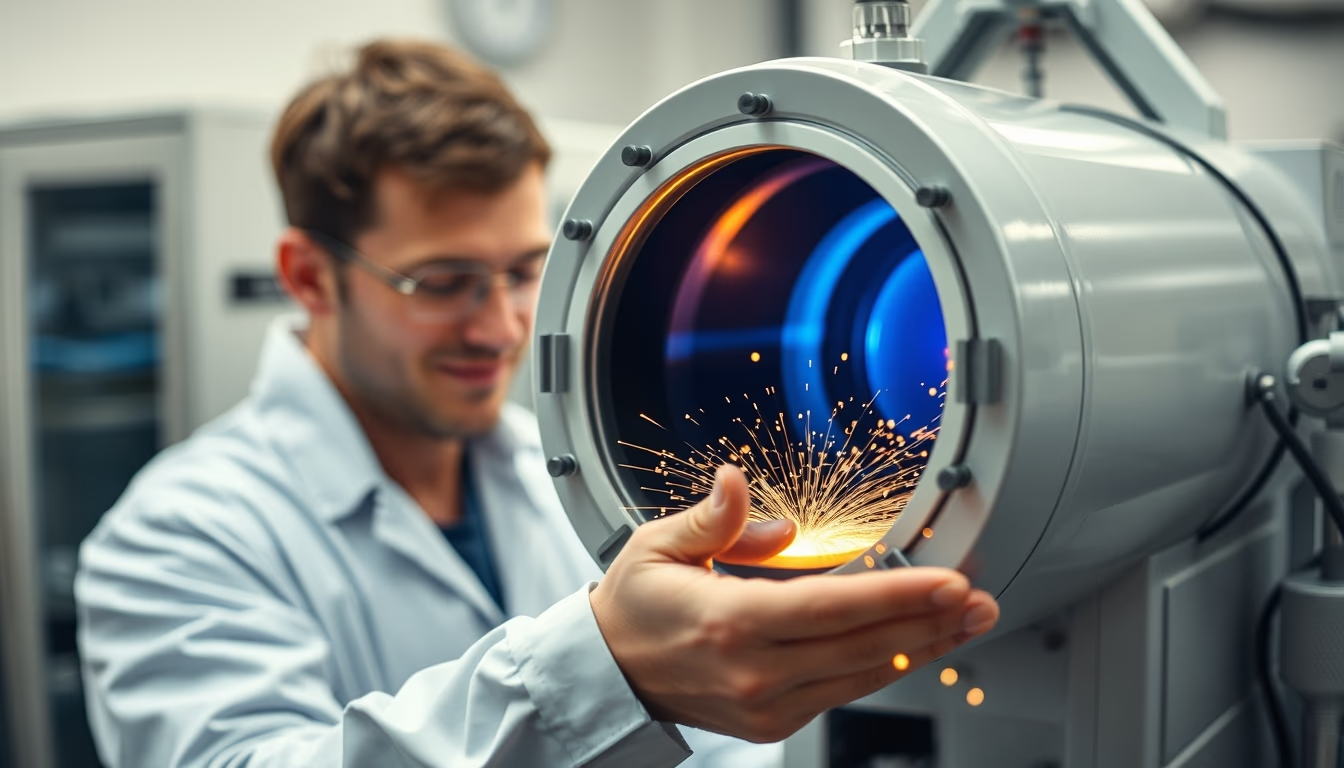
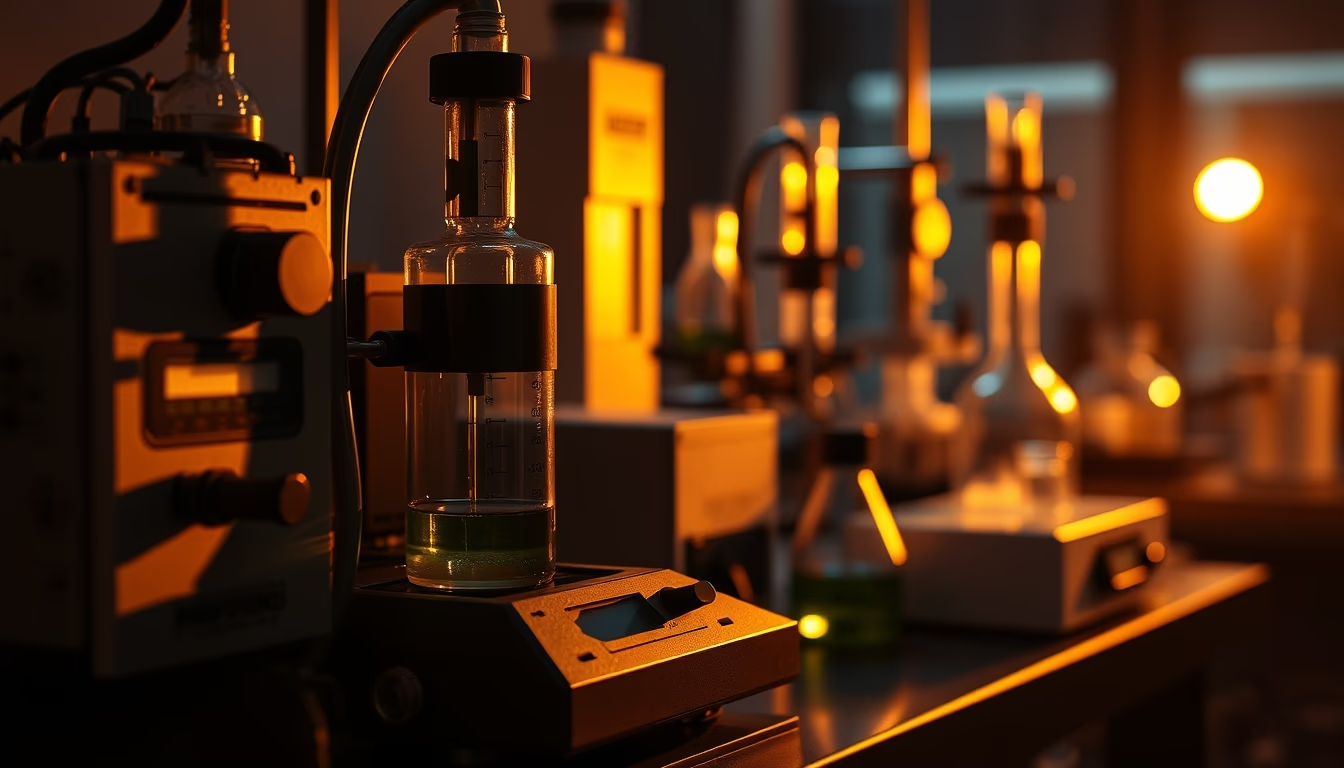
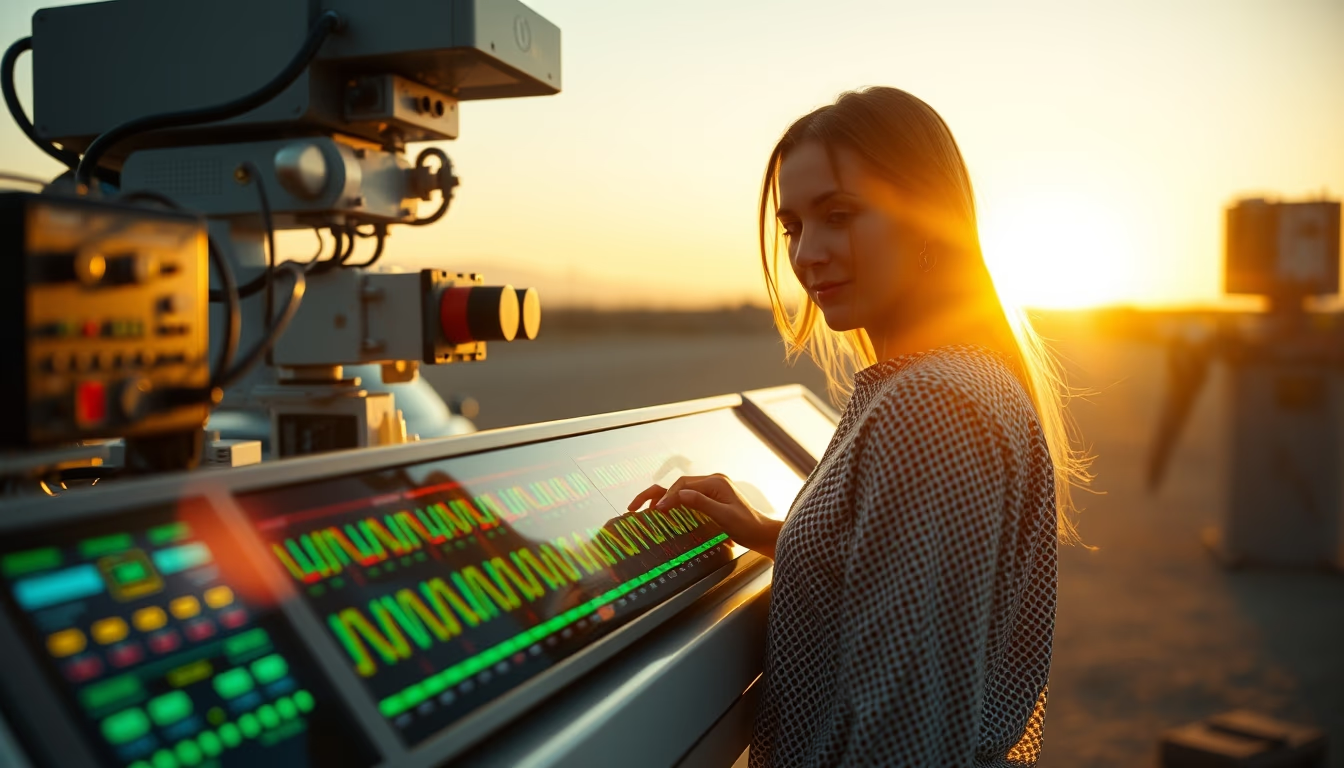
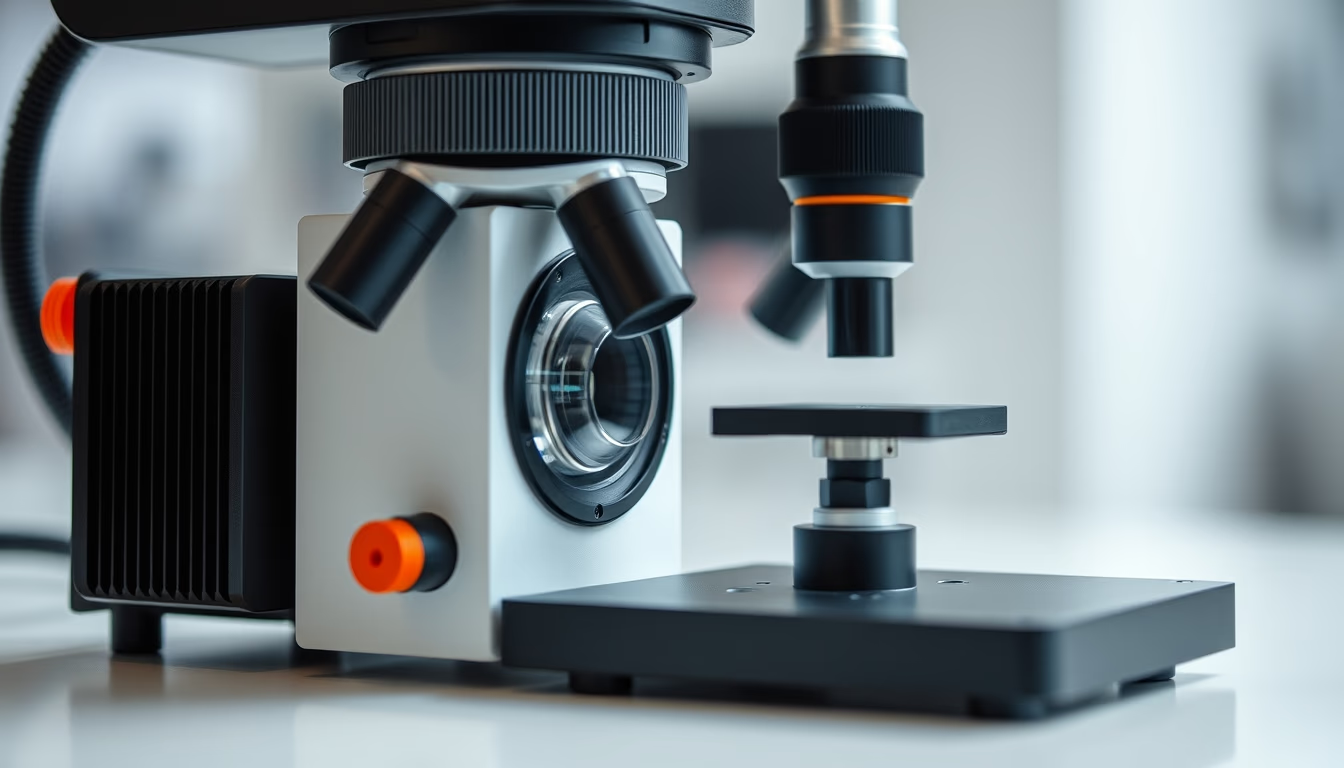
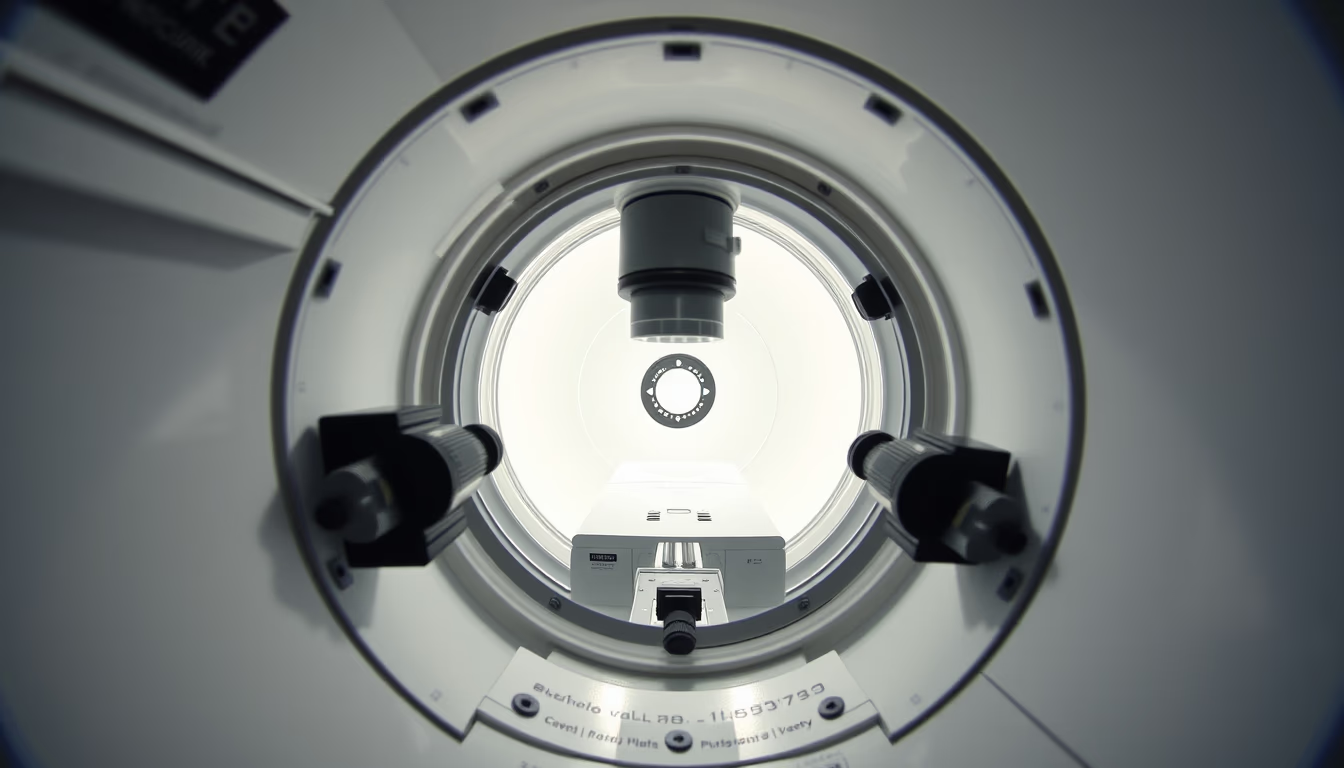
Particle physics detectors are essential scientific instruments for high-energy physics, enabling observation of collisions and identification of subatomic particles.
About this subject
Particle physics detectors are sophisticated devices used in accelerators such as the Large Hadron Collider (LHC) at CERN to record the products of collisions between particles accelerated to near-light speeds. They act as giant three-dimensional cameras, measuring trajectories, energies, and types of particles generated in each event. Different types exist: tracking detectors (e.g., ionization chambers, wire chambers), calorimeters (electromagnetic and hadronic), and muon chambers, each specialized for detecting certain particles or properties.
The largest and most complex detectors reside at the LHC: ATLAS and CMS, tens of meters in size and weighing thousands of tons, responsible for the 2012 discovery of the Higgs boson. They use intense magnetic fields to bend charged particles' paths, enabling measurement of momentum and charge. Other notable detectors include ALICE (focused on quark-gluon plasma) and LHCb (study of CP violation and flavor physics). Outside CERN, detectors operate at accelerators like Fermilab in the U.S. and KEK in Japan.
A modern detector consists of multiple concentric layers: an inner tracker near the collision point, calorimeters to measure energy of electrons and hadrons, and muon chambers on the outside. Signal readout is handled by data acquisition systems processing millions of electronic channels in real time, selecting only interesting events via trigger systems. The LHC collision rate is about 40 million events per second, but only a few thousand are stored after filtering.
Maintenance and calibration require multidisciplinary teams of physicists, engineers, and technicians. Particle detectors also have applications beyond fundamental research, such as medical imaging (PET scans), security (baggage scanners), and archaeology (enhanced radiocarbon dating). Ongoing development aims for detectors with higher resolution and speed, driven by LHC upgrades and proposals for future colliders.
Frequently Asked Questions
What exactly does a particle detector measure?
It measures trajectories, momentum, energy, and electric charge of particles produced in collisions. This allows identification of particles such as electrons, muons, pions, and photons.
How does a detector handle millions of collisions per second?
Multilevel trigger systems filter events in real time, discarding the vast majority and preserving only those of interest for later analysis.
What is the largest particle detector ever built?
The ATLAS detector at CERN's LHC is among the largest, measuring 46 meters in length and 25 meters in height, weighing about 7,000 tons.
Direct URL
https://pub-c7d6a6ea828543ac903a74a341ccb2e1.r2.dev/imagens/particle-physics-detector-documentary-photography-fresh17.avifHow to credit
Include a visible link back to UtilizAí. Copy one of the snippets below:
<a href="https://xn--utiliza-eza.com/en/midia/imagens/particle-physics-detector-documentary-photography-fresh17">Particle physics detector</a> by <a href="https://xn--utiliza-eza.com">UtilizAí</a>, licensed under <a href="https://creativecommons.org/licenses/by/4.0/">CC BY 4.0</a>.
[Particle physics detector](https://xn--utiliza-eza.com/en/midia/imagens/particle-physics-detector-documentary-photography-fresh17) by [UtilizAí](https://xn--utiliza-eza.com), CC BY 4.0
License: CC-BY-4.0