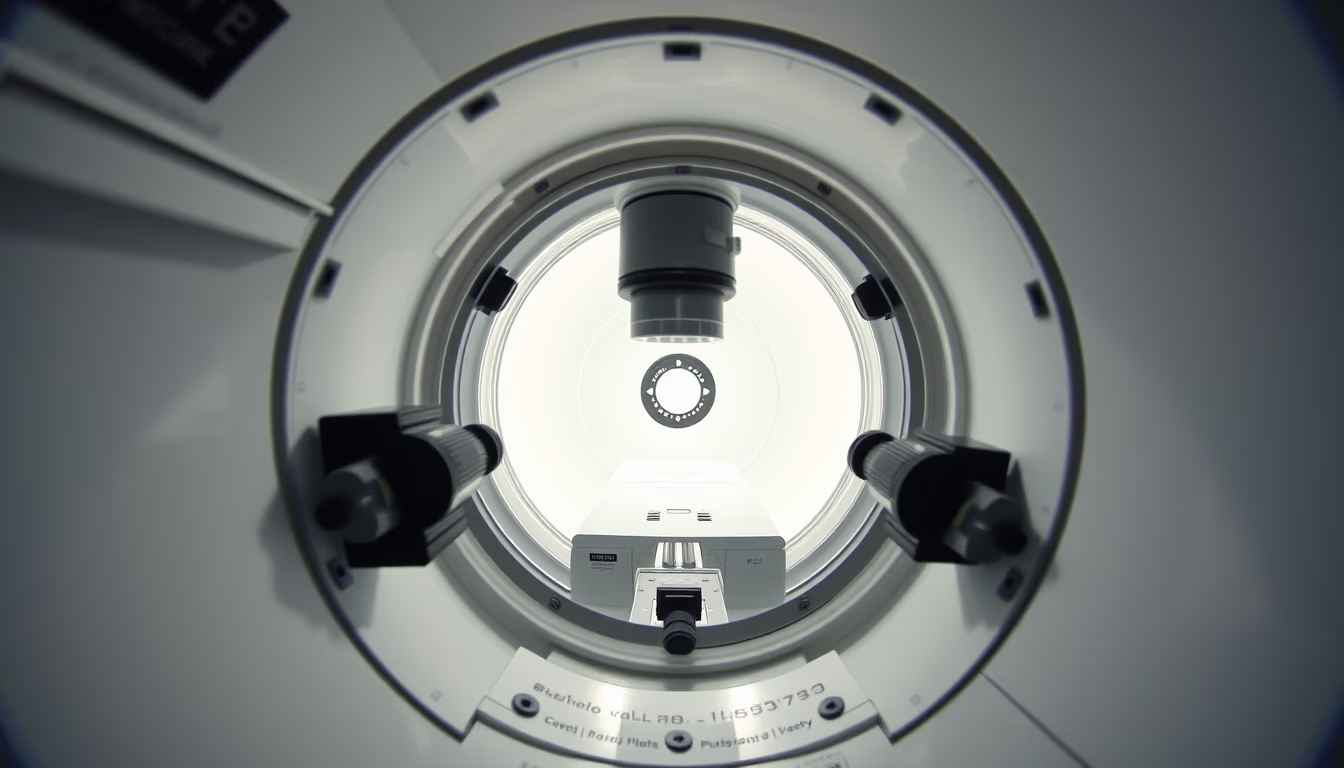
Particle physics detector
1344×768 · AVIF · CC BY 4.0
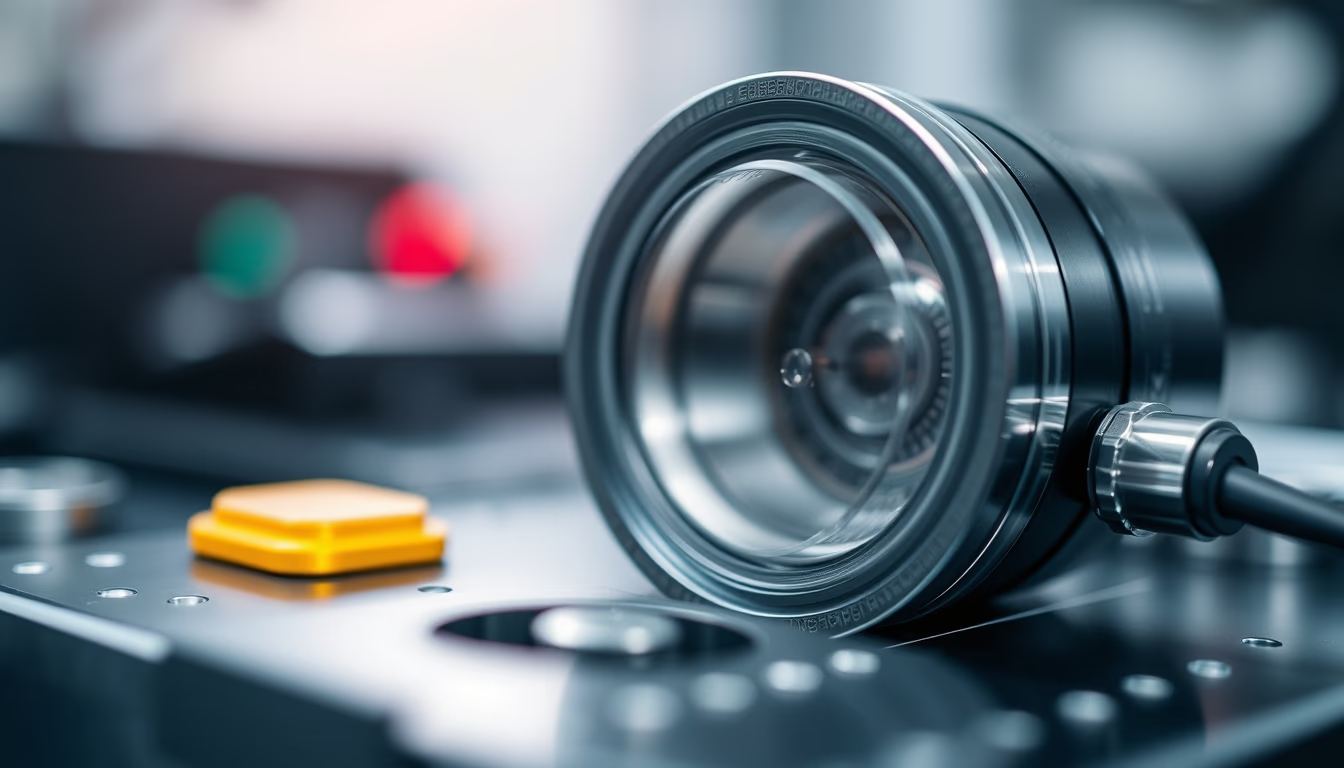
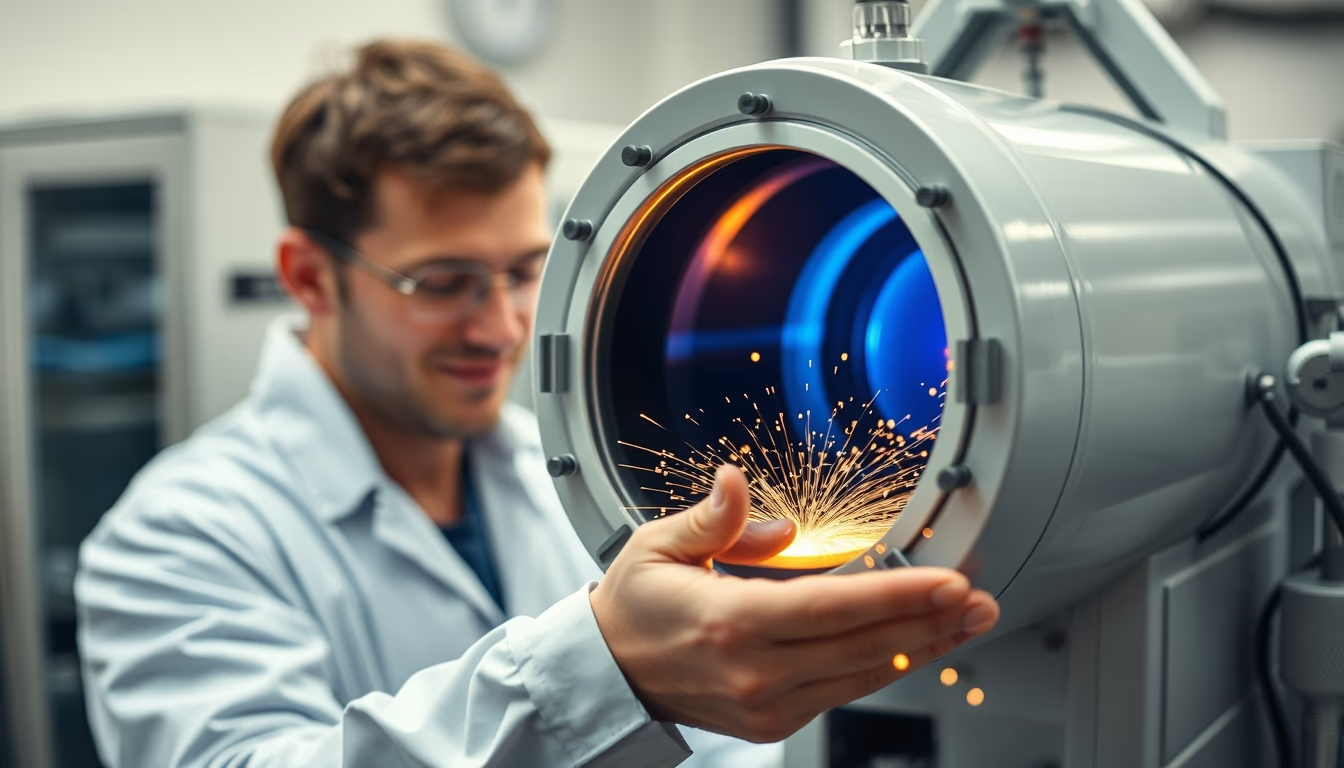
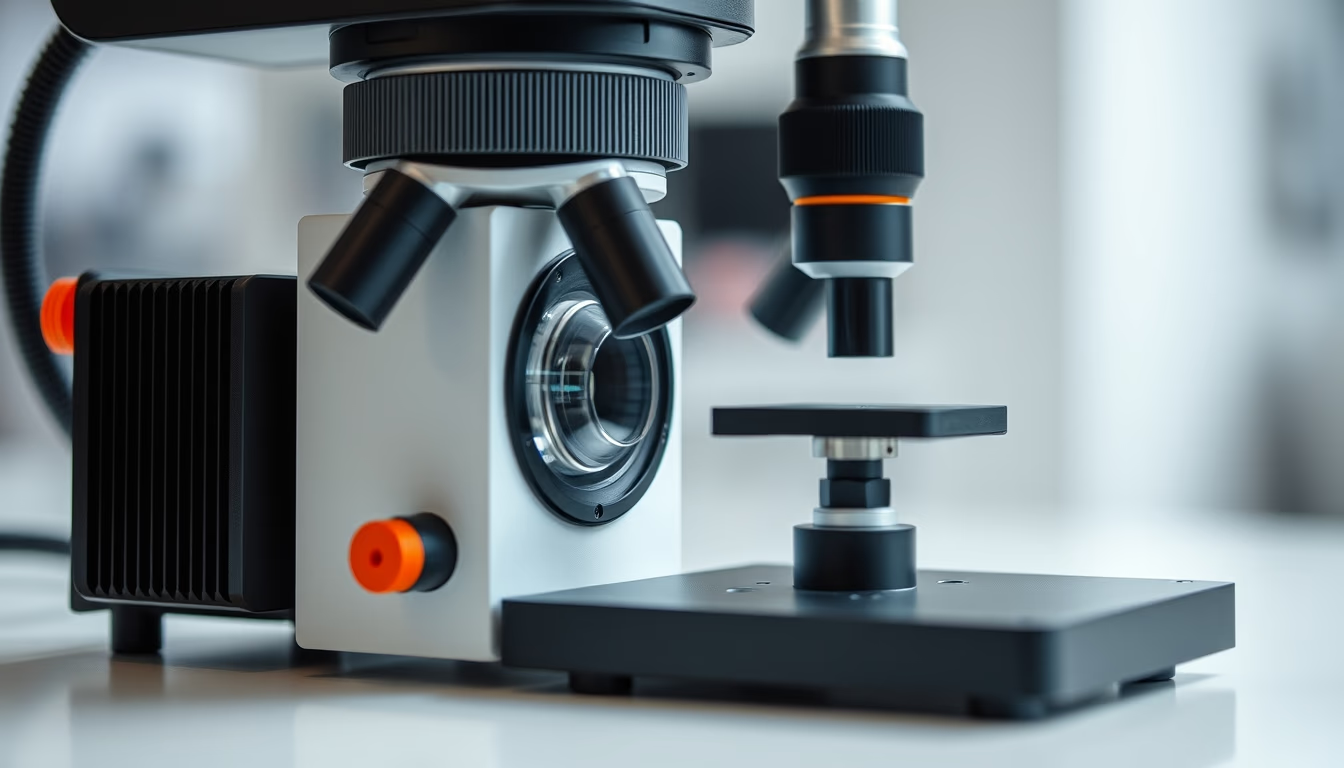
Particle detectors are scientific instruments that record and identify subatomic particles in high-energy physics experiments, such as those conducted at the LHC at CERN.
About this subject
Particle detectors are sophisticated devices designed to observe and measure properties of subatomic particles generated in high-energy collisions. They allow reconstruction of trajectories, energies, and identities of particles, enabling advances such as the discovery of the Higgs boson in 2012. There are various types, including time projection chambers (TPCs), electromagnetic and hadronic calorimeters, silicon detectors, and scintillators. Each specializes in measuring different aspects: for instance, tracking detectors use magnetic fields to bend the path of charged particles, revealing their charge and momentum.
The world's largest and most powerful accelerator, the Large Hadron Collider (LHC) at CERN, houses four major detectors: ATLAS, CMS, ALICE, and LHCb. ATLAS is 46 meters long and weighs 7,000 tons, while CMS is even denser at 14,000 tons. These detectors operate at temperatures near absolute zero and generate petabytes of data per second, which are filtered by a trigger system before storage for analysis.
The origin of modern detectors traces back to bubble chambers and spark chambers of the 1950s and 1960s. Physicist Donald Glaser won the 1960 Nobel Prize for inventing the bubble chamber, which used superheated liquid to visualize particle tracks. Today, technology has evolved to solid-state detectors like silicon sensors, offering extremely high spatial precision, essential for identifying short-lived particles such as B mesons.
Beyond fundamental physics, particle detectors have practical applications in medical imaging (positron emission tomography, PET) and security (baggage scanners). Ongoing research aims for faster and more radiation-resistant detectors, needed for future colliders like the Future Circular Collider (FCC) planned for the 2040s.
Frequently Asked Questions
How does a particle detector 'see' particles?
Detectors do not 'see' particles directly but record interactions such as ionization, scintillation, or pair production. Sensors convert these signals into electronic data used to reconstruct the particle's trajectory and energy.
What is the largest particle detector in the world?
The ATLAS detector at CERN's LHC is the largest in volume, at 46 meters long and 25 meters in diameter. CMS is the most massive, weighing 14,000 tons.
What is the purpose of a calorimeter in a detector?
A calorimeter measures the total energy of particles by absorbing them and converting that energy into a measurable signal. It is essential for identifying photons, electrons, and hadrons.
Direct URL
https://pub-c7d6a6ea828543ac903a74a341ccb2e1.r2.dev/imagens/particle-physics-detector-macro-closeup-fresh1.avifHow to credit
Include a visible link back to UtilizAí. Copy one of the snippets below:
<a href="https://xn--utiliza-eza.com/en/midia/imagens/particle-physics-detector-macro-closeup-fresh1">Particle physics detector</a> by <a href="https://xn--utiliza-eza.com">UtilizAí</a>, licensed under <a href="https://creativecommons.org/licenses/by/4.0/">CC BY 4.0</a>.
[Particle physics detector](https://xn--utiliza-eza.com/en/midia/imagens/particle-physics-detector-macro-closeup-fresh1) by [UtilizAí](https://xn--utiliza-eza.com), CC BY 4.0
License: CC-BY-4.0