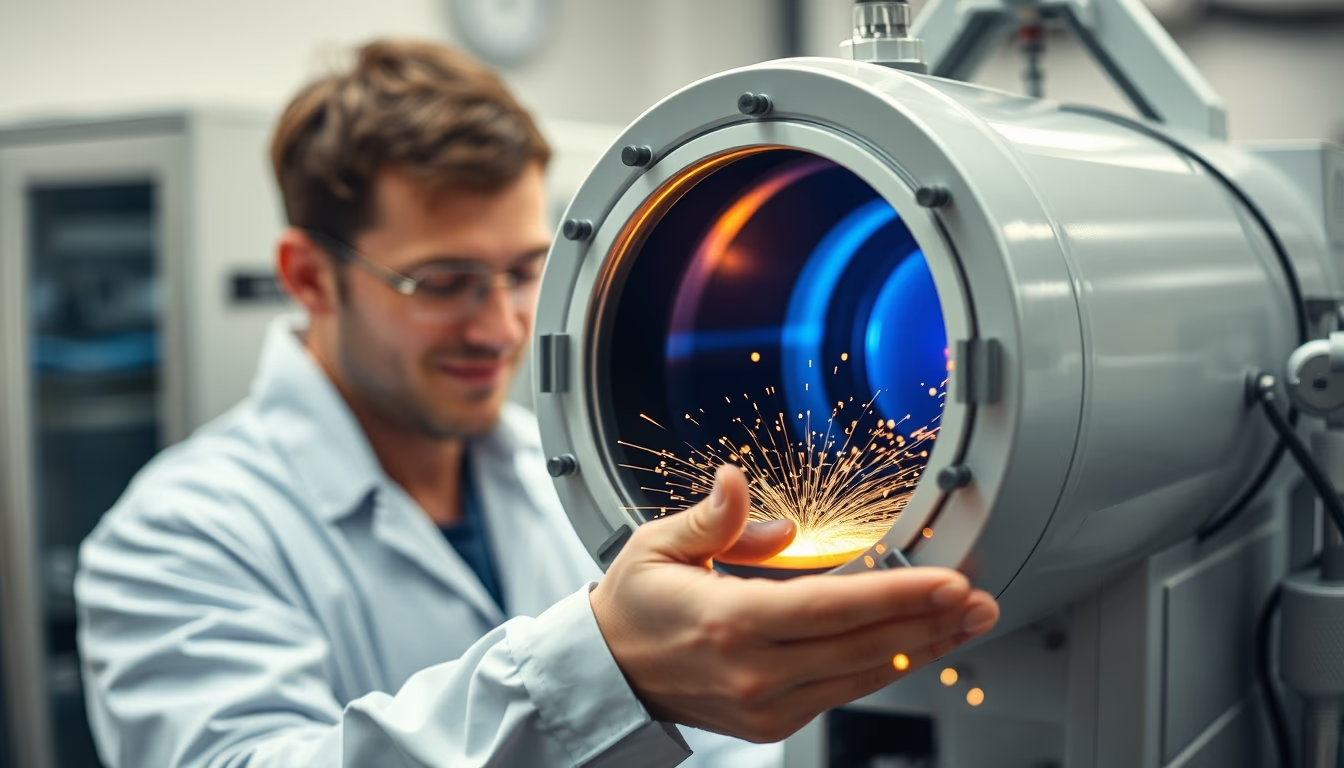
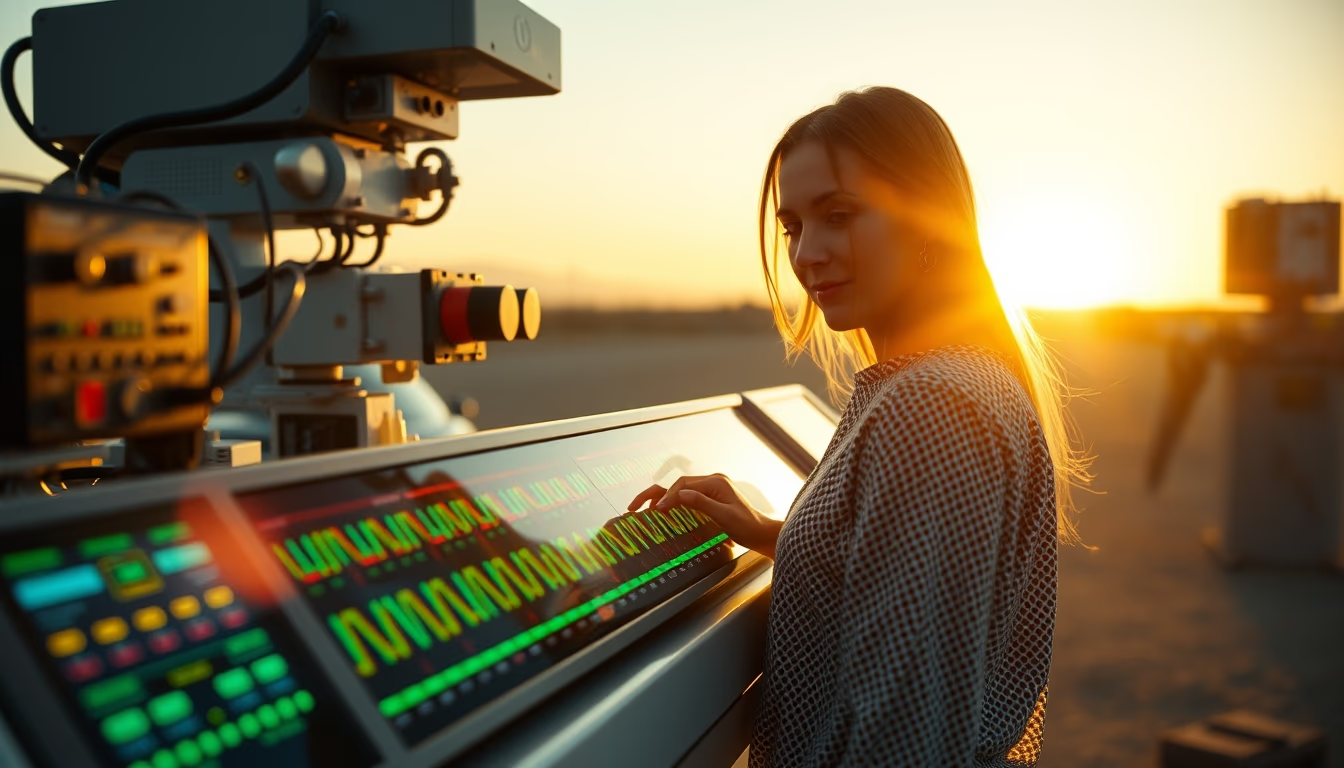
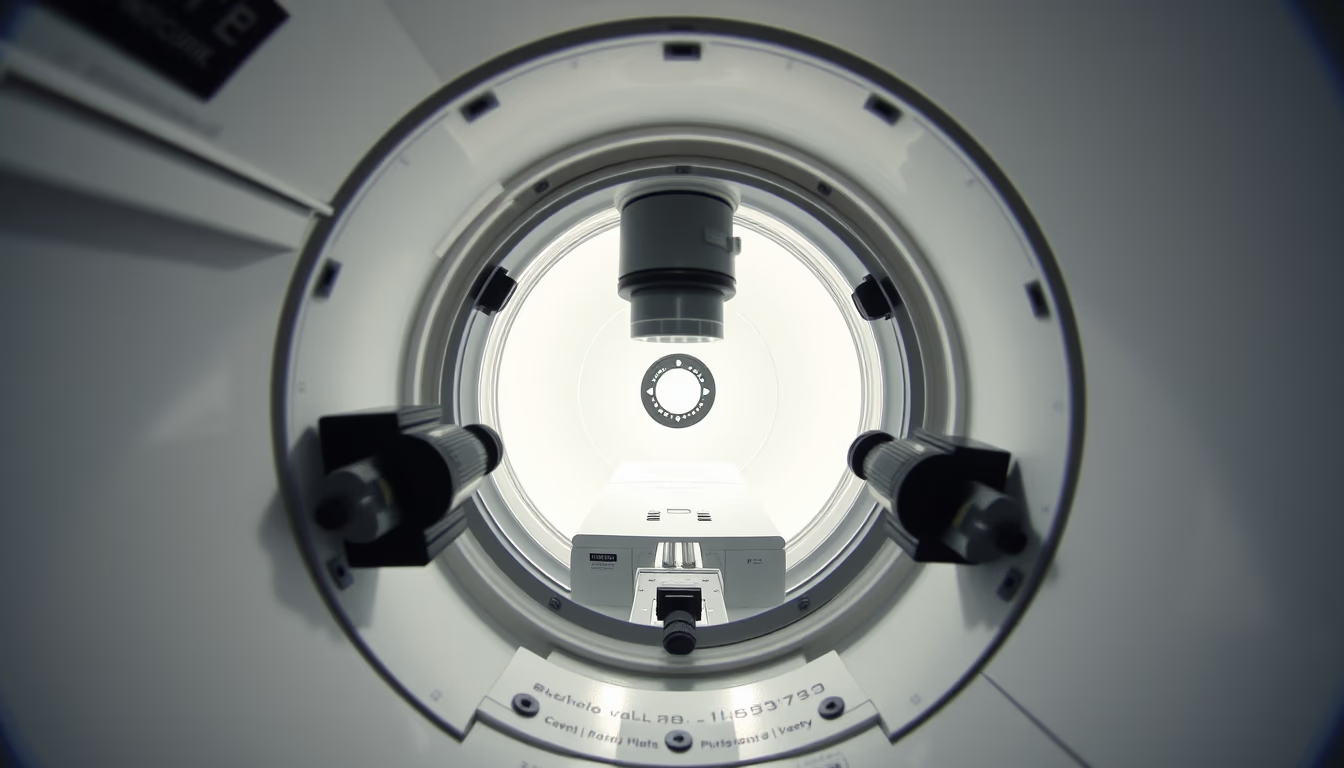
Particle physics detector
1344×768 · AVIF · CC BY 4.0

Detectores de partículas são instrumentos científicos complexos usados para observar e medir partículas subatômicas em experimentos de física de altas energias.
Sobre o tema
Detectores de partículas são equipamentos fundamentais em laboratórios de física de altas energias, como o CERN na Suíça e o Fermilab nos Estados Unidos. Eles funcionam registrando os vestígios deixados por partículas subatômicas quando colidem ou passam por materiais sensíveis. Existem diversos tipos, incluindo detectores de câmara de nuvens, câmaras de faíscas, calorímetros e detectores de traços, cada um especializado em diferentes propriedades como energia, momento e carga. O detector ATLAS no Large Hadron Collider (LHC), por exemplo, tem cerca de 45 metros de comprimento e pesa 7.000 toneladas, composto por milhões de canais de detecção.
Esses instrumentos são essenciais para descobertas como a do bóson de Higgs em 2012, que validou o Modelo Padrão da física de partículas. Os detectores modernos utilizam tecnologias avançadas, como supercondutores, tubos fotomultiplicadores e silício, para atingir precisão e sensibilidade extremas. Um dos maiores desafios é lidar com o enorme volume de dados gerados, que chega a dezenas de petabytes por ano, exigindo sistemas de trigger e processamento em tempo real.
Curiosamente, detectores de partículas também têm aplicações fora da física, como em imagens médicas (PET scan), segurança (scanners de bagagens) e datação por radiocarbono. O desenvolvimento desses instrumentos impulsiona inovações em eletrônica, materiais e computação. A colaboração internacional em experimentos como o LHC envolve milhares de cientistas, evidenciando a escala global da pesquisa.
Perguntas frequentes
Como funciona um detector de partículas?
Detectores de partículas registram os efeitos das partículas ao interagir com materiais sensíveis, convertendo essas interações em sinais elétricos que são analisados por computadores.
Onde são usados os maiores detectores de partículas?
Os maiores detectores estão em aceleradores como o LHC no CERN, onde experimentos como ATLAS e CMS têm detectores de várias toneladas e dimensões de dezenas de metros.
Qual a importância dos detectores de partículas para a ciência?
Eles permitem testar teorias fundamentais da física, descobrir novas partículas e compreender as forças da natureza, além de gerar tecnologias aplicadas em medicina e segurança.
URL direta
https://pub-c7d6a6ea828543ac903a74a341ccb2e1.r2.dev/imagens/particle-physics-detector-high-fashion-editorial-fresh7.avifComo creditar
Inclua um link visível de volta pro UtilizAí. Copie um dos snippets abaixo:
<a href="https://xn--utiliza-eza.com/midia/imagens/particle-physics-detector-high-fashion-editorial-fresh7">Particle physics detector</a> by <a href="https://xn--utiliza-eza.com">UtilizAí</a>, licensed under <a href="https://creativecommons.org/licenses/by/4.0/">CC BY 4.0</a>.
[Particle physics detector](https://xn--utiliza-eza.com/midia/imagens/particle-physics-detector-high-fashion-editorial-fresh7) by [UtilizAí](https://xn--utiliza-eza.com), CC BY 4.0
Licença: CC-BY-4.0