Old map parchment
1344×768 · AVIF · CC BY 4.0
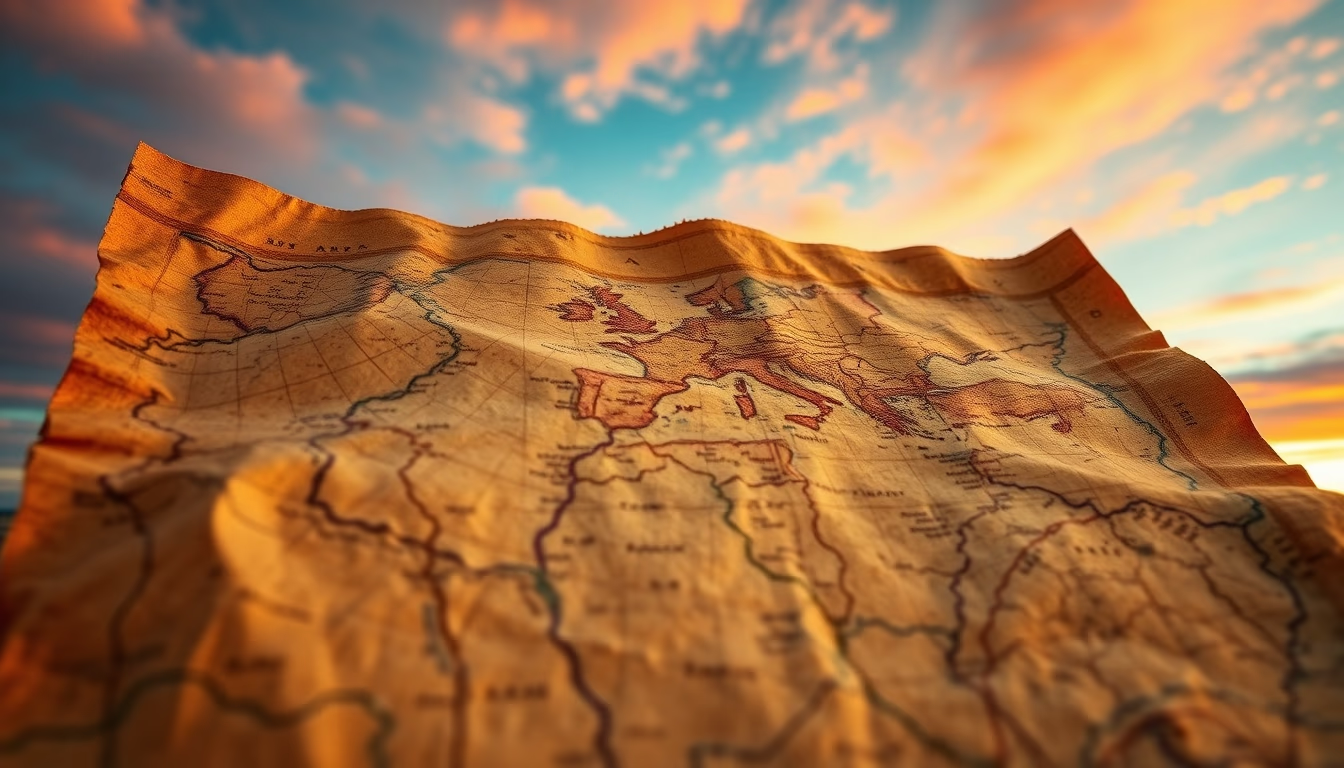
Old map parchment, a historical artifact that reveals cartographic knowledge and exploration routes from centuries past.
About this subject
Old map parchments are precious documents that record the world's view in times when cartography was both science and art. Made from animal skin, such as goat or sheep, these materials were treated to receive iron or carbon-based ink, resulting in lines that have lasted for centuries. Many of these maps, like those produced during the Age of Discovery (15th to 17th centuries), showed newly found lands, sea routes, and imaginary borders, blending empirical knowledge with legends and myths.
Preserving these parchments is challenging as they are sensitive to humidity, light, and temperature. Institutions like the National Library of Brazil and the British Library hold significant collections, using modern digitization techniques to make these documents accessible without damage. The oldest known parchment map is the Hereford Mappa Mundi from the 13th century, depicting the known world with Jerusalem at its center.
Interestingly, many old maps included illustrations of sea monsters and fantastic creatures, reflecting the dangers imagined by navigators. These details today help historians understand the beliefs and fears of past societies. Cartography on parchment also influenced how empires planned expansions and demarcated territories, serving as vital political and economic tools.
In Brazil, map production on parchment was common during the colonial period, especially for charting the coastline and exploration routes into the interior. The collection of the National Archive contains examples showing the evolution of Brazilian borders over centuries. Nowadays, replicas of old parchments are popular in decoration and historical studies, keeping alive the connection to the cartographic past.
Frequently Asked Questions
What material were old map parchments made from?
Parchment was made from animal skin, such as goat, sheep, or calf, which underwent a process of washing, stretching, and drying to become a durable writing surface.
What is the oldest known parchment map?
The Hereford Mappa Mundi, dating from the 13th century, is one of the oldest world maps on parchment. It measures about 1.6 meters in diameter and is preserved at Hereford Cathedral in England.
How do museums preserve parchment maps today?
Museums control temperature, humidity, and light levels. Many digitize the maps in high resolution for public access, avoiding direct handling. Conservation techniques include cleaning with specific solvents and storage in acid-free boxes.
Direct URL
https://pub-c7d6a6ea828543ac903a74a341ccb2e1.r2.dev/imagens/old-map-parchment-long-exposure-p8.avifHow to credit
Include a visible link back to UtilizAí. Copy one of the snippets below:
<a href="https://xn--utiliza-eza.com/en/midia/imagens/old-map-parchment-long-exposure-p8">Old map parchment</a> by <a href="https://xn--utiliza-eza.com">UtilizAí</a>, licensed under <a href="https://creativecommons.org/licenses/by/4.0/">CC BY 4.0</a>.
[Old map parchment](https://xn--utiliza-eza.com/en/midia/imagens/old-map-parchment-long-exposure-p8) by [UtilizAí](https://xn--utiliza-eza.com), CC BY 4.0
License: CC-BY-4.0