Old map parchment
1344×768 · AVIF · CC BY 4.0
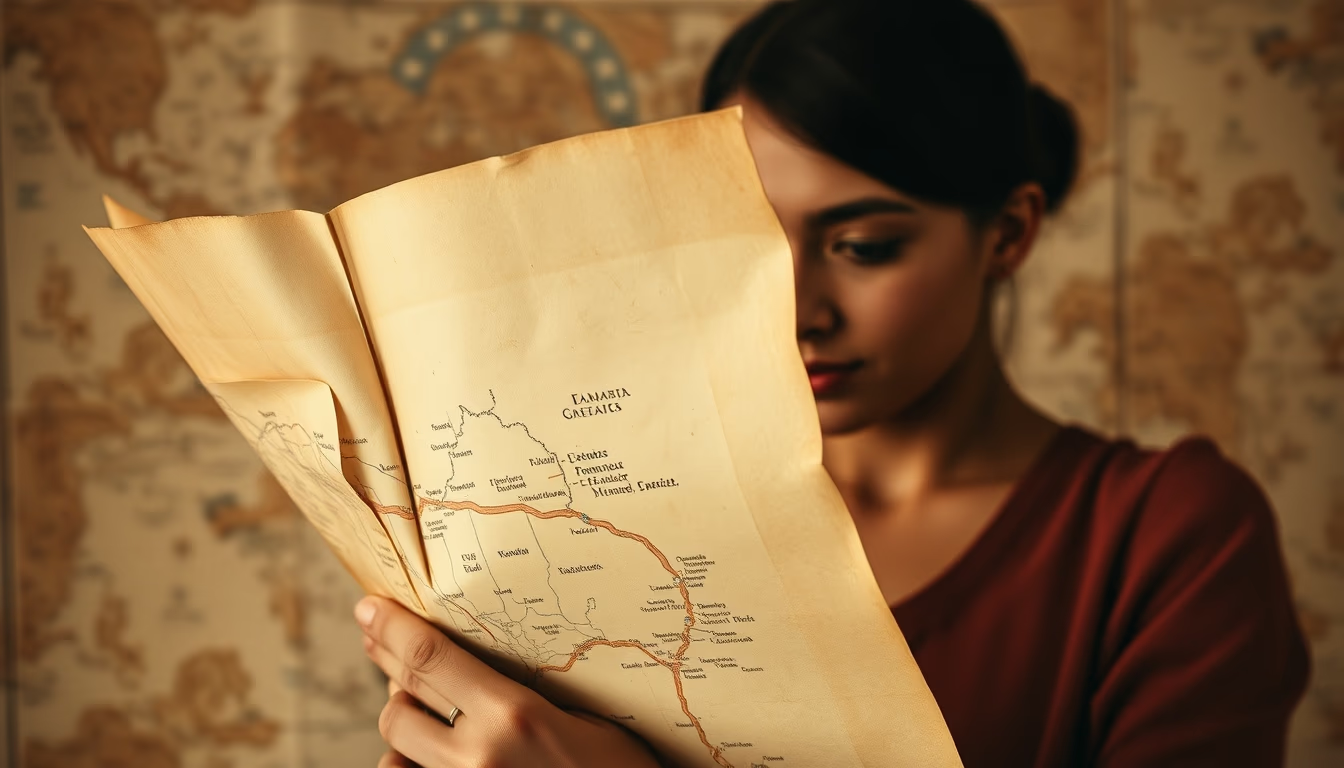
Old map parchments are historical documents that reveal worldviews, cartographic techniques, and exploration routes from centuries past.
About this subject
Old map parchments are precious artifacts that combine art, science, and history. Made from animal skin, especially sheep or goat, parchment was treated with lime and polished to create a durable writing surface. Unlike paper, which originated in China and spread through the Islamic world and Europe, parchment was widely used in medieval Europe and the Mediterranean for important documents, including maps.
Parchment maps often feature unique characteristics: decorated borders, elaborate compass roses, sea monsters, and fictitious islands. The crafting technique required skilled artisanship, and each map was hand-drawn with inks made from natural pigments. A famous example is the Hereford Mappa Mundi from the 13th century, measuring about 1.5 meters in diameter, depicting the known world with Jerusalem at the center. These maps were not accurate in the modern sense but reflected the religious worldview and travel narratives of the time.
Preserving parchment is challenging due to sensitivity to humidity, light, and temperature variations. Many ancient maps survive only in fragments or later copies. Institutions like the National Library of France and the British Library maintain high-resolution digital collections, allowing scholars and enthusiasts to explore details invisible to the naked eye. The film grain technique in modern reproductions attempts to recreate the aged texture and tactile feel of the original material, evoking the sensation of handling a historical document.
Remarkably, the largest parchment map in the world is the Catalan Atlas from 1375, made by Cresques Abraham, combining geographical information with illustrations of caravans and ships. Such maps were used not only for navigation but as symbols of power and knowledge, often displayed in royal courts. Today, parchment map reproductions are popular in decor, reminding us of the Age of Discovery and the art of manual cartography.
Frequently Asked Questions
What is the difference between parchment and paper in ancient cartography?
Parchment is made from treated animal skin, more durable and expensive than paper. In medieval Europe, it was used for important maps. Paper, cheaper, became widespread after the invention of the printing press.
How are parchment maps preserved today?
They are kept in controlled temperature and humidity, away from direct light. Many are digitized for virtual access, reducing physical handling. Repairs use specialized conservation techniques.
What do the creatures and figures on old maps mean?
Sea monsters and mythological creatures represented unknown dangers or were based on travelers' tales. They also filled empty spaces and reflected the era's limited knowledge of the world.
Direct URL
https://pub-c7d6a6ea828543ac903a74a341ccb2e1.r2.dev/imagens/old-map-parchment-film-grain-authentic-p5.avifHow to credit
Include a visible link back to UtilizAí. Copy one of the snippets below:
<a href="https://xn--utiliza-eza.com/en/midia/imagens/old-map-parchment-film-grain-authentic-p5">Old map parchment</a> by <a href="https://xn--utiliza-eza.com">UtilizAí</a>, licensed under <a href="https://creativecommons.org/licenses/by/4.0/">CC BY 4.0</a>.
[Old map parchment](https://xn--utiliza-eza.com/en/midia/imagens/old-map-parchment-film-grain-authentic-p5) by [UtilizAí](https://xn--utiliza-eza.com), CC BY 4.0
License: CC-BY-4.0