Northeast wind farm turbines against scrubland vegetation
1344×768 · AVIF · CC BY 4.0
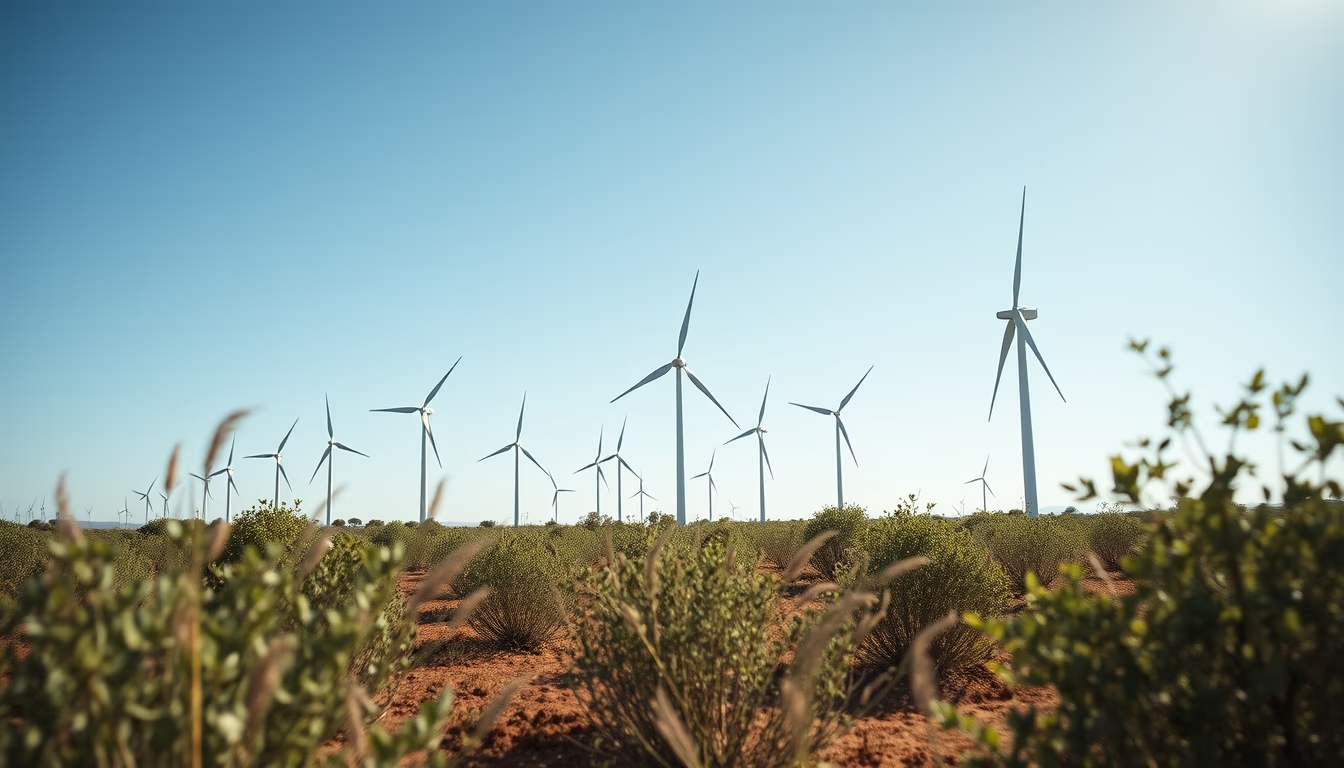
Wind turbines in the Brazilian Northeast contrast with Caatinga vegetation, generating clean energy in one of Brazil's most threatened biomes.
About this subject
The Brazilian Northeast concentrates about 80% of the country's installed wind capacity, especially in Rio Grande do Norte, Bahia, Ceará, and Piauí. The image shows turbines installed in Caatinga, an exclusive Brazilian biome covering approximately 10% of the national territory. Caatinga is characterized by xerophytic vegetation adapted to semi-aridity, with species like mandacaru, xique-xique, and juazeiro.
Wind energy in the Northeast has expanded rapidly since 2009, driven by constant and strong winds, especially from June to December. Brazil's onshore wind potential is estimated at 500 GW, most of it in the Northeast. Modern turbines, with towers up to 150 meters and blades of 60 meters, generate 2 to 5 MW each.
The coexistence of wind farms and Caatinga raises environmental concerns. Turbine installation requires localized deforestation and road construction, fragmenting habitats. Species such as the white-winged dove and the three-banded armadillo may be affected. Mitigation measures include bird and bat monitoring and recovery of degraded areas with native seedlings.
Brazil ranks 6th globally in wind capacity, with over 22 GW installed (2023). Wind power represents about 12% of the national electricity matrix. In the Northeast, wind energy already surpasses hydropower in some months, contributing to energy security and CO₂ emission reductions.
Frequently Asked Questions
Why is the Northeast ideal for wind energy?
The Northeast has constant and strong winds, especially from June to December, with average speeds above 7 m/s. The flat topography and low population density in some areas facilitate the installation of wind farms.
Does wind turbine installation harm the Caatinga?
Yes, installation requires localized deforestation and habitat fragmentation. However, environmental impact studies and mitigation measures, such as fauna monitoring and replanting native species, help reduce damage.
What is Brazil's installed wind capacity?
Brazil has over 22 GW of installed wind capacity (2023), ranking 6th globally. Wind power represents about 12% of the national electricity matrix.
Direct URL
https://pub-c7d6a6ea828543ac903a74a341ccb2e1.r2.dev/imagens/northeast-wind-farm-turbines-against-caatinga-vegetation-symmetric-bright-midday.avifHow to credit
Include a visible link back to UtilizAí. Copy one of the snippets below:
<a href="https://xn--utiliza-eza.com/en/midia/imagens/northeast-wind-farm-turbines-against-caatinga-vegetation-symmetric-bright-midday">Northeast wind farm turbines against scrubland vegetation</a> by <a href="https://xn--utiliza-eza.com">UtilizAí</a>, licensed under <a href="https://creativecommons.org/licenses/by/4.0/">CC BY 4.0</a>.
[Northeast wind farm turbines against scrubland vegetation](https://xn--utiliza-eza.com/en/midia/imagens/northeast-wind-farm-turbines-against-caatinga-vegetation-symmetric-bright-midday) by [UtilizAí](https://xn--utiliza-eza.com), CC BY 4.0
License: CC-BY-4.0