Northeast wind farm turbines against scrubland vegetation
1344×768 · AVIF · CC BY 4.0
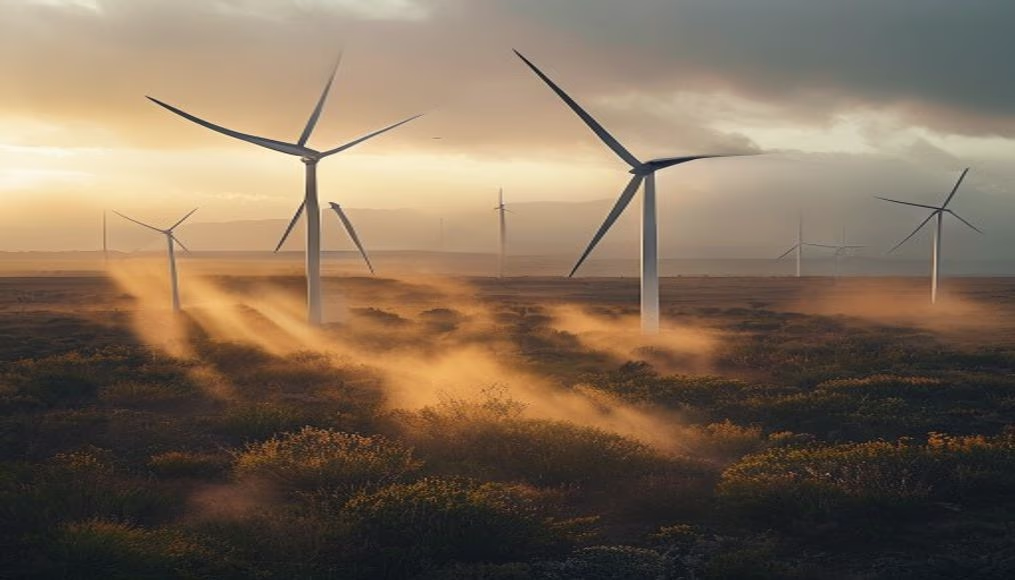
Wind turbines in the Brazilian Northeast contrast with the Caatinga vegetation, an exclusively Brazilian biome.
About this subject
The image shows a wind farm in the Brazilian semiarid region, where the Caatinga, the only exclusively Brazilian biome, serves as a backdrop for the wind turbine blades. The Caatinga covers about 10% of the national territory and harbors a biodiversity adapted to drought, with species such as the mandacaru cactus and the jurema tree. The constant winds in the Northeast, especially in the states of Rio Grande do Norte, Ceará, and Bahia, make the region ideal for wind power generation, which already accounts for over 20% of Brazil's electricity matrix, according to ABEEólica. Brazil is the 6th largest wind energy producer worldwide, with an installed capacity exceeding 26 GW. Installing turbines in the Caatinga requires environmental care, such as minimal deforestation and preservation of ecological corridors for local fauna, including endangered species like the three-banded armadillo. The contrast between modern technology and the arid landscape symbolizes the potential for sustainable development in the semiarid region.
Frequently Asked Questions
Why is the Caatinga considered an exclusive biome of Brazil?
The Caatinga is a biome that occurs only in Brazil, covering much of the Northeast region. Its flora and fauna are adapted to the semiarid climate, with plants like cacti and thorny shrubs, and animals such as the three-banded armadillo and the Spix's macaw.
What is the importance of wind energy for the Brazilian Northeast?
Wind energy is a renewable source that harnesses the constant winds of the coast and hinterland of the Northeast. It generates jobs, reduces dependence on hydroelectric plants, and contributes to decarbonizing the electricity matrix, economically benefiting the region.
How does the installation of wind farms impact the Caatinga biome?
Impacts include vegetation suppression, soil compaction, and potential bird collisions with turbines. However, measures such as environmental impact studies, ecological corridors, and fauna monitoring minimize these effects, seeking to balance energy generation and conservation.
Direct URL
https://pub-c7d6a6ea828543ac903a74a341ccb2e1.r2.dev/imagens/northeast-wind-farm-turbines-against-caatinga-vegetation-editorial-overcast-daytime-6.avifHow to credit
Include a visible link back to UtilizAí. Copy one of the snippets below:
<a href="https://xn--utiliza-eza.com/en/midia/imagens/northeast-wind-farm-turbines-against-caatinga-vegetation-editorial-overcast-daytime-6">Northeast wind farm turbines against scrubland vegetation</a> by <a href="https://xn--utiliza-eza.com">UtilizAí</a>, licensed under <a href="https://creativecommons.org/licenses/by/4.0/">CC BY 4.0</a>.
[Northeast wind farm turbines against scrubland vegetation](https://xn--utiliza-eza.com/en/midia/imagens/northeast-wind-farm-turbines-against-caatinga-vegetation-editorial-overcast-daytime-6) by [UtilizAí](https://xn--utiliza-eza.com), CC BY 4.0
License: CC-BY-4.0