Medieval shield colors
1344×768 · AVIF · CC BY 4.0
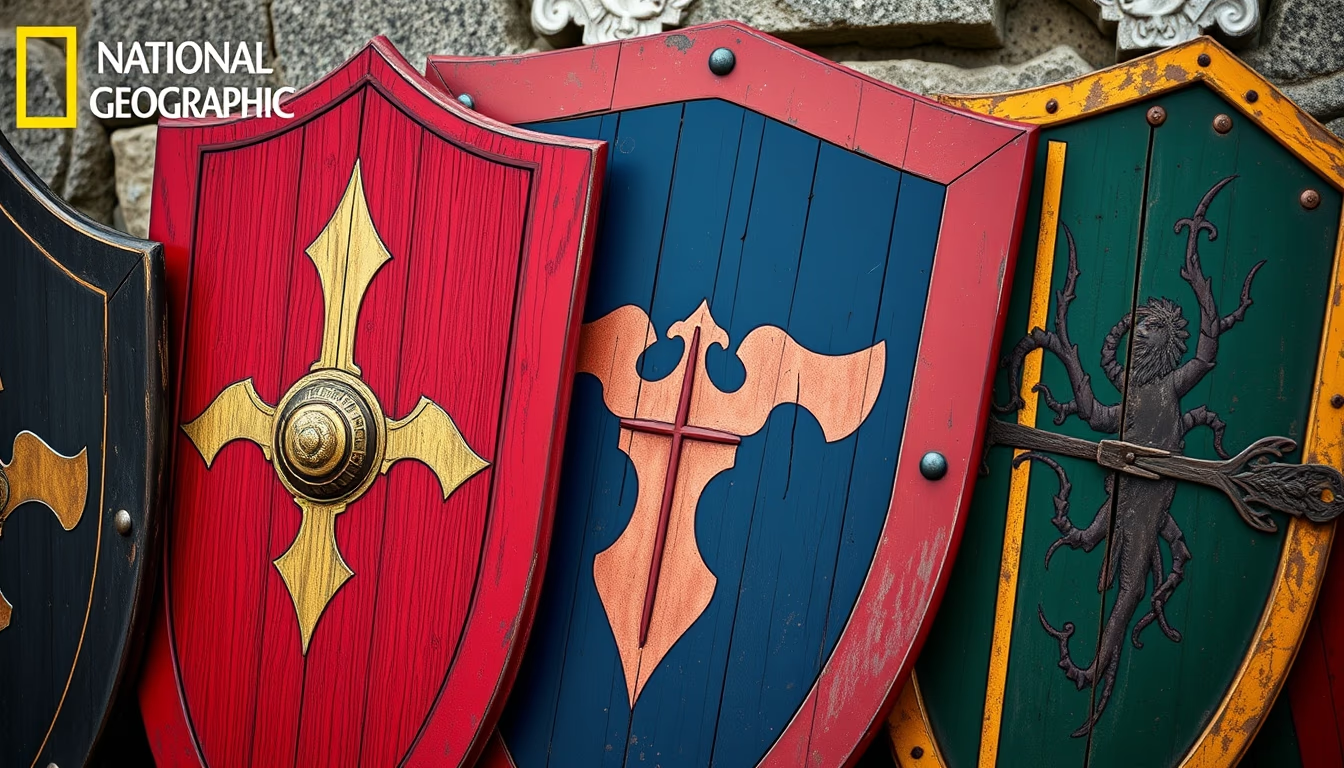
Medieval shield colors reveal not only aesthetic preferences but a complex heraldic system that identified lineages and battles.
About this subject
In medieval Europe, shield colors were not chosen at random. They were part of the heraldic system, which emerged in the 12th century to identify knights in tournaments and battlefields. Each color, called a 'tincture', carried symbolic meaning. Gold represented generosity and nobility; silver, purity and peace; red, courage and martyrdom; blue, loyalty and truth; green, hope and joy; and black, mourning and wisdom. Combinations followed strict rules: never place a color on a color or a metal on a metal, ensuring contrast and legibility from a distance.
Colors were applied to shields of wood, leather, or metal. Pigments came from minerals and plants: red from cinnabar, blue from lapis lazuli, and green from malachite. Gold and silver were achieved with metallic leaf. These materials made shields expensive, turning them into status symbols. Besides colors, figures like lions, eagles, and crosses were painted with vegetable or mineral dyes, fixed with natural resins.
Heraldry flourished between the 12th and 15th centuries. Famous examples include the shield of England with three golden lions on a red background, and that of France with blue fleurs-de-lis on a white field. Over time, coats of arms came to identify families, cities, and corporations. The study of heraldic colors, called blazonry, remains alive in contemporary coats of arms, preserving centuries-old traditions.
Frequently Asked Questions
What were the most common colors on medieval shields?
The most common colors were red, blue, green, black, and purple, along with the metals gold (yellow) and silver (white). Each had a specific meaning in heraldry.
What did each color mean in medieval heraldry?
Gold represented generosity; silver, purity; red, courage; blue, loyalty; green, hope; black, wisdom; and purple, royalty. Meanings varied slightly by region.
How were colors applied to shields?
Pigments were extracted from minerals and plants, such as cinnabar for red and lapis lazuli for blue. Metals like gold and silver used metallic leaf. Paints were fixed with natural resins on wood, leather, or metal.
Direct URL
https://pub-c7d6a6ea828543ac903a74a341ccb2e1.r2.dev/imagens/medieval-shield-colors-national-geographic-style-p2.avifHow to credit
Include a visible link back to UtilizAí. Copy one of the snippets below:
<a href="https://xn--utiliza-eza.com/en/midia/imagens/medieval-shield-colors-national-geographic-style-p2">Medieval shield colors</a> by <a href="https://xn--utiliza-eza.com">UtilizAí</a>, licensed under <a href="https://creativecommons.org/licenses/by/4.0/">CC BY 4.0</a>.
[Medieval shield colors](https://xn--utiliza-eza.com/en/midia/imagens/medieval-shield-colors-national-geographic-style-p2) by [UtilizAí](https://xn--utiliza-eza.com), CC BY 4.0
License: CC-BY-4.0