Mechanical clock gears
1344×768 · AVIF · CC BY 4.0
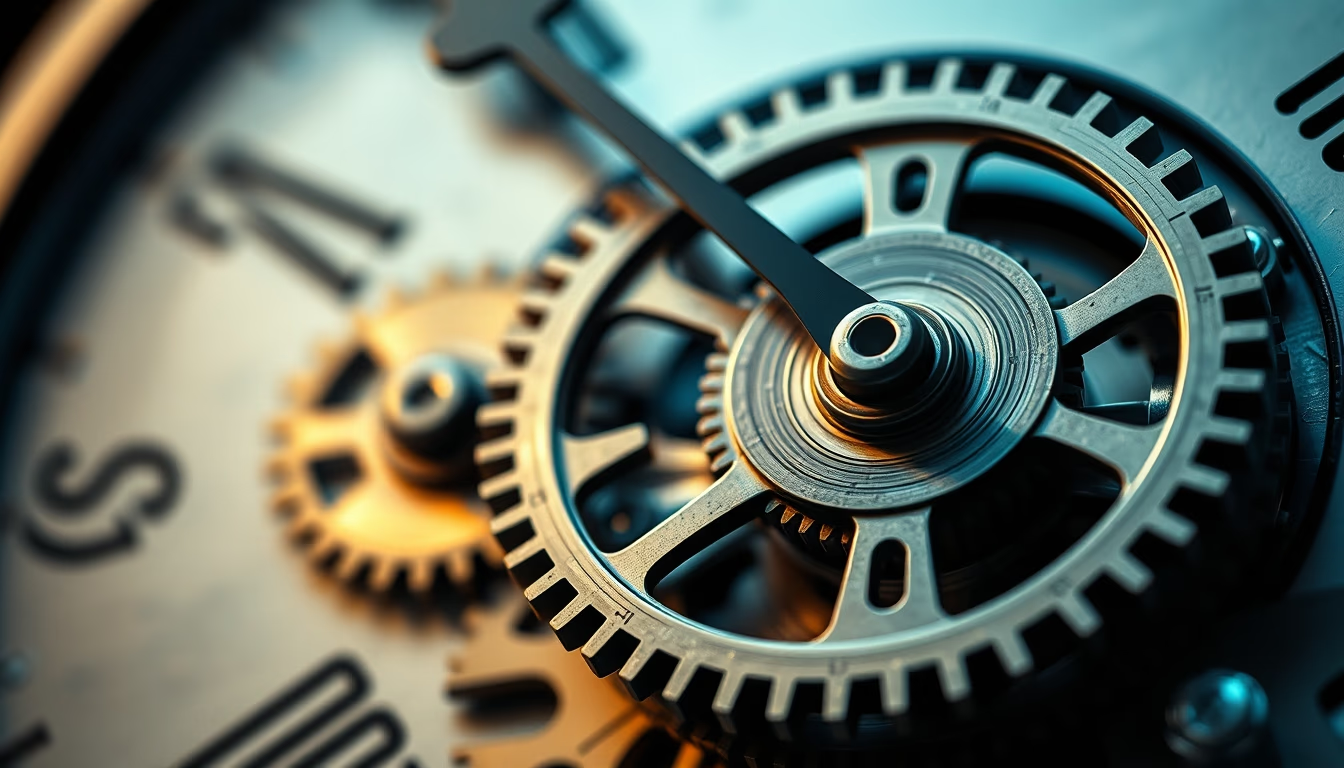
Mechanical clock gears are essential components of timekeeping, blending precision and artistry since the 14th century.
About this subject
Mechanical clock gears form the heart of the motion transmission system, converting spring or weight energy into regulated pointer movement. From early tower clocks, such as Salisbury Cathedral’s (1286), to modern chronometers, the gear train, a set of toothed wheels, determines accuracy and running duration. Each tooth, trace, and angle is calculated to minimize friction and maximize efficiency. Materials evolved from wrought iron to brass and steel, with modern alloys like beryllium copper. Tooth geometry, typically cycloidal or involute, is designed for smooth constant engagement.
The history of mechanical clocks is closely tied to gear development. In the 14th century, the verge-and-foliot escapement paired with simple toothed wheels enabled the first mechanical time measurement. Christiaan Huygens’ pendulum (1656) demanded more precise gears. Later, John Harrison’s marine chronometer (H4) used anti-corrosion gears to solve the longitude problem. Today, high-end watch calibers feature polished teeth and synthetic lubrication, operating at 28,800 to 36,000 vibrations per hour.
Culturally, clock gears have transcended function: they symbolize human ingenuity, patience, and order. Medieval monasteries used them for prayers. Towers like Big Ben or Prague’s Orloj set community rhythm. In fashion and editorial photography, the industrial aesthetics of gears, with cutouts, spokes, and metallic textures, are valued as vintage and futuristic design elements, blending mechanical past with contemporary elegance.
Frequently Asked Questions
How do mechanical clock gears work?
Gears transmit power from the mainspring or hanging weight, reducing speed and increasing torque. The gear train uses wheels of different sizes to convert rapid drum rotation into slow pointer motion.
Why are gears important for clock accuracy?
Well-designed gears minimize friction and wear, ensuring constant force to the escapement. Tooth precision and material influence rate stability, crucial for accurate timekeeping.
Why are clock gears considered works of art?
Handcrafted production requires manual polishing, clearance adjustment, and decoration like anglage or perlage. In luxury watches, gears are visible through the sapphire caseback, highlighting mechanical aesthetics.
Direct URL
https://pub-c7d6a6ea828543ac903a74a341ccb2e1.r2.dev/imagens/mechanical-clock-gears-high-fashion-editorial-p0.avifHow to credit
Include a visible link back to UtilizAí. Copy one of the snippets below:
<a href="https://xn--utiliza-eza.com/en/midia/imagens/mechanical-clock-gears-high-fashion-editorial-p0">Mechanical clock gears</a> by <a href="https://xn--utiliza-eza.com">UtilizAí</a>, licensed under <a href="https://creativecommons.org/licenses/by/4.0/">CC BY 4.0</a>.
[Mechanical clock gears](https://xn--utiliza-eza.com/en/midia/imagens/mechanical-clock-gears-high-fashion-editorial-p0) by [UtilizAí](https://xn--utiliza-eza.com), CC BY 4.0
License: CC-BY-4.0