Mass spectrometer device
1344×768 · AVIF · CC BY 4.0

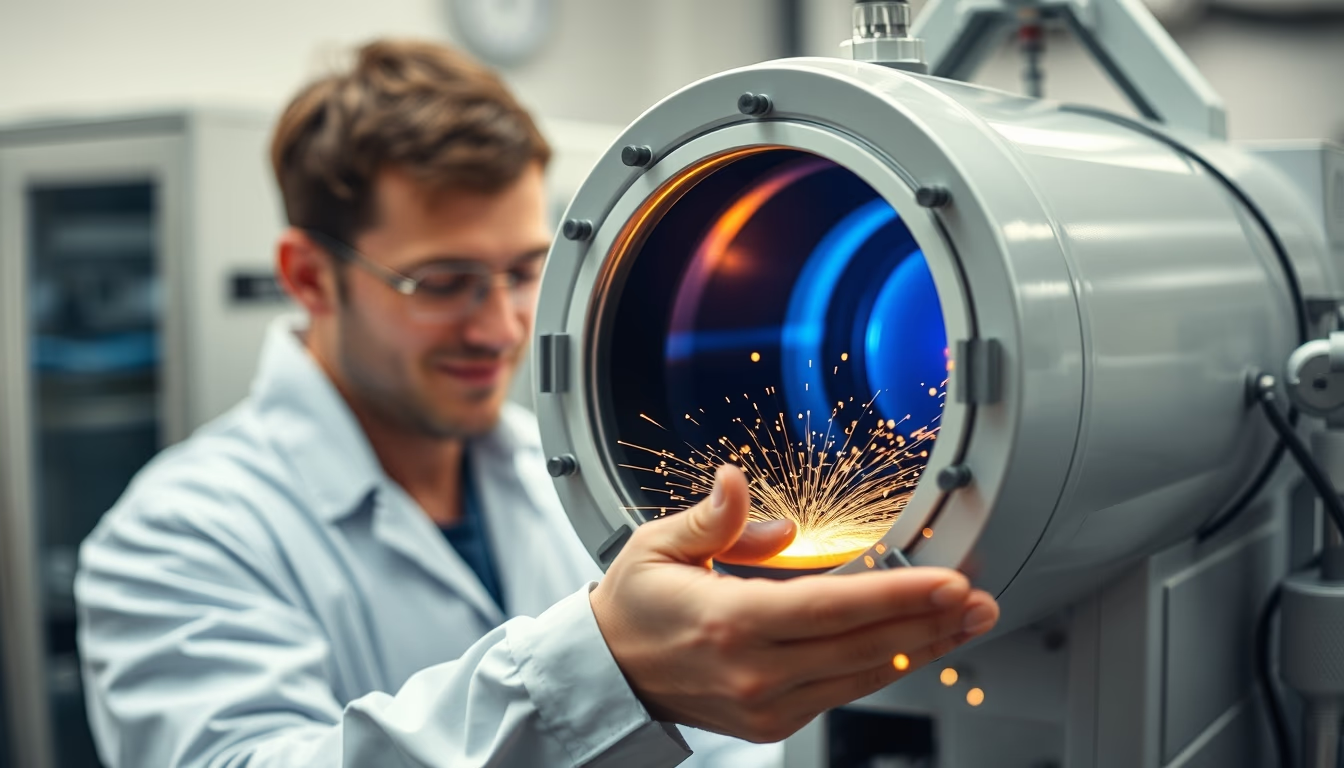
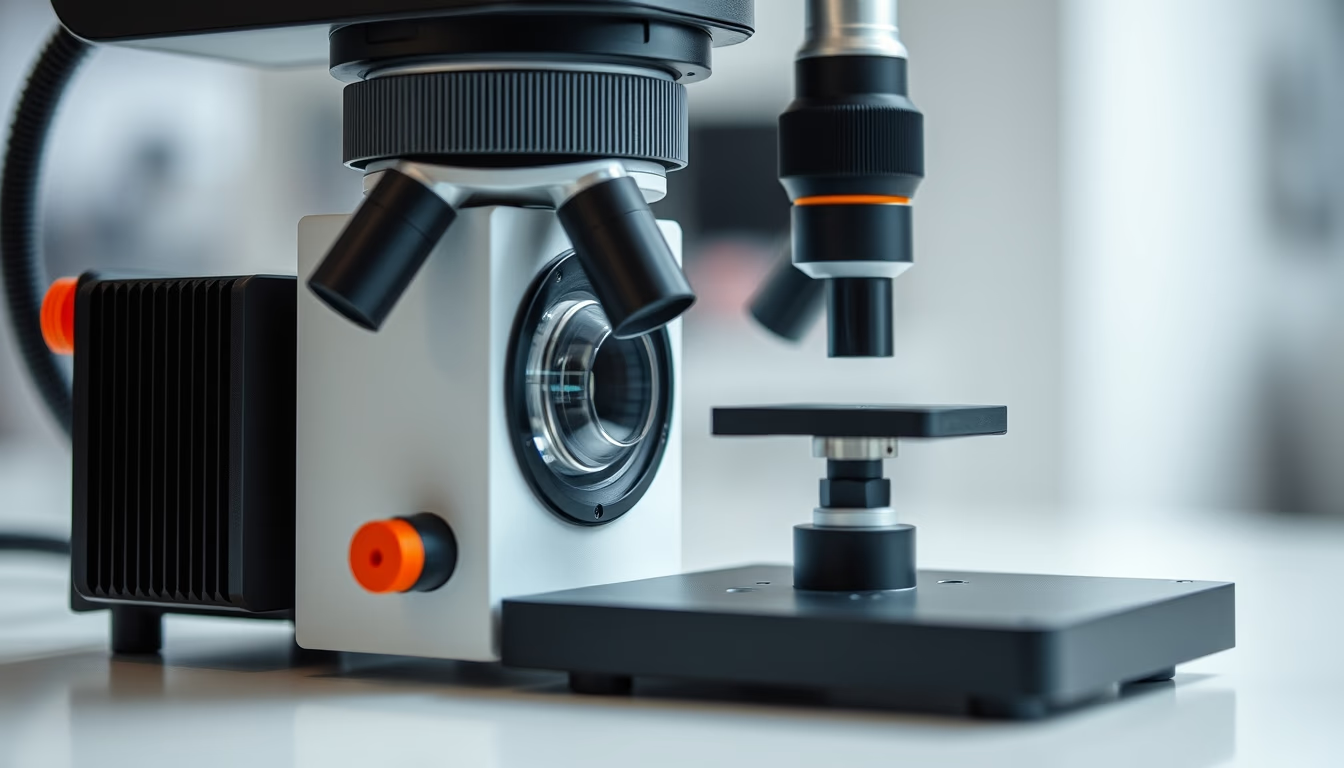
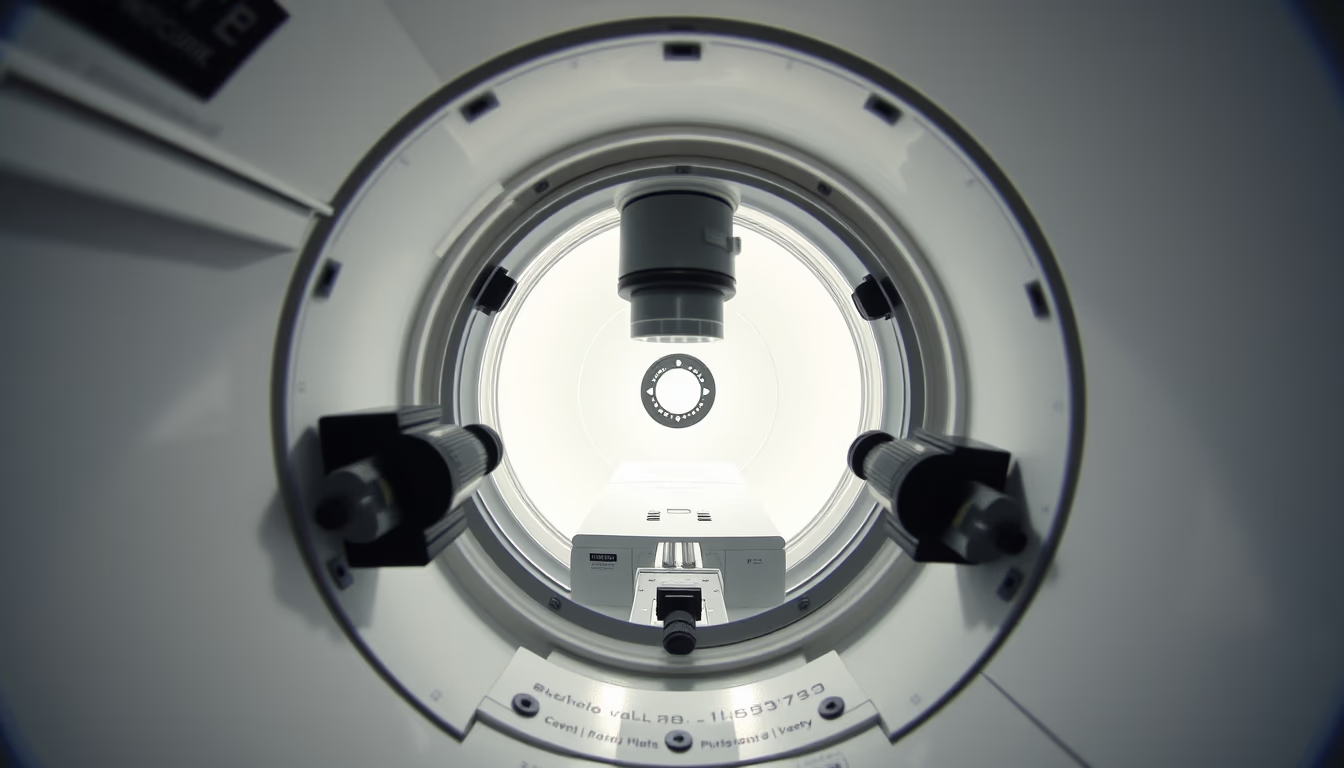
Mass spectrometer, an instrument that separates ions by mass-to-charge ratio to identify chemical compounds.
About this subject
The mass spectrometer is an analytical instrument that measures the mass-to-charge ratio of ions to identify and quantify molecules. Its operating principle involves ionizing the sample, accelerating the ions in an electric field, deflecting them in a magnetic or electric field, and detecting their trajectory. Each compound generates a unique mass spectrum, enabling precise identification.
Invented by Francis Aston in the 1910s, the mass spectrometer evolved from simple instruments to sophisticated systems coupled with chromatographs (GC-MS and LC-MS). These devices are essential in forensic chemistry labs, pharmaceutical quality control, and biomedical research. For example, in medicine, mass spectrometry is used to detect disease biomarkers in blood or urine samples.
In industry, the instrument is crucial for monitoring chemical reactions, verifying substance purity, and analyzing environmental residues. In astrobiology, space probes like Curiosity on Mars use mass spectrometers to analyze soil and atmosphere composition. The technique is also vital in food safety to detect contaminants and pesticides.
Remarkably, the precision of these devices can reach parts per trillion (ppt), allowing detection of trace amounts. Additionally, new methods such as MALDI-TOF (Matrix-Assisted Laser Desorption/Ionization Time-of-Flight) enable analysis of whole proteins, revolutionizing proteomics. Continuing miniaturization of components promises to bring this technology to portable applications and field analysis.
Frequently Asked Questions
What is a mass spectrometer used for?
A mass spectrometer identifies and quantifies chemical compounds based on their mass-to-charge ratio. It is widely used in forensic chemistry, pharmaceuticals, environmental monitoring, and biomedical research.
How does a mass spectrometer work?
The instrument ionizes the sample, accelerates the ions, deflects them in a magnetic or electric field, and detects their position. Each ion produces a signal proportional to its abundance, generating a characteristic mass spectrum.
What are the main applications of mass spectrometry?
Applications include drug and metabolite analysis, pharmaceutical quality control, food contaminant detection, proteomics studies, and analysis of space samples such as Martian soil.
Direct URL
https://pub-c7d6a6ea828543ac903a74a341ccb2e1.r2.dev/imagens/mass-spectrometer-device-long-exposure-fresh14.avifHow to credit
Include a visible link back to UtilizAí. Copy one of the snippets below:
<a href="https://xn--utiliza-eza.com/en/midia/imagens/mass-spectrometer-device-long-exposure-fresh14">Mass spectrometer device</a> by <a href="https://xn--utiliza-eza.com">UtilizAí</a>, licensed under <a href="https://creativecommons.org/licenses/by/4.0/">CC BY 4.0</a>.
[Mass spectrometer device](https://xn--utiliza-eza.com/en/midia/imagens/mass-spectrometer-device-long-exposure-fresh14) by [UtilizAí](https://xn--utiliza-eza.com), CC BY 4.0
License: CC-BY-4.0