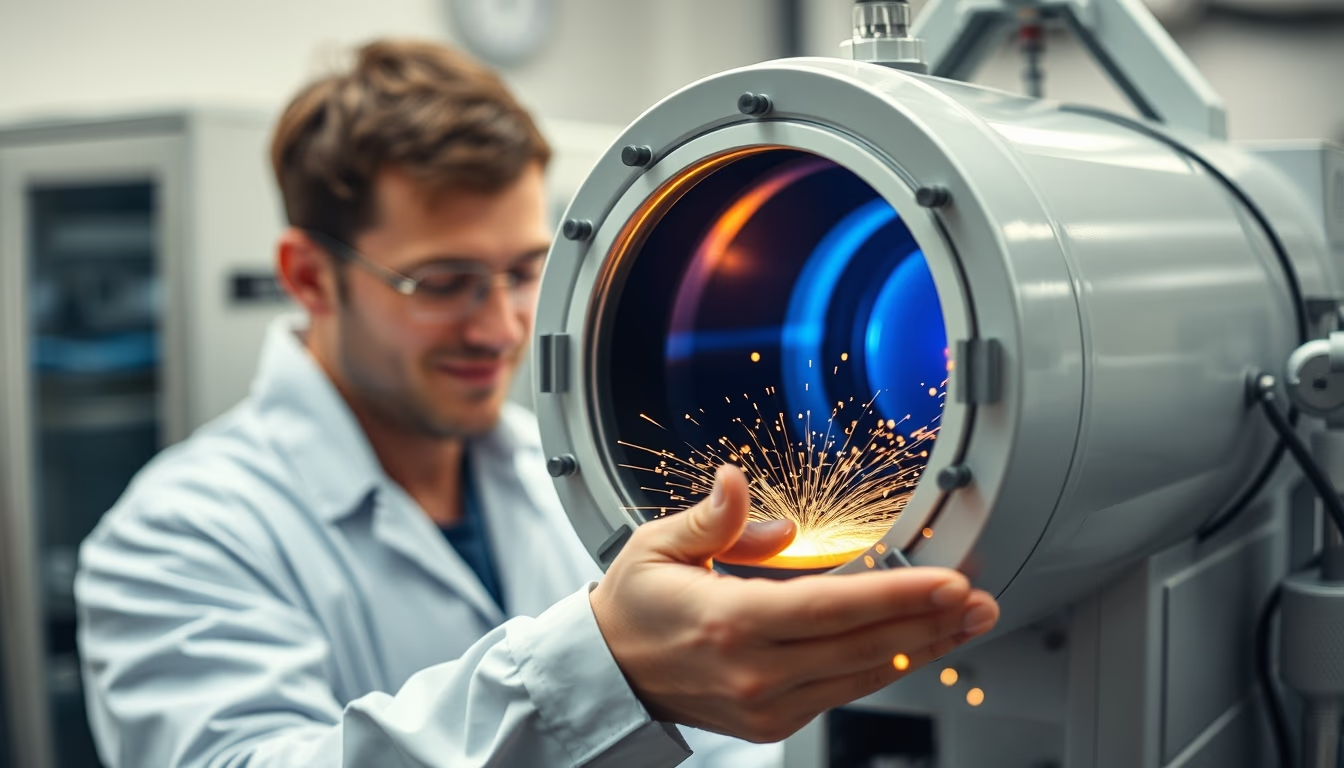
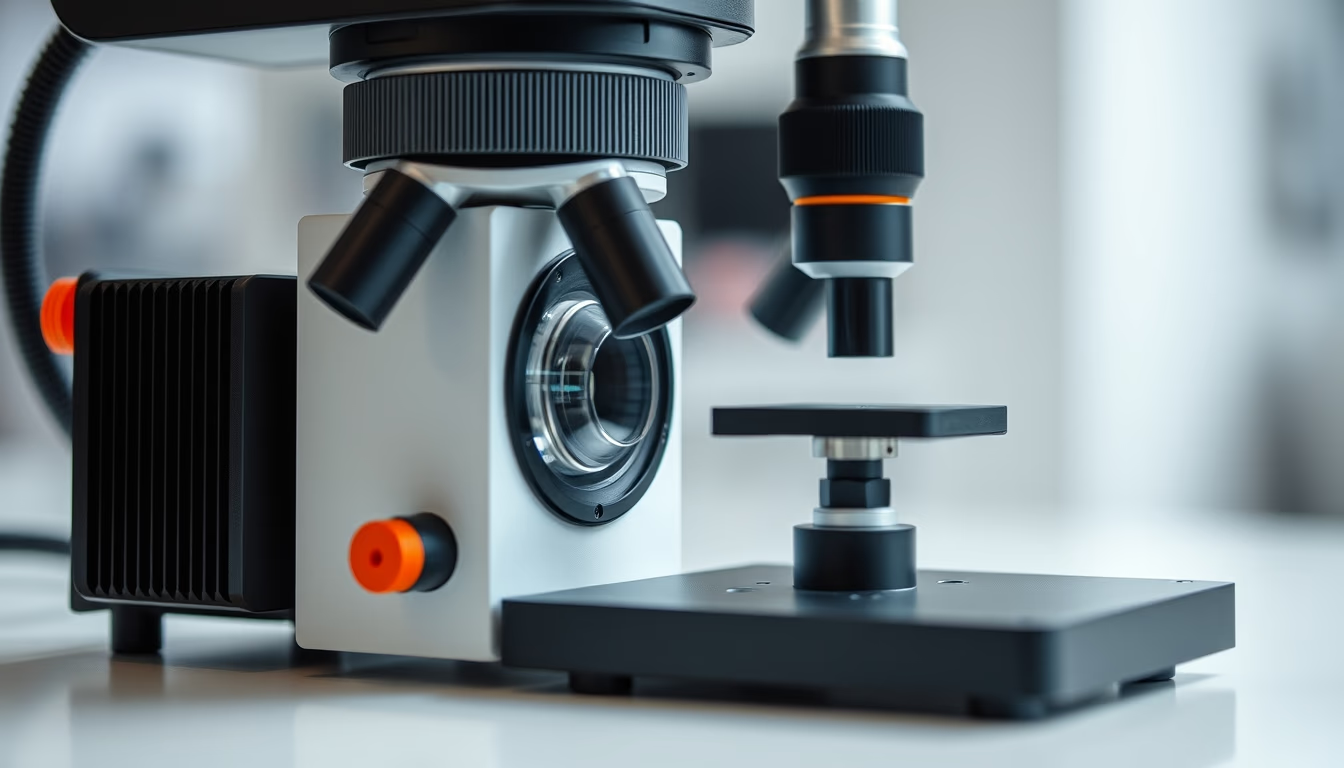
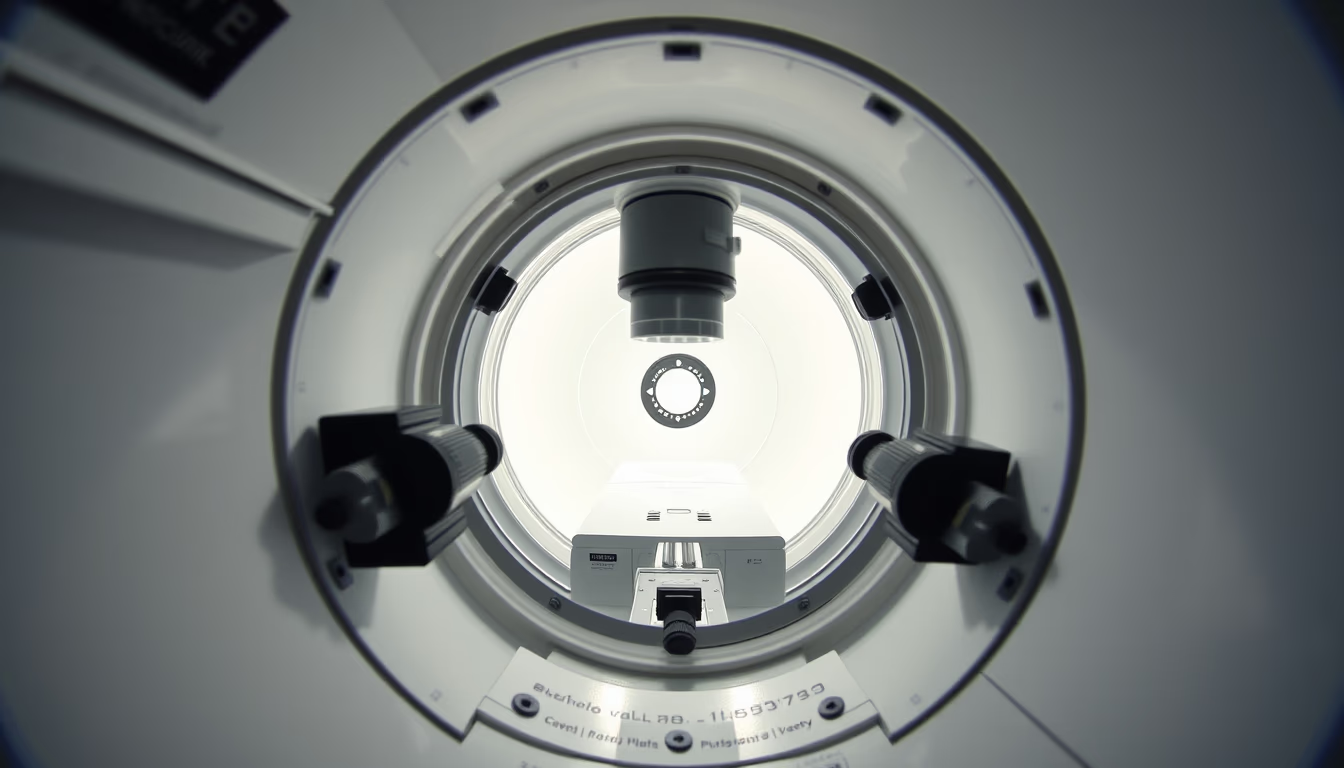
Mass spectrometer device
1344×768 · AVIF · CC BY 4.0

A mass spectrometer is an analytical instrument that measures the mass-to-charge ratio of ions, essential in chemistry and biology.
About this subject
A mass spectrometer is a scientific instrument that separates and detects ions based on their mass-to-charge ratio (m/z). The basic principle involves three steps: ionization of the sample, separation of ions by an electric or magnetic field, and detection. Various types exist, such as quadrupole, time-of-flight (TOF), and electrospray ionization (ESI), each suited to different applications.
The technique is widely used in identifying organic compounds, protein analysis (proteomics), metabolomics, pharmacology, and forensic science. For instance, tandem mass spectrometry (MS/MS) allows fragmenting selected ions to elucidate molecular structures. In medicine, it is employed for diagnosing metabolic diseases and monitoring therapeutic drugs.
Historically, the development of the mass spectrometer dates back to J.J. Thomson (1913), who measured the mass-to-charge ratio of the electron. Francis William Aston refined the concept for isotopes, winning the Nobel Prize in Chemistry in 1922. Since then, technology has evolved to high-resolution instruments like the Orbitrap (2005), capable of exact masses with parts-per-million precision.
In editorial context, images of mass spectrometers often highlight their technical and futuristic design, symbolizing scientific innovation. However, the focus here is purely informational: the instrument revolutionized chemical analysis, enabling advances in drug discovery, food quality control, and environmental sciences.
Frequently Asked Questions
What is a mass spectrometer used for?
It identifies and quantifies molecules by measuring their masses, essential in analytical chemistry, molecular biology, and medical diagnostics.
What are the main types of mass spectrometers?
Common types include quadrupole, time-of-flight (TOF), electrospray ionization (ESI), and Orbitrap, each with specific advantages.
How does ionization work in a mass spectrometer?
The sample is ionized via methods like electrospray, chemical ionization, or laser, generating ions that are then separated by mass.
Direct URL
https://pub-c7d6a6ea828543ac903a74a341ccb2e1.r2.dev/imagens/mass-spectrometer-device-high-fashion-editorial-fresh9.avifHow to credit
Include a visible link back to UtilizAí. Copy one of the snippets below:
<a href="https://xn--utiliza-eza.com/en/midia/imagens/mass-spectrometer-device-high-fashion-editorial-fresh9">Mass spectrometer device</a> by <a href="https://xn--utiliza-eza.com">UtilizAí</a>, licensed under <a href="https://creativecommons.org/licenses/by/4.0/">CC BY 4.0</a>.
[Mass spectrometer device](https://xn--utiliza-eza.com/en/midia/imagens/mass-spectrometer-device-high-fashion-editorial-fresh9) by [UtilizAí](https://xn--utiliza-eza.com), CC BY 4.0
License: CC-BY-4.0