Magnifying glass papers
1344×768 · AVIF · CC BY 4.0
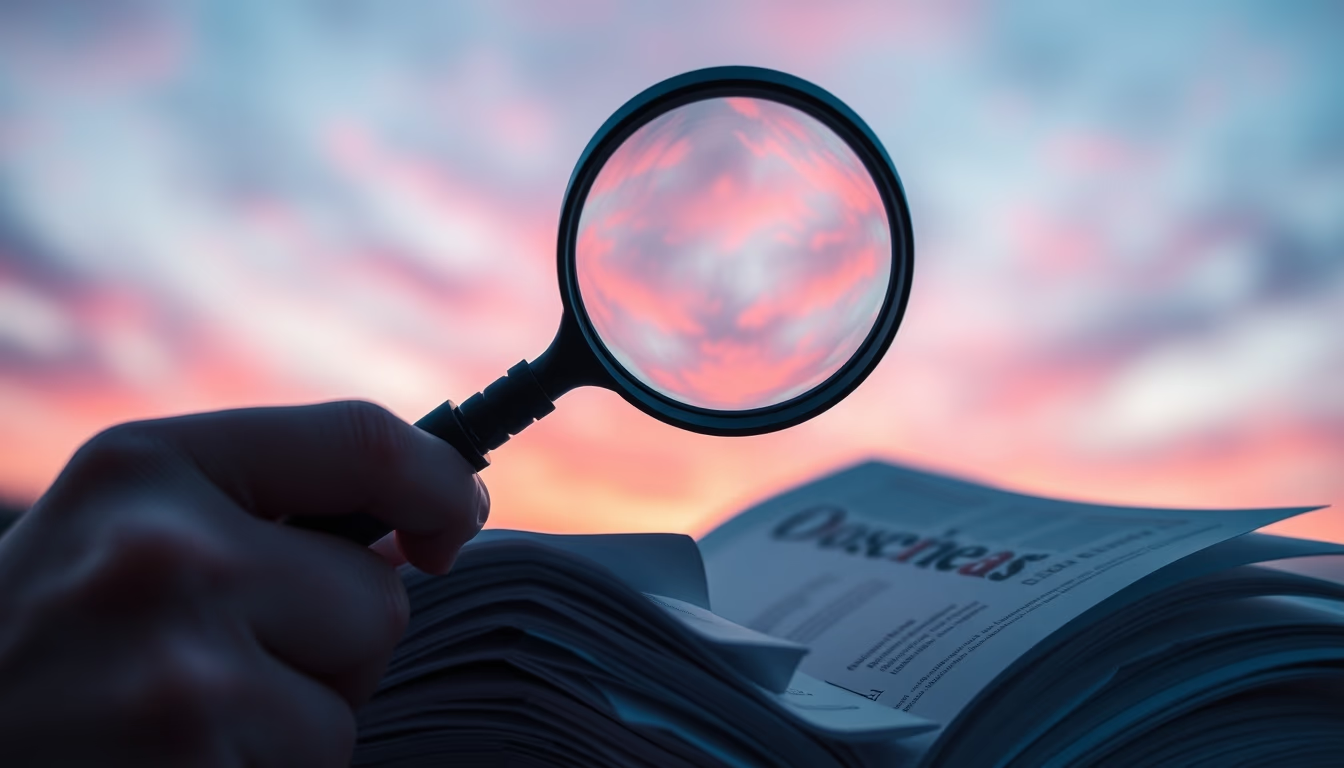
Magnifying glass on old papers reveals details of historical documents and is an essential tool for scholars of antiquities.
About this subject
The magnifying glass, or hand lens, is an optical instrument that magnifies small objects or fine details. In the context of antiquities, it is frequently used to examine manuscripts, maps, engravings, and other historical documents, helping to identify features such as paper type, ink, watermarks, and printing techniques. The portable magnifying glass became popular in the 18th century among collectors and bibliophiles, and its design has changed little since. Today, it remains an indispensable tool for paleographers, historians, and conservators, who rely on it to authenticate works and study the material aspects of the past.
The use of magnifying glasses with old paper is linked to the practice of 'material bibliography', which analyzes the physical attributes of books and documents. Small details, such as the texture of handmade paper or fiber distribution, can only be seen under magnification. Additionally, the magnifying glass reveals pencil notes, erasures, or corrections that would go unnoticed by the naked eye. In stamps and coins, it helps verify reliefs and mint marks.
Interestingly, the pocket magnifying glass was a common accessory among 19th-century intellectuals, often carried in a small wooden or metal case. Great thinkers like Charles Darwin and Thomas Jefferson used magnifying glasses to examine specimens and documents. In the antiquities market, the magnifying glass itself is a collectible item, with antique models made of brass, ivory, or silver valued for their design and history.
Frequently Asked Questions
What is the origin of the magnifying glass?
The magnifying glass has ancient roots, with magnifying lenses found in Roman excavations and described by Seneca. In the 13th century, Roger Bacon described using lenses to enlarge texts. The portable magnifying glass as we know it emerged in the 18th century.
How does a magnifying glass help authenticate old documents?
It allows observation of details such as watermarks, paper texture, ink type, and corrections, which provide clues to the document's date and origin. It also reveals printing characteristics that may indicate forgeries.
What materials were used in antique magnifying glasses?
Antique magnifying glasses had frames made of metals like brass and silver, handles of wood, bone, or ivory, and lenses of glass or rock crystal. Simpler models used leather or cardboard.
Direct URL
https://pub-c7d6a6ea828543ac903a74a341ccb2e1.r2.dev/imagens/magnifying-glass-papers-long-exposure-p0.avifHow to credit
Include a visible link back to UtilizAí. Copy one of the snippets below:
<a href="https://xn--utiliza-eza.com/en/midia/imagens/magnifying-glass-papers-long-exposure-p0">Magnifying glass papers</a> by <a href="https://xn--utiliza-eza.com">UtilizAí</a>, licensed under <a href="https://creativecommons.org/licenses/by/4.0/">CC BY 4.0</a>.
[Magnifying glass papers](https://xn--utiliza-eza.com/en/midia/imagens/magnifying-glass-papers-long-exposure-p0) by [UtilizAí](https://xn--utiliza-eza.com), CC BY 4.0
License: CC-BY-4.0