Magnifying glass papers
1344×768 · AVIF · CC BY 4.0
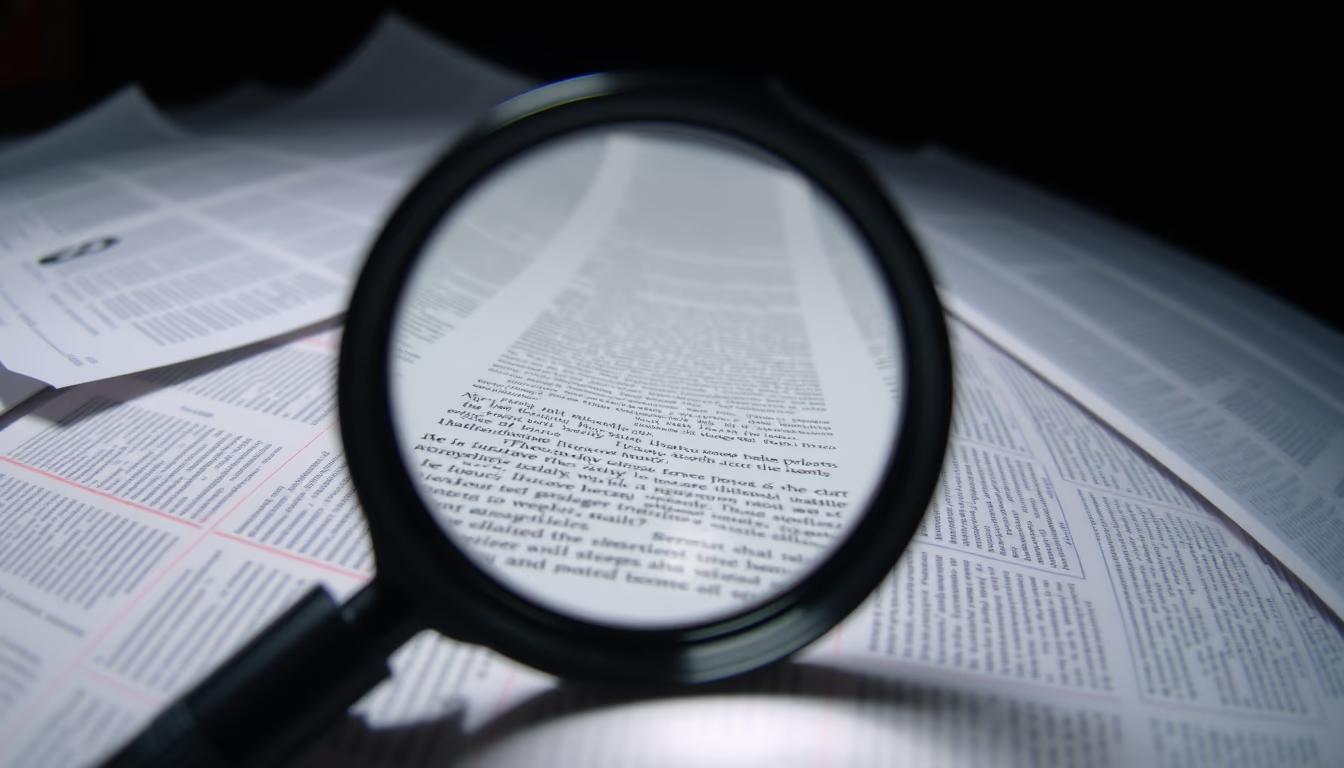
A lupa sobre papéis antigos evoca a investigação de documentos históricos, combinando a óptica de aumento com o estudo de manuscritos e impressos raros.
Sobre o tema
A lupa, instrumento óptico composto por uma lente convexa, tem origens que remontam ao século XIII, quando Roger Bacon descreveu seus princípios. Seu uso se difundiu no Renascimento para leitura de textos minúsculos e exame de detalhes em obras de arte e mapas. No século XVII, Antoni van Leeuwenhoek aperfeiçoou lupas simples para observar microrganismos, inaugurando a microbiologia.
Papéis antigos, como os produzidos a partir de trapos de linho e algodão entre os séculos XV e XIX, são frágeis e muitas vezes apresentam marcas d'água, caligrafia manuscrita ou impressão tipográfica. A lupa permite examinar a textura do papel, a tinta e possíveis adulterações. Em arquivos e bibliotecas, o uso de lupas com iluminação é essencial para a leitura de documentos desgastados.
A combinação de lupa e papéis remete a cenas de detetives, arqueólogos ou colecionadores de selos e moedas. Na numismática e filatelia, lupas de aumento de 5x a 10x são padrão para verificar detalhes de gravação e estado de conservação. Já na paleografia, o exame minucioso de letras e abreviaturas em manuscritos medievais depende de boa iluminação e aumento óptico.
Do ponto de vista técnico, lupas podem ser simples ou binoculares, com lentes de vidro ou acrílico, e algumas possuem luz LED embutida. A distância focal e a ampliação são inversamente proporcionais: uma lupa de 10x geralmente tem distância focal de 2,5 cm. O efeito olho de peixe, mencionado nas tags, distorce a imagem periférica, mas não é usual em lupas comuns; pode ser um recurso fotográfico para enfatizar o objeto.
Perguntas frequentes
Qual é a ampliação ideal de uma lupa para examinar papéis antigos?
Para a maioria dos documentos históricos, lupas de 5x a 10x são suficientes. Para detalhes muito finos, como marcas d'água, pode-se usar até 20x, mas a distância focal fica muito curta, exigindo iluminação adicional.
Como identificar a autenticidade de um papel antigo usando lupa?
A lupa permite ver a textura das fibras, a distribuição irregular da tinta e possíveis marcas de molde. Papéis artesanais mostram marcas d'água e variações de espessura que podem ser comparadas com referências de época.
Que cuidados devo ter ao usar lupa sobre documentos raros?
Evite tocar a superfície do papel com a lente. Use suportes ou lupas com apoio para manter distância. A luz não deve ser intensa ou direta por muito tempo para não danificar o papel ou a tinta.
URL direta
https://pub-c7d6a6ea828543ac903a74a341ccb2e1.r2.dev/imagens/magnifying-glass-papers-fish-eye-wide-angle-p2.avifComo creditar
Inclua um link visível de volta pro UtilizAí. Copie um dos snippets abaixo:
<a href="https://xn--utiliza-eza.com/midia/imagens/magnifying-glass-papers-fish-eye-wide-angle-p2">Magnifying glass papers</a> by <a href="https://xn--utiliza-eza.com">UtilizAí</a>, licensed under <a href="https://creativecommons.org/licenses/by/4.0/">CC BY 4.0</a>.
[Magnifying glass papers](https://xn--utiliza-eza.com/midia/imagens/magnifying-glass-papers-fish-eye-wide-angle-p2) by [UtilizAí](https://xn--utiliza-eza.com), CC BY 4.0
Licença: CC-BY-4.0