Lizard scales pattern
1344×768 · AVIF · CC BY 4.0
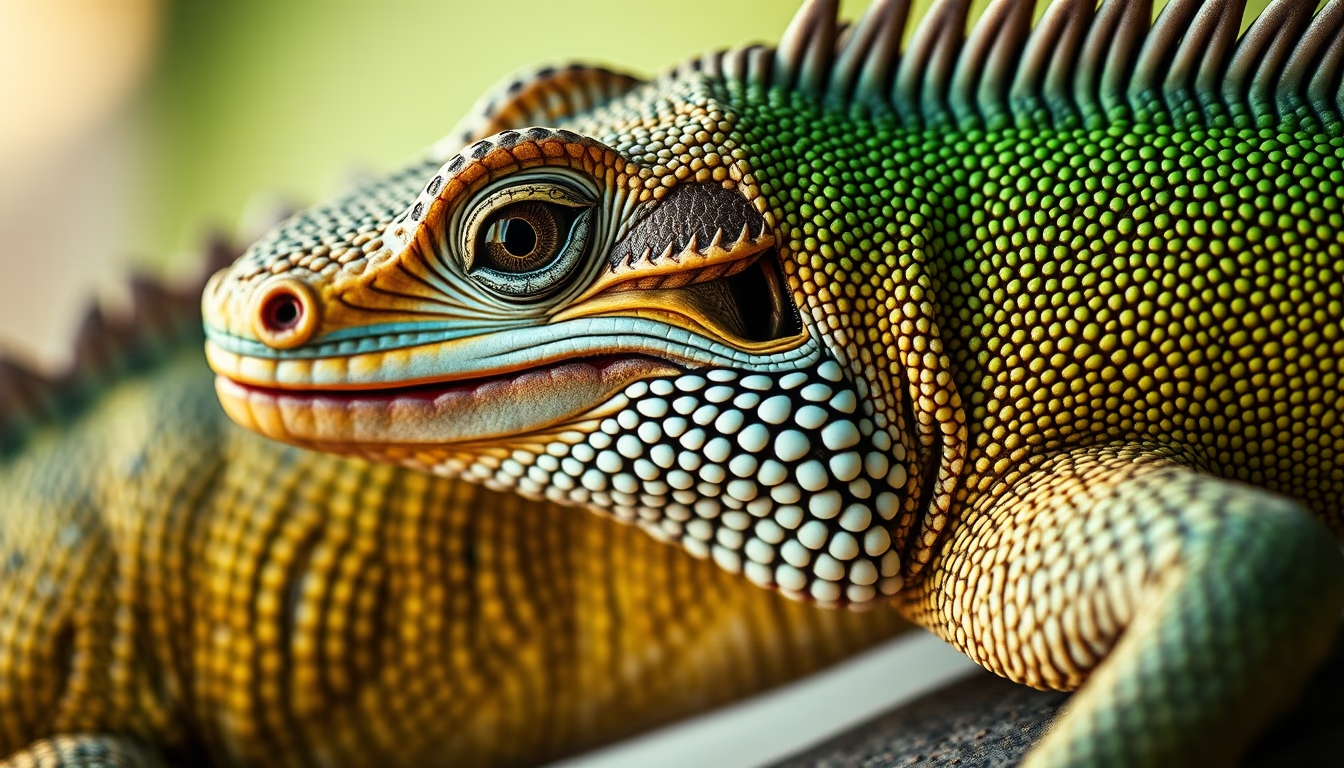
Lizard scales are keratinized structures that protect against predators, regulate temperature, and aid locomotion, with patterns varying by species.
About this subject
Lizard scales are epidermal plates composed mainly of keratin, the same protein found in human nails and hair. They perform multiple vital functions: mechanical protection against predators and abrasion, a barrier against water loss (especially crucial for species in arid environments), and aid in thermoregulation, as dark scales absorb more heat. The diversity of forms is striking: scales can be smooth (as in many Brazilian whiptail lizards), keeled (with ridges that reduce friction), or modified into structures like fringes and spines. In Brazil, species such as the tegu (Salvator merianae) and the tropical lizard (Tropidurus torquatus) display patterns that provide camouflage in Cerrado and Caatinga vegetation. The arrangement and shape of scales are important taxonomic characters for identifying genera and species. Interestingly, scales are periodically renewed through ecdysis (shedding), a process that also removes external parasites. Some groups, like geckos, have evolved adhesive scales on their feet that allow them to climb smooth surfaces, thanks to millions of microscopic setae (van der Waals effect). The evolution of reptilian scales predates the emergence of bird feathers: embryonic development studies indicate that both skin appendages share common genetic pathways, but scales are older and less derived. In summary, lizard scale patterns are not merely aesthetic: they reflect ecological, physiological, and evolutionary adaptations that enable these reptiles to occupy habitats ranging from tropical forests to deserts.
Frequently Asked Questions
How many scales does a lizard have?
The number varies greatly among species. A common lizard may have from hundreds to thousands of scales arranged in rows on the body and head. Scale counts are used by herpetologists to identify species.
Why do lizard scales have different patterns?
Scale patterns evolved primarily for camouflage, sexual signaling, and thermoregulation. Species in dense foliage tend to have green or brown scales with spots, while desert lizards have lighter colors to reflect heat.
Do lizard scales grow back if lost?
Yes, scales regenerate during the shedding process (ecdysis). If a scale is torn off, it is replaced in the next molt cycle, which occurs periodically throughout the lizard's life.
Direct URL
https://pub-c7d6a6ea828543ac903a74a341ccb2e1.r2.dev/imagens/lizard-scales-pattern-documentary-photography-p4.avifHow to credit
Include a visible link back to UtilizAí. Copy one of the snippets below:
<a href="https://xn--utiliza-eza.com/en/midia/imagens/lizard-scales-pattern-documentary-photography-p4">Lizard scales pattern</a> by <a href="https://xn--utiliza-eza.com">UtilizAí</a>, licensed under <a href="https://creativecommons.org/licenses/by/4.0/">CC BY 4.0</a>.
[Lizard scales pattern](https://xn--utiliza-eza.com/en/midia/imagens/lizard-scales-pattern-documentary-photography-p4) by [UtilizAí](https://xn--utiliza-eza.com), CC BY 4.0
License: CC-BY-4.0