Lenticular cloud ufo
1344×768 · AVIF · CC BY 4.0
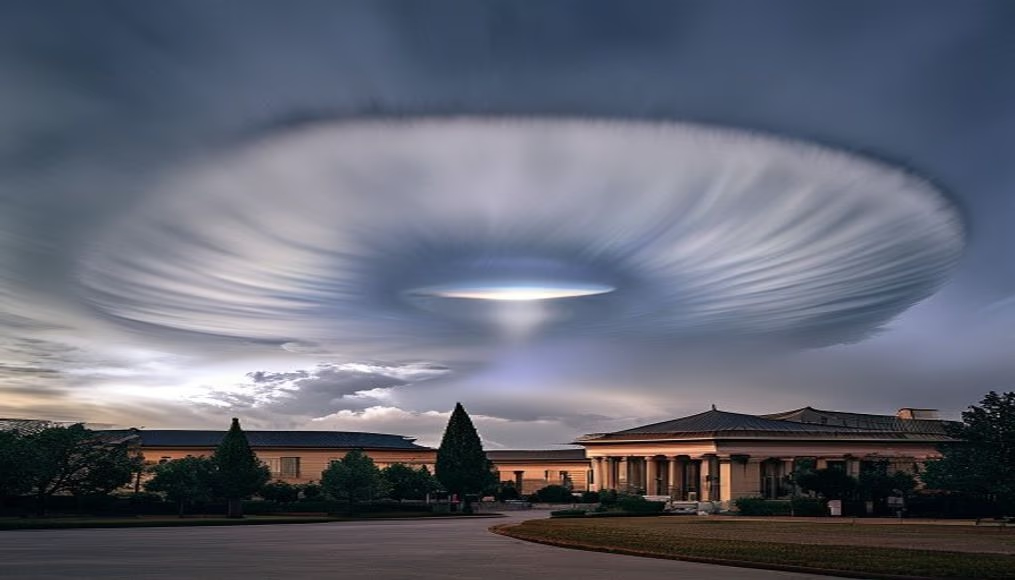
Lenticular clouds are aerodynamic atmospheric formations that resemble flying saucers, often mistaken for UFOs.
About this subject
Lenticular clouds, also known as disc clouds or altocumulus lenticularis, are a meteorological phenomenon characterized by their elongated, aerodynamic shape resembling a flying saucer. They form when moist, stable wind encounters a geographic barrier such as a mountain or hill range, forcing the air to rise in atmospheric waves. As the air ascends and cools, water vapor condenses at the crests of these waves, creating stationary clouds that can remain in the same location for hours.
These clouds are most common in mountainous regions worldwide, including the Andes, the Alps, and the Rocky Mountains. In Brazil, they can be observed in highland areas like the Serra do Mar and Serra da Mantiqueira, especially during winter when the air is drier and more stable. Their unusual appearance has sparked numerous UFO sighting reports throughout history, particularly during World War II, when Allied pilots mistook them for enemy aircraft.
Interestingly, lenticular clouds are indicators of atmospheric conditions favorable for mountain wave formation, which can create severe turbulence dangerous for aviation. For paraglider and hang-glider pilots, however, these waves offer opportunities for sustained updrafts over long distances. Architectural photography often uses these clouds as dramatic backdrops for buildings, highlighting the interaction between sky and the built landscape.
In terms of classification, lenticular clouds appear mainly in two varieties: altocumulus lenticularis (mid-level) and cirrocumulus lenticularis (high-level). They rarely produce precipitation, but their presence signals changes in wind patterns. Scientists study these clouds to better understand atmospheric wave dynamics and the propagation of airborne pollutants.
Frequently Asked Questions
What are lenticular clouds?
They are disc-shaped aerodynamic clouds formed when wind encounters mountains and rises in atmospheric waves, condensing water vapor at the crests.
Why are lenticular clouds associated with UFOs?
Their flying saucer shape and stationary appearance have led many to mistake them for unidentified flying objects, especially during World War II.
Where can I see lenticular clouds in Brazil?
They are most common in mountain ranges such as Serra do Mar and Serra da Mantiqueira, particularly in winter when the air is stable.
Direct URL
https://pub-c7d6a6ea828543ac903a74a341ccb2e1.r2.dev/imagens/lenticular-cloud-ufo-architectural-photography-p1.avifHow to credit
Include a visible link back to UtilizAí. Copy one of the snippets below:
<a href="https://xn--utiliza-eza.com/en/midia/imagens/lenticular-cloud-ufo-architectural-photography-p1">Lenticular cloud ufo</a> by <a href="https://xn--utiliza-eza.com">UtilizAí</a>, licensed under <a href="https://creativecommons.org/licenses/by/4.0/">CC BY 4.0</a>.
[Lenticular cloud ufo](https://xn--utiliza-eza.com/en/midia/imagens/lenticular-cloud-ufo-architectural-photography-p1) by [UtilizAí](https://xn--utiliza-eza.com), CC BY 4.0
License: CC-BY-4.0