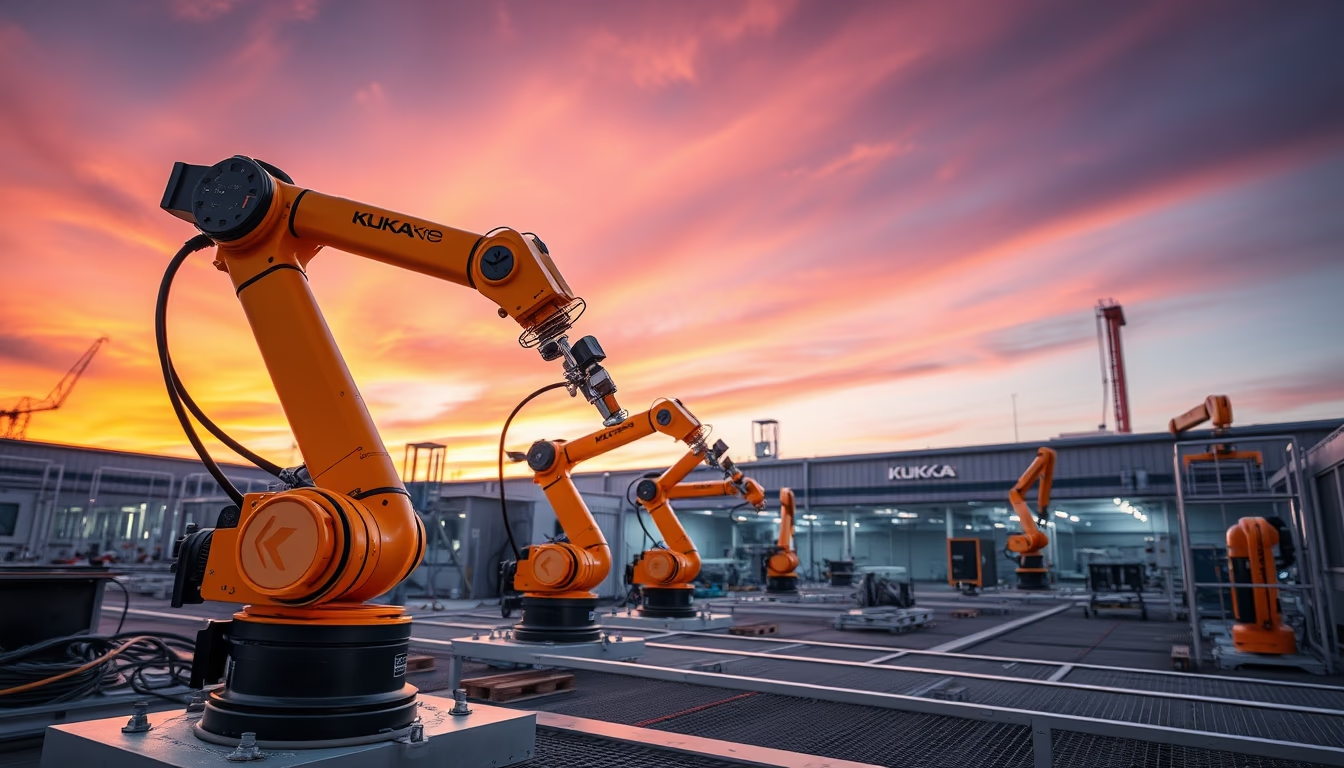
Industrial robot arm welding
1344×768 · AVIF · CC BY 4.0
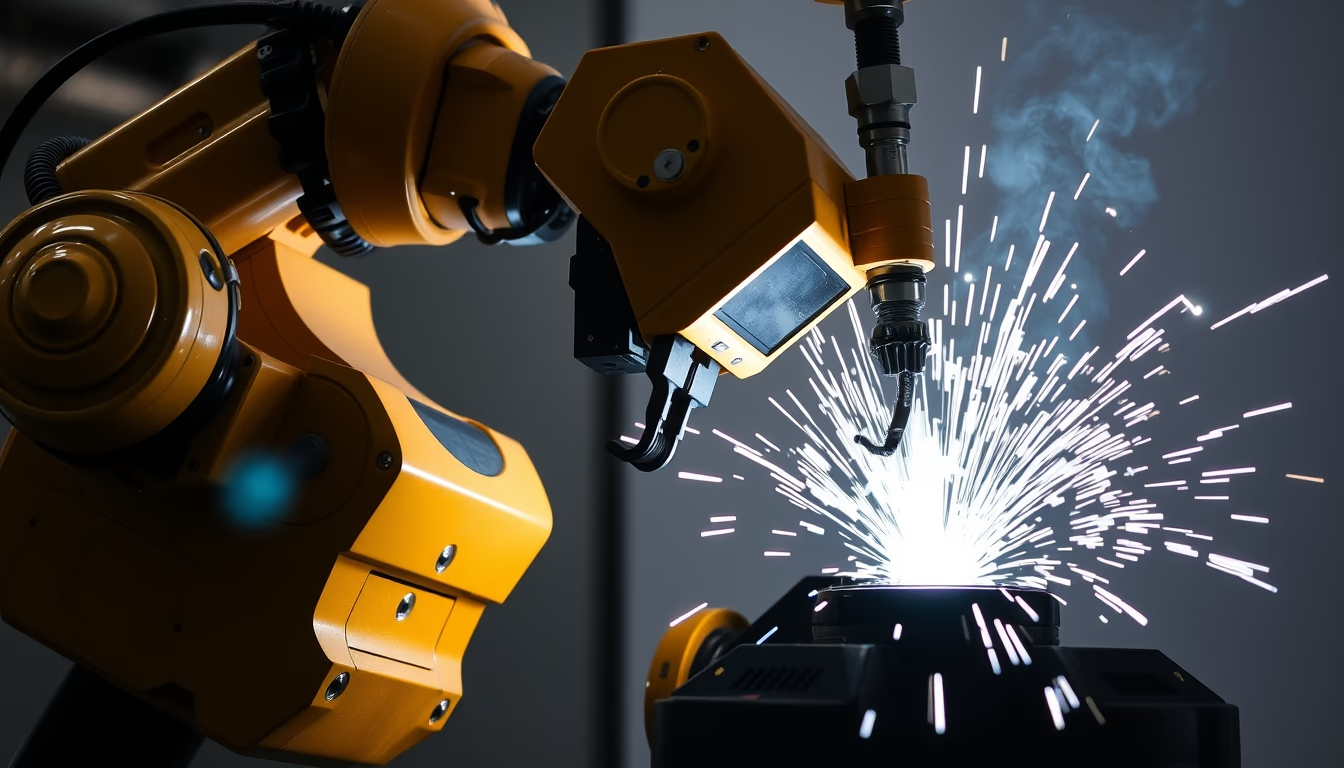
Industrial robot arms for welding automate processes with millimeter precision, boosting productivity and safety on assembly lines.
About this subject
Industrial robot arms dedicated to welding are essential equipment in modern manufacturing, especially in the automotive, shipbuilding, and heavy machinery industries. These robots, typically six-axis articulated arms, perform arc welding (MIG/MAG, TIG) or spot welding with repeatability as tight as 0.02 mm. They operate inside welding cells protected by safety curtains, executing pre-programmed trajectories via teach pendants or CAD/CAM software.
Global adoption of these systems surged in the 1980s, led by manufacturers such as KUKA, ABB, Fanuc, and Yaskawa. In Brazil, the automotive industry was the main driver: automakers like Volkswagen, GM, and Ford use thousands of these robots on their assembly lines. A noteworthy fact is that robotic welding reduces cycle time by up to 70% compared to manual welding, while eliminating workers' exposure to metal fumes and UV radiation.
These robots are equipped with force sensors and machine vision to adjust the torch position in real time, compensating for part dimensional variations. Offline programming enables simulation of the weld before execution, saving production downtime. With Industry 4.0, they integrate with MES and IIoT systems, generating data for predictive maintenance and process optimization.
Trivia: the first industrial welding robot was installed by Unimation in 1961 at General Motors, welding car body parts. Since then, an estimated 2 million industrial robots are operating worldwide, with welding being one of the most common applications, accounting for about 30% of all installations.
Frequently Asked Questions
What are the main advantages of using a robotic arm for welding?
The main advantages are repeatable precision, increased productivity (cycles up to 70% faster), reduced material waste, and improved worker safety by eliminating exposure to fumes, radiation, and heat.
What types of welding can an industrial robot perform?
Welding robots can perform arc welding (MIG/MAG, TIG, flux-cored), resistance spot welding, laser welding, and friction welding, depending on the model and attached tooling.
How is a welding robot programmed?
Programming can be done via a teach pendant (manually guiding the robot along the path) or offline using CAD/CAM software that generates coordinates automatically. Sensors and machine vision enable real-time adjustments during operation.
Direct URL
https://pub-c7d6a6ea828543ac903a74a341ccb2e1.r2.dev/imagens/industrial-robot-arm-welding-studio-still-life-p9.avifHow to credit
Include a visible link back to UtilizAí. Copy one of the snippets below:
<a href="https://xn--utiliza-eza.com/en/midia/imagens/industrial-robot-arm-welding-studio-still-life-p9">Industrial robot arm welding</a> by <a href="https://xn--utiliza-eza.com">UtilizAí</a>, licensed under <a href="https://creativecommons.org/licenses/by/4.0/">CC BY 4.0</a>.
[Industrial robot arm welding](https://xn--utiliza-eza.com/en/midia/imagens/industrial-robot-arm-welding-studio-still-life-p9) by [UtilizAí](https://xn--utiliza-eza.com), CC BY 4.0
License: CC-BY-4.0