Industrial robot arm welding
1344×768 · AVIF · CC BY 4.0
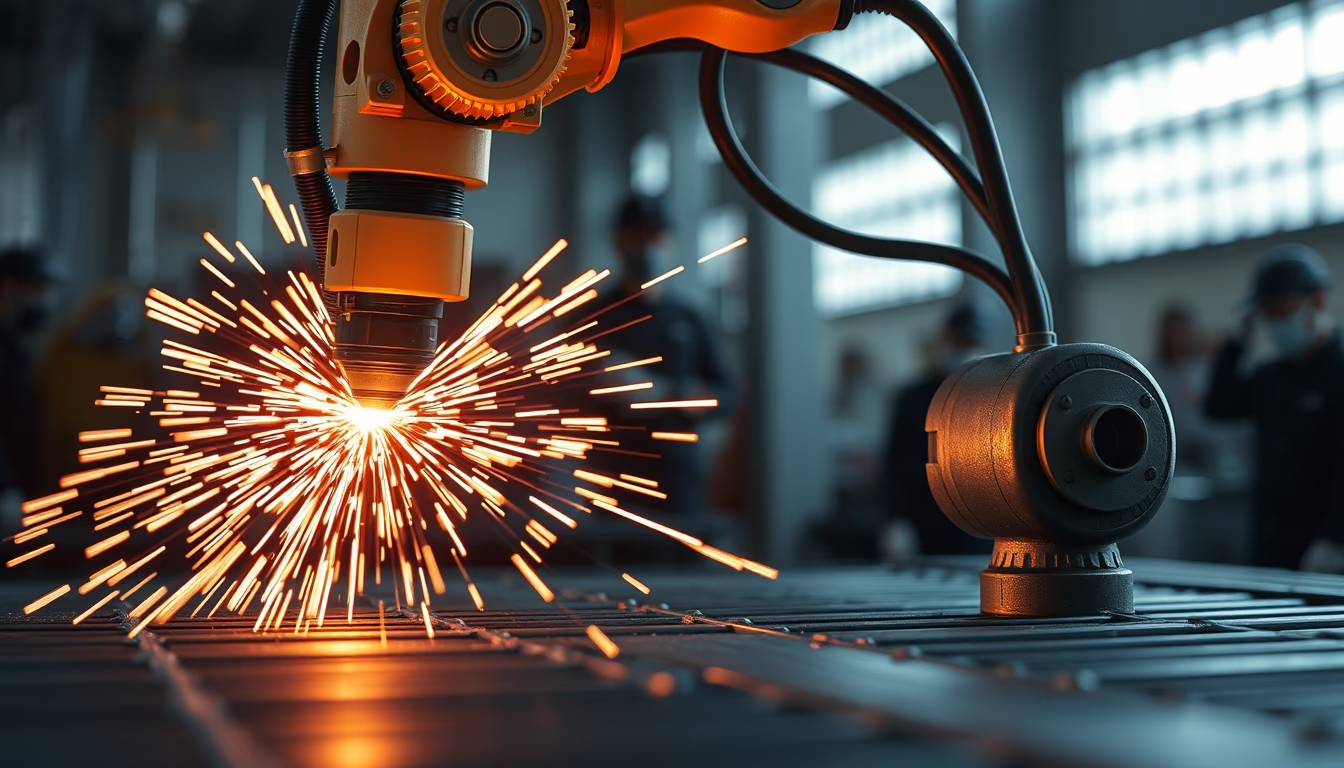
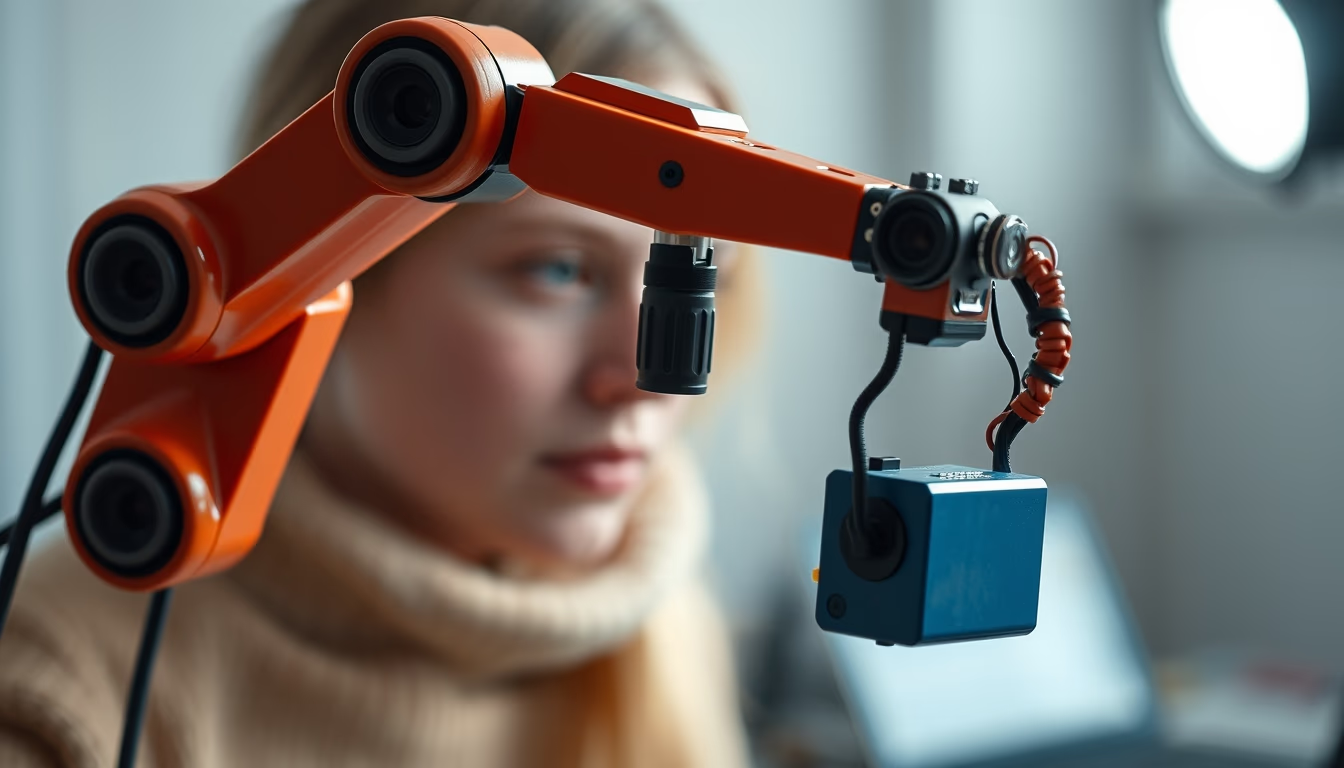
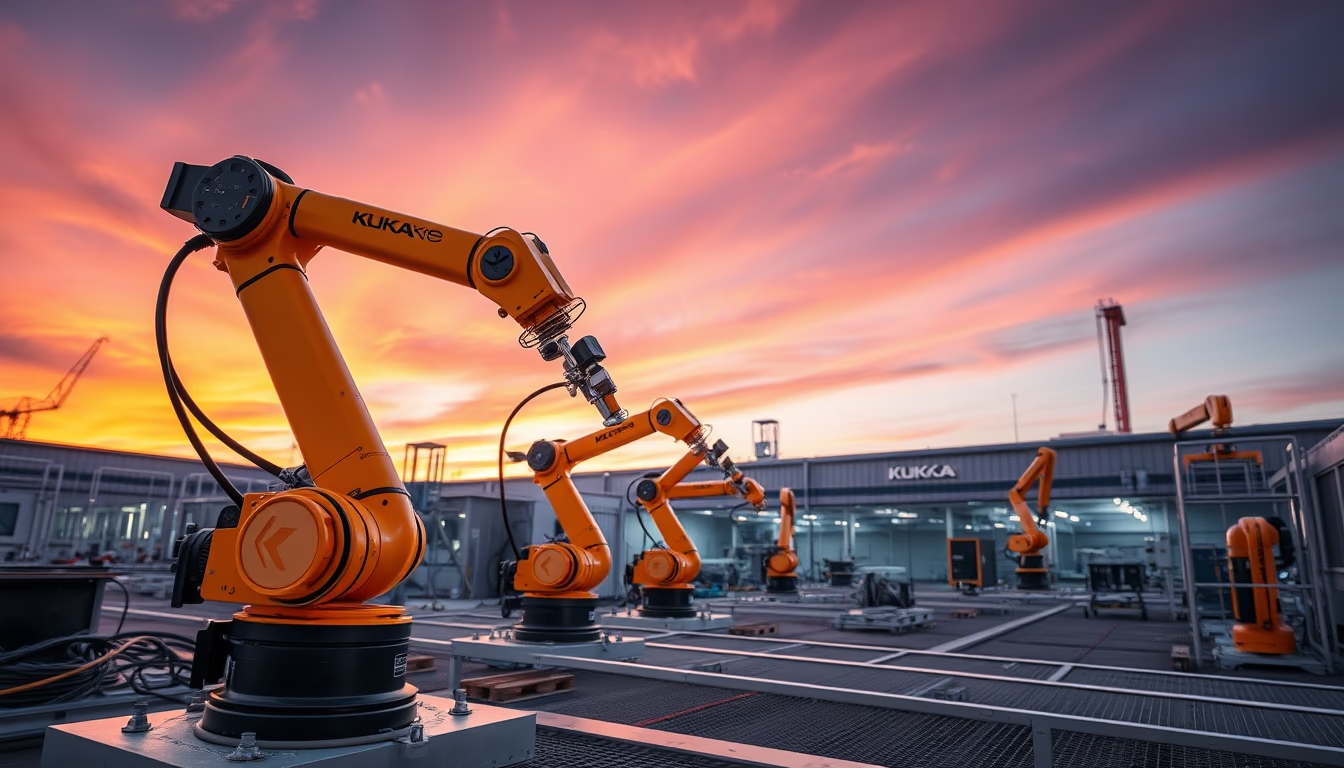
Industrial robots perform welding with precision and speed, transforming manufacturing in automotive, aerospace, and metalworking sectors.
About this subject
Robotic welding is an automated process where mechanical arms perform metal joining operations, replacing or assisting manual labor. Common technologies include arc welding, spot welding, and laser welding. Each method is selected based on material, thickness, and strength requirements.
In the automotive industry, welding robots are essential on assembly lines, welding car bodies with repeatability and uniformity that reduce scrap. Automakers such as Volkswagen, Ford, and Toyota employ hundreds of robots in their plants, including facilities in Brazil. Spot welding is widely used for joining steel sheets, while arc welding (MIG/MAG) is preferred for more complex structures.
Robotic welding development dates back to the 1960s with Unimation's first industrial robots. Programming evolved from teach pendants to offline simulation using CAD software. Force sensors, machine vision, and AI algorithms now enable robots to adjust parameters in real time, compensating for thermal and fit variations.
Safety is paramount: robotic cells are enclosed with fences and light curtains, with interlocks that stop the arm upon intrusion. New collaborative robots (cobots) work alongside humans with torque sensors, though they are still limited for heavy welding. The trend is to integrate IoT and machine learning for predictive maintenance and path optimization, boosting productivity in Brazilian and global factories.
Frequently Asked Questions
How does robotic welding work?
A programmed robotic arm moves along a defined path, applying heat and pressure to fuse metals. The process can use electric arc, resistance (spot), or laser, controlled by a logic controller that regulates current, speed, and wire feed.
What are the main advantages of robotic welding?
Increased precision and repeatability, fewer defects, higher production speed, reduced human exposure to fumes and radiation, and 24/7 operation capability. This results in lower per-part costs and consistent quality.
How has robotic welding evolved in recent years?
Advancements include sensors (force, 3D vision), offline programming, artificial intelligence for real-time adaptation, and collaborative robots. Integration with IoT enables remote monitoring and predictive maintenance, boosting production line efficiency.
Direct URL
https://pub-c7d6a6ea828543ac903a74a341ccb2e1.r2.dev/imagens/industrial-robot-arm-welding-magazine-editorial-p1.avifHow to credit
Include a visible link back to UtilizAí. Copy one of the snippets below:
<a href="https://xn--utiliza-eza.com/en/midia/imagens/industrial-robot-arm-welding-magazine-editorial-p1">Industrial robot arm welding</a> by <a href="https://xn--utiliza-eza.com">UtilizAí</a>, licensed under <a href="https://creativecommons.org/licenses/by/4.0/">CC BY 4.0</a>.
[Industrial robot arm welding](https://xn--utiliza-eza.com/en/midia/imagens/industrial-robot-arm-welding-magazine-editorial-p1) by [UtilizAí](https://xn--utiliza-eza.com), CC BY 4.0
License: CC-BY-4.0