Industrial robot arm welding
1344×768 · AVIF · CC BY 4.0
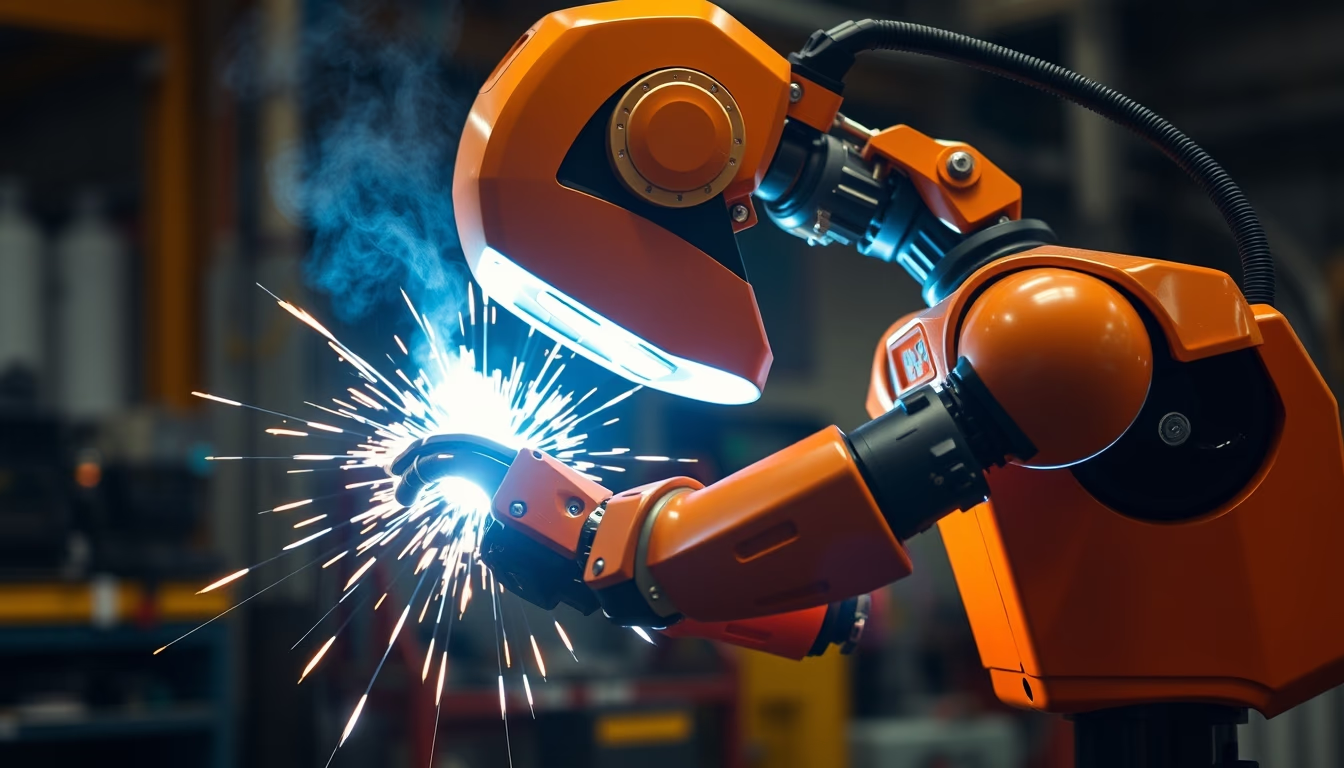
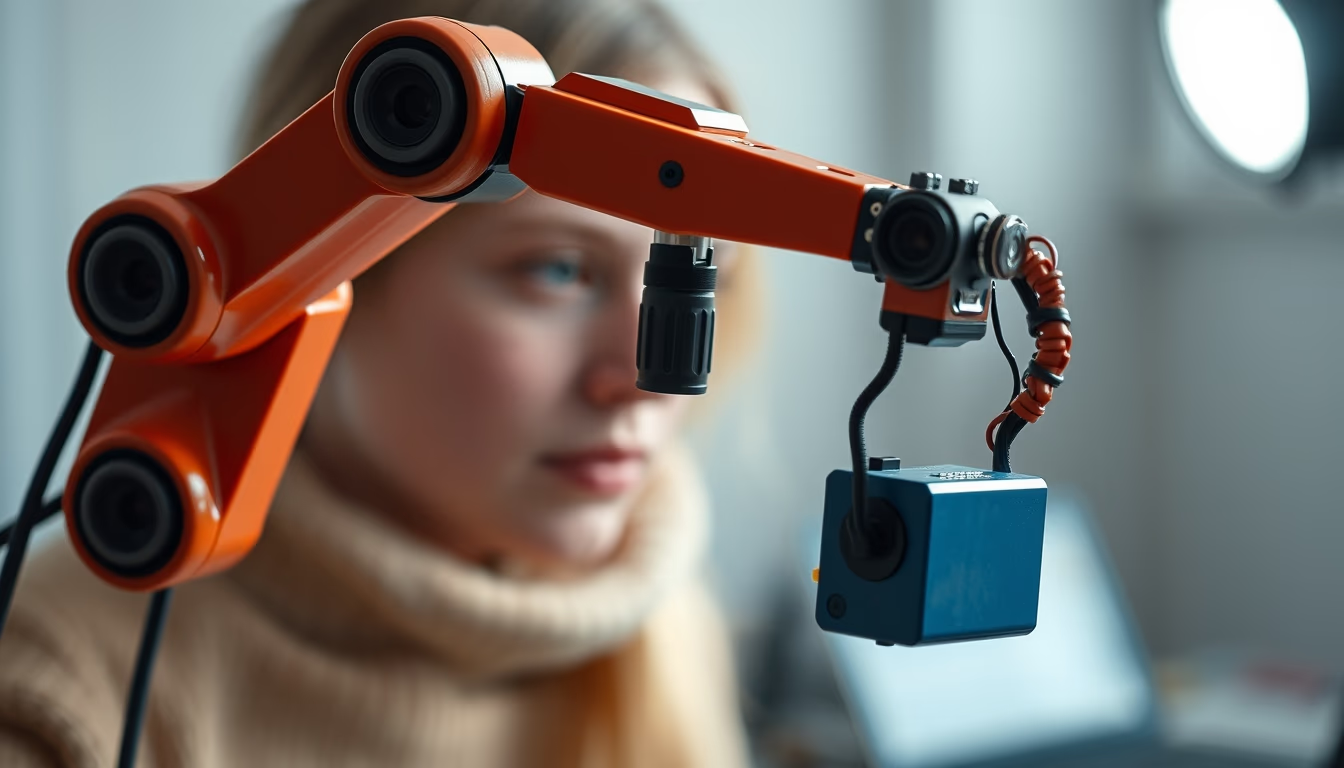
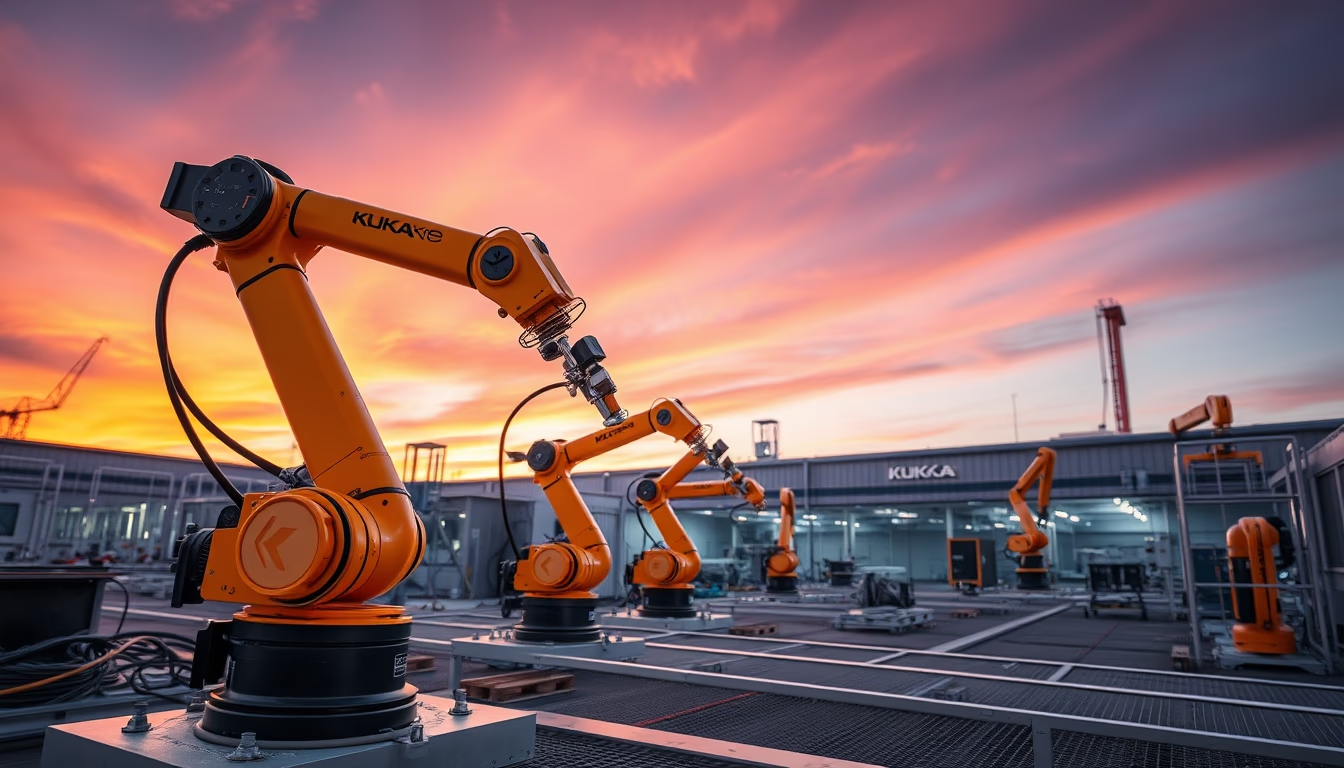
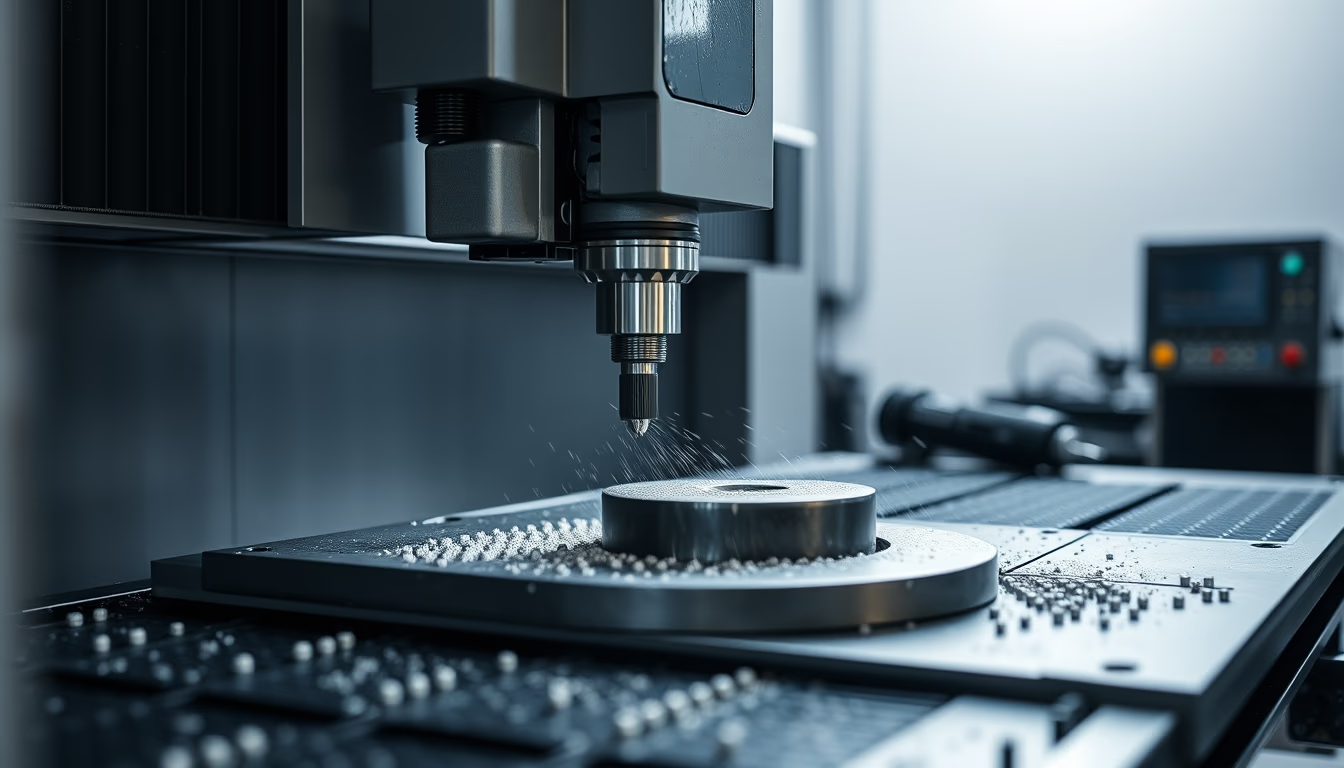
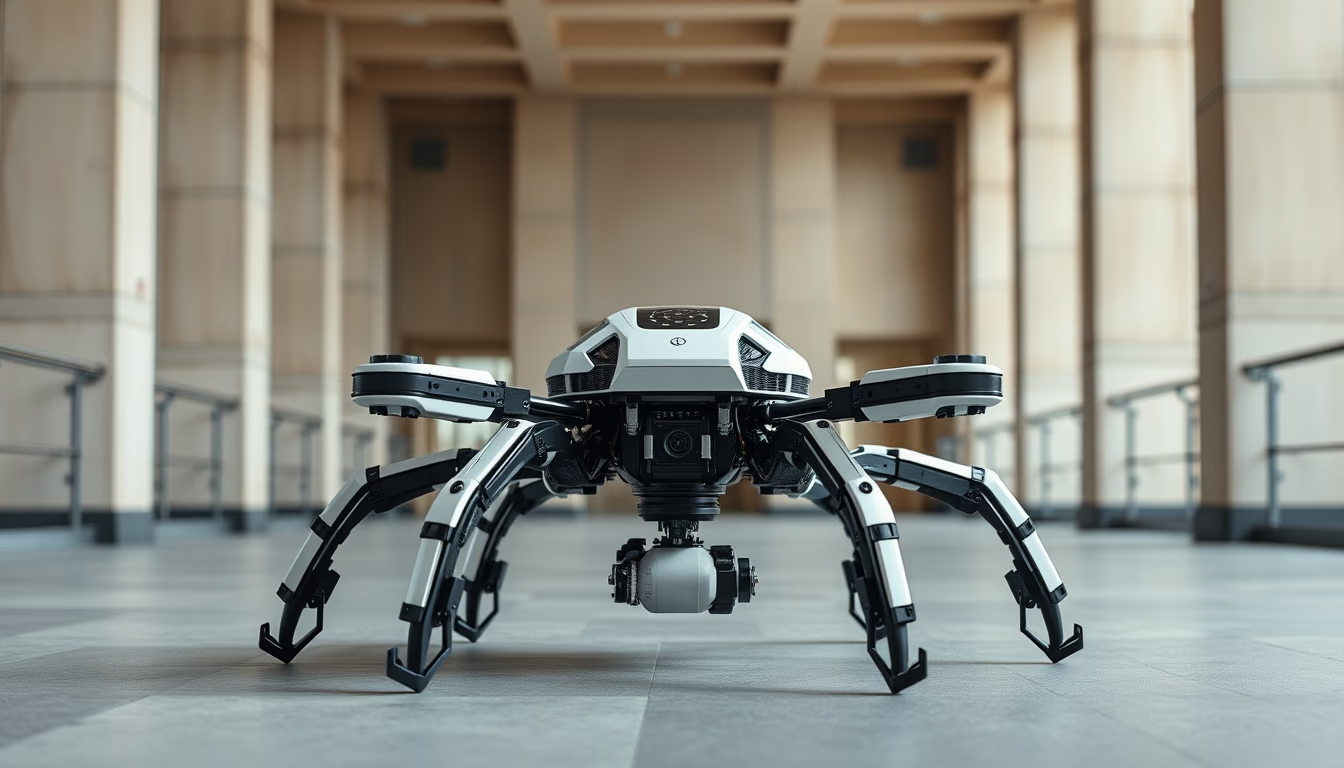
Industrial robot arms perform welding with precision and repeatability, essential in automotive and metal fabrication.
About this subject
Industrial robot arms for welding are automated equipment that perform metal joining processes with high precision and speed. Widely used in automotive, machinery manufacturing, and shipbuilding, these robots execute arc, spot, and laser welding, ensuring consistent quality and reducing human error. Major brands such as Kuka, Fanuc, and ABB dominate the market, with models reaching payloads of up to 500 kg and reaches exceeding 3 meters. Programming is done via teach pendant or offline simulation, allowing fine adjustments of trajectory, speed, and welding parameters.
The use of robots in welding began in the 1960s, with the Unimate #001 installed at General Motors for handling tasks; welding only became a major application later. Today, a single assembly line can employ dozens of synchronized robots, performing hundreds of weld points per car body. Repeatable precision is in the order of ±0.1 mm, which is critical for the structural integrity of vehicles and equipment. Moreover, robots operate in harsh environments (heat, fumes, UV radiation) without requiring human protection, increasing workplace safety.
Recent technologies include vision sensors for real-time adjustment, force control for thin material welding, and Internet of Things integration for predictive monitoring. Robotic welding is also key in manufacturing batteries for electric vehicles, where precision avoids thermal damage. With Industry 4.0, collaborative robots (cobots) begin to share space with humans, but for heavy welding, traditional industrial robots still dominate due to the required power and robustness.
Frequently Asked Questions
What are the advantages of robotic welding over manual welding?
Robotic welding offers higher precision, repeatability, and speed, reducing defects and rework. It also improves safety by removing operators from hazardous environments and allows continuous operation without fatigue, increasing productivity.
What are the main types of robotic welding?
The main types are arc welding (MIG/MAG, TIG), spot welding (resistance), and laser welding. Each is chosen based on material, thickness, and precision requirements of the part.
How is a welding robot programmed?
Programming can be done via a teach pendant, where the operator manually guides the robot through desired points, or via offline simulation in CAD/CAM software, which automatically generates trajectories and welding parameters.
Direct URL
https://pub-c7d6a6ea828543ac903a74a341ccb2e1.r2.dev/imagens/industrial-robot-arm-welding-lo-fi-disposable-camera-p8.avifHow to credit
Include a visible link back to UtilizAí. Copy one of the snippets below:
<a href="https://xn--utiliza-eza.com/en/midia/imagens/industrial-robot-arm-welding-lo-fi-disposable-camera-p8">Industrial robot arm welding</a> by <a href="https://xn--utiliza-eza.com">UtilizAí</a>, licensed under <a href="https://creativecommons.org/licenses/by/4.0/">CC BY 4.0</a>.
[Industrial robot arm welding](https://xn--utiliza-eza.com/en/midia/imagens/industrial-robot-arm-welding-lo-fi-disposable-camera-p8) by [UtilizAí](https://xn--utiliza-eza.com), CC BY 4.0
License: CC-BY-4.0