Braço robótico industrial welding
1344×768 · AVIF · CC BY 4.0
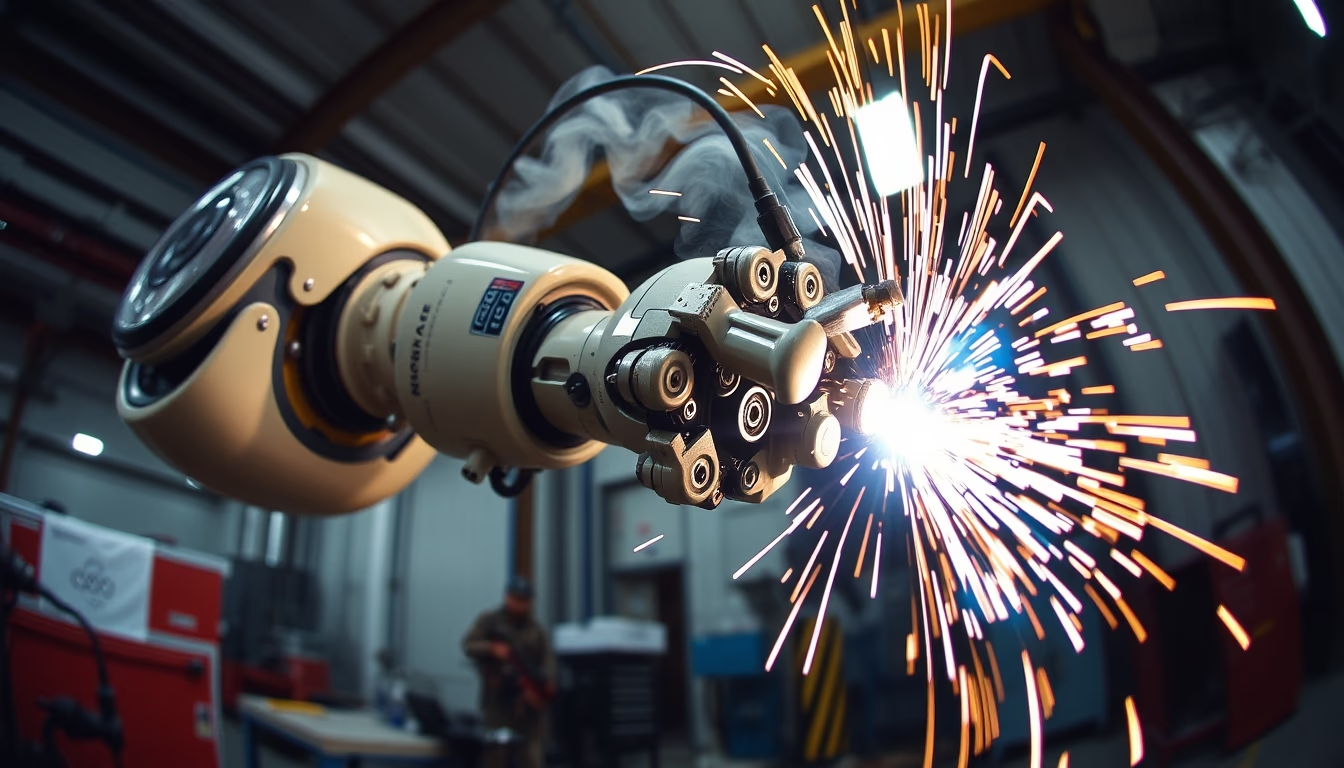
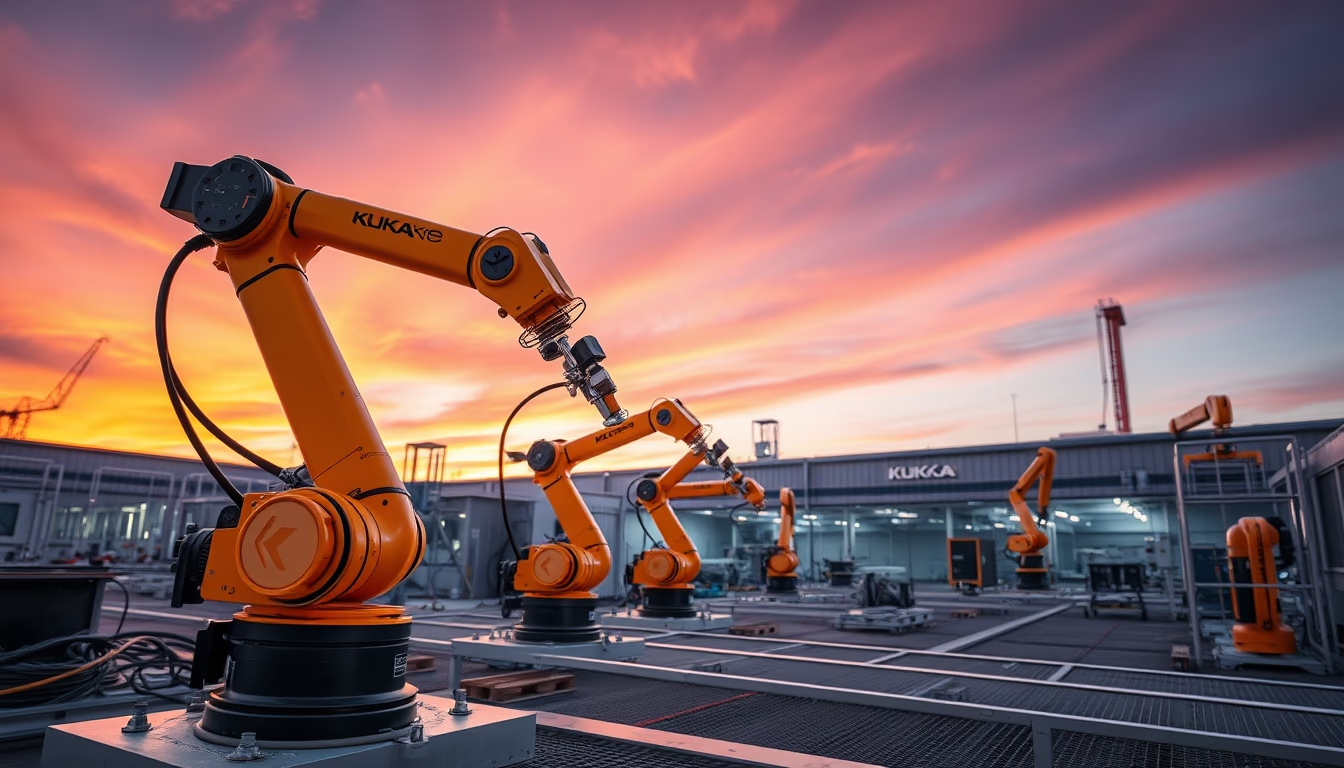
Braço robótico industrial executando solda de precisão em ambiente fabril, capturado com lente olho de peixe para ampliar a percepção de escala e movimento.
Sobre o tema
Robôs industriais para soldagem são amplamente utilizados em linhas de montagem automotiva, fabricação de estruturas metálicas e equipamentos pesados. Esses sistemas oferecem alta repetibilidade, soldas consistentes e operação contínua, reduzindo erros humanos e aumentando a produtividade. A soldagem robótica pode ser do tipo MIG (Metal Inert Gas), TIG (Tungsten Inert Gas) ou solda a ponto, dependendo da aplicação.
O primeiro robô industrial programável, o Unimate, foi instalado em 1961 na General Motors para operações de fundição sob pressão. A partir dos anos 1970, a soldagem robótica se expandiu com o avanço dos controladores numéricos e sensores de visão. Atualmente, os robôs articulados de seis eixos são os mais comuns, permitindo acesso a geometrias complexas.
A segurança é crucial nessas células de trabalho. Os robôs são cercados por barreiras de proteção, cortinas de luz e sensores de presença. Programadores e operadores utilizam teach pendants para definir trajetórias e parâmetros de solda. A manutenção preventiva inclui troca de tochas, limpeza de bicos e calibração periódica.
No Brasil, a indústria automotiva lidera a adoção de robôs de solda, com destaque para montadoras como Volkswagen, Ford e General Motors. Outros setores, como construção naval e fabricação de tubulações, também utilizam essas máquinas para aumentar a eficiência. A lente olho de peixe na imagem evidencia o ambiente imersivo da célula robótica, destacando a interação entre máquina e espaço fabril.
Perguntas frequentes
Quais são os tipos de soldagem robótica mais comuns?
Os tipos mais comuns são soldagem MIG (Metal Inert Gas), TIG (Tungsten Inert Gas) e solda a ponto. A escolha depende do material, espessura e requisitos de qualidade da junta.
Qual a precisão típica de um braço robótico de solda?
Robôs articulados modernos alcançam repetibilidade de posicionamento na ordem de ±0,1 mm, garantindo soldas consistentes mesmo em peças complexas.
Quais indústrias mais utilizam robôs de solda?
A indústria automotiva é a maior usuária, seguida por fabricantes de máquinas pesadas, estruturas metálicas, construção naval e tubulações.
URL direta
https://pub-c7d6a6ea828543ac903a74a341ccb2e1.r2.dev/imagens/industrial-robot-arm-welding-fish-eye-wide-angle-p12.avifComo creditar
Inclua um link visível de volta pro UtilizAí. Copie um dos snippets abaixo:
<a href="https://xn--utiliza-eza.com/midia/imagens/industrial-robot-arm-welding-fish-eye-wide-angle-p12">Braço robótico industrial welding</a> by <a href="https://xn--utiliza-eza.com">UtilizAí</a>, licensed under <a href="https://creativecommons.org/licenses/by/4.0/">CC BY 4.0</a>.
[Braço robótico industrial welding](https://xn--utiliza-eza.com/midia/imagens/industrial-robot-arm-welding-fish-eye-wide-angle-p12) by [UtilizAí](https://xn--utiliza-eza.com), CC BY 4.0
Licença: CC-BY-4.0