Industrial robot arm welding
1344×768 · AVIF · CC BY 4.0
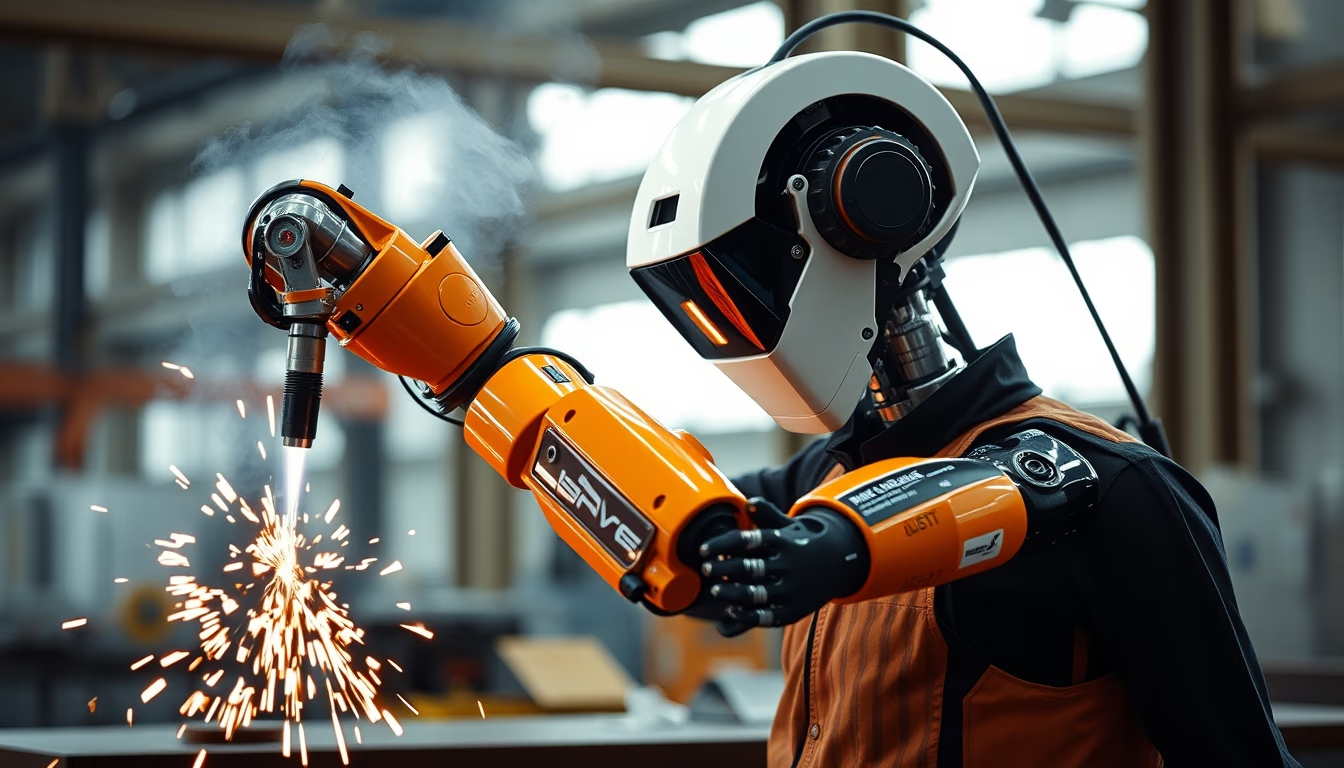
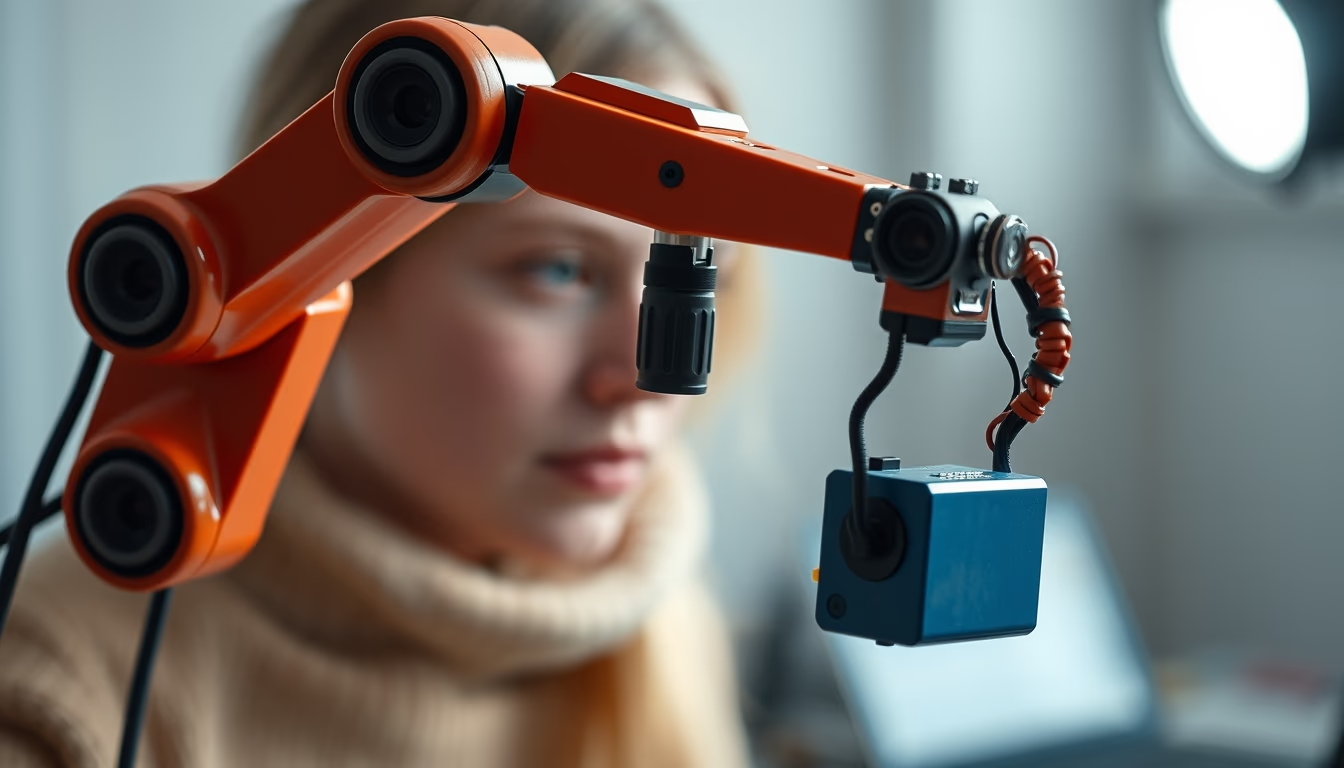
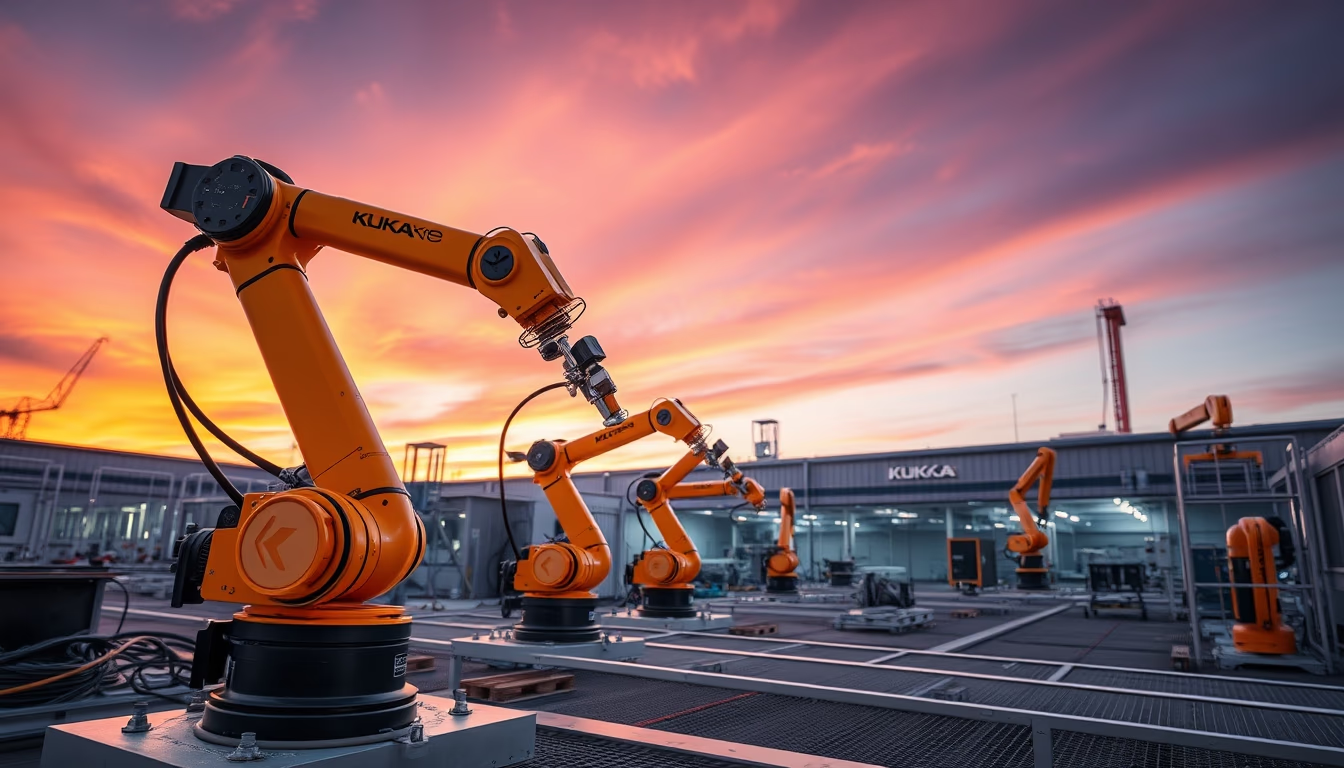
Industrial robot arms for welding are automation tools used in manufacturing cars, ships, and metal structures, enhancing precision and speed.
About this subject
Industrial welding robots are programmable articulated arms that perform metal joining operations with high repeatability. They are widely used in assembly lines, especially in the automotive industry, where they weld car bodies and structural components. Programming is done via teach pendant or offline software, allowing fine adjustments of trajectory and welding parameters.
There are two main types: arc welding robots (MIG/MAG and TIG) and spot welding robots. Arc welding uses a continuous wire or tungsten electrode with shielding gas; spot welding applies an electric current at localized points. Sensors such as cameras and force sensors enable joint tracking and compensation for tolerances.
Adopting robotic welding brings significant benefits: it eliminates human fatigue, reduces defects, and speeds up production. Estimates indicate that a robot can weld 4 to 5 times faster than a manual welder. It also operates in hostile environments with toxic fumes and high temperatures, protecting worker health.
Historically, the first industrial robot, the Unimate, was installed in 1961 at General Motors for welding tasks. Today, brands like FANUC, ABB, and KUKA lead the market, offering models with payloads of hundreds of kilograms and reaches exceeding 3 meters. The trend is integration with artificial intelligence for real-time optimization.
Frequently Asked Questions
How does an industrial welding robot arm work?
The robot arm follows a programmed trajectory, moving the welding torch along the joint. Sensors adjust the position in real time to ensure penetration and bead quality. The program sets parameters such as speed, current, and torch angle.
What are the main applications of robotic welding?
It is mainly used in the automotive industry (welding car bodies, chassis, and components), shipbuilding (hulls and structures), agricultural machinery manufacturing, and production of metal pipes and tanks.
What are the benefits of using robots for welding?
Increased productivity, reduced scrap, improved worker safety (avoiding exposure to fumes and heat), and greater consistency in weld quality. Robots can also operate 24/7 with scheduled maintenance.
Direct URL
https://pub-c7d6a6ea828543ac903a74a341ccb2e1.r2.dev/imagens/industrial-robot-arm-welding-film-grain-authentic-p7.avifHow to credit
Include a visible link back to UtilizAí. Copy one of the snippets below:
<a href="https://xn--utiliza-eza.com/en/midia/imagens/industrial-robot-arm-welding-film-grain-authentic-p7">Industrial robot arm welding</a> by <a href="https://xn--utiliza-eza.com">UtilizAí</a>, licensed under <a href="https://creativecommons.org/licenses/by/4.0/">CC BY 4.0</a>.
[Industrial robot arm welding](https://xn--utiliza-eza.com/en/midia/imagens/industrial-robot-arm-welding-film-grain-authentic-p7) by [UtilizAí](https://xn--utiliza-eza.com), CC BY 4.0
License: CC-BY-4.0