Illuminated manuscript
1344×768 · AVIF · CC BY 4.0
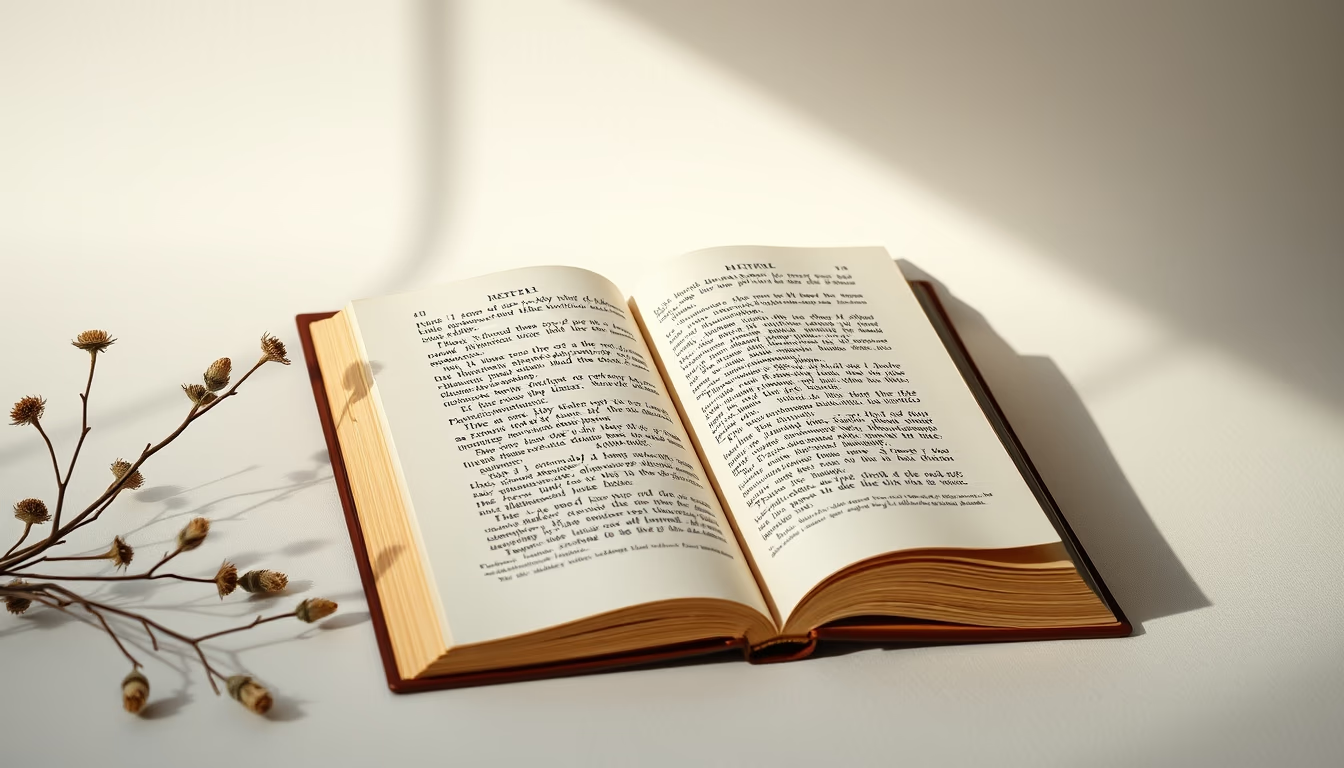
Illuminated manuscripts are medieval artworks combining text and elaborate decoration, revealing unique techniques and symbolism.
About this subject
Illuminated manuscripts represent one of the most refined artistic expressions of the Middle Ages, produced mainly between the 6th and 16th centuries. They consist of hand-written books decorated with ornaments, elaborate initial capital letters, and often miniature paintings using vibrant colors. The term 'illuminated' derives from Latin 'illuminare', meaning 'to light up' or 'give light', referring to the brilliance achieved by using gold and silver leaf that reflects light.
Monastic scribes in European monasteries were primarily responsible for this tradition, especially during the Carolingian and Romanesque periods. They used parchment made from animal skin, vegetable and mineral pigments, and precious metals. Each page required months of meticulous work. The Book of Kells, an Irish gospel from the 9th century, is one of the most famous examples, featuring interlace decoration and complex Christian iconography.
The production of illuminated manuscripts was intrinsically linked to the power of the Church and nobility, who commissioned these works to display wealth and devotion. Besides religious content, there were also secular manuscripts, such as historical chronicles and scientific treatises. The technique of illumination later influenced panel painting and stained glass art.
With the invention of the printing press by Gutenberg in the 15th century, the production of illuminated manuscripts gradually declined, but they continue to be studied as testimonies to art history, paleography, and medieval culture. Important collections are preserved in libraries such as the British Library, the National Library of France, and the Vatican Apostolic Library.
Frequently Asked Questions
What distinguishes an illuminated manuscript from a regular manuscript?
The main difference is the decoration: illuminated manuscripts have ornaments, decorated initial letters, and often miniature paintings with gold and silver, while regular manuscripts contain only text.
What materials were used in illuminations?
Materials included parchment (animal skin), pigments from crushed minerals and plants, and gold and silver leaf for shine. Ultramarine blue, for instance, came from lapis lazuli, a semi-precious stone.
Where can I see illuminated manuscripts today?
Major collections are held at the British Library (London), the National Library of France (Paris), and the Vatican Apostolic Library. Many are also digitized online.
Direct URL
https://pub-c7d6a6ea828543ac903a74a341ccb2e1.r2.dev/imagens/illuminated-manuscript-minimalist-composition-p6.avifHow to credit
Include a visible link back to UtilizAí. Copy one of the snippets below:
<a href="https://xn--utiliza-eza.com/en/midia/imagens/illuminated-manuscript-minimalist-composition-p6">Illuminated manuscript</a> by <a href="https://xn--utiliza-eza.com">UtilizAí</a>, licensed under <a href="https://creativecommons.org/licenses/by/4.0/">CC BY 4.0</a>.
[Illuminated manuscript](https://xn--utiliza-eza.com/en/midia/imagens/illuminated-manuscript-minimalist-composition-p6) by [UtilizAí](https://xn--utiliza-eza.com), CC BY 4.0
License: CC-BY-4.0