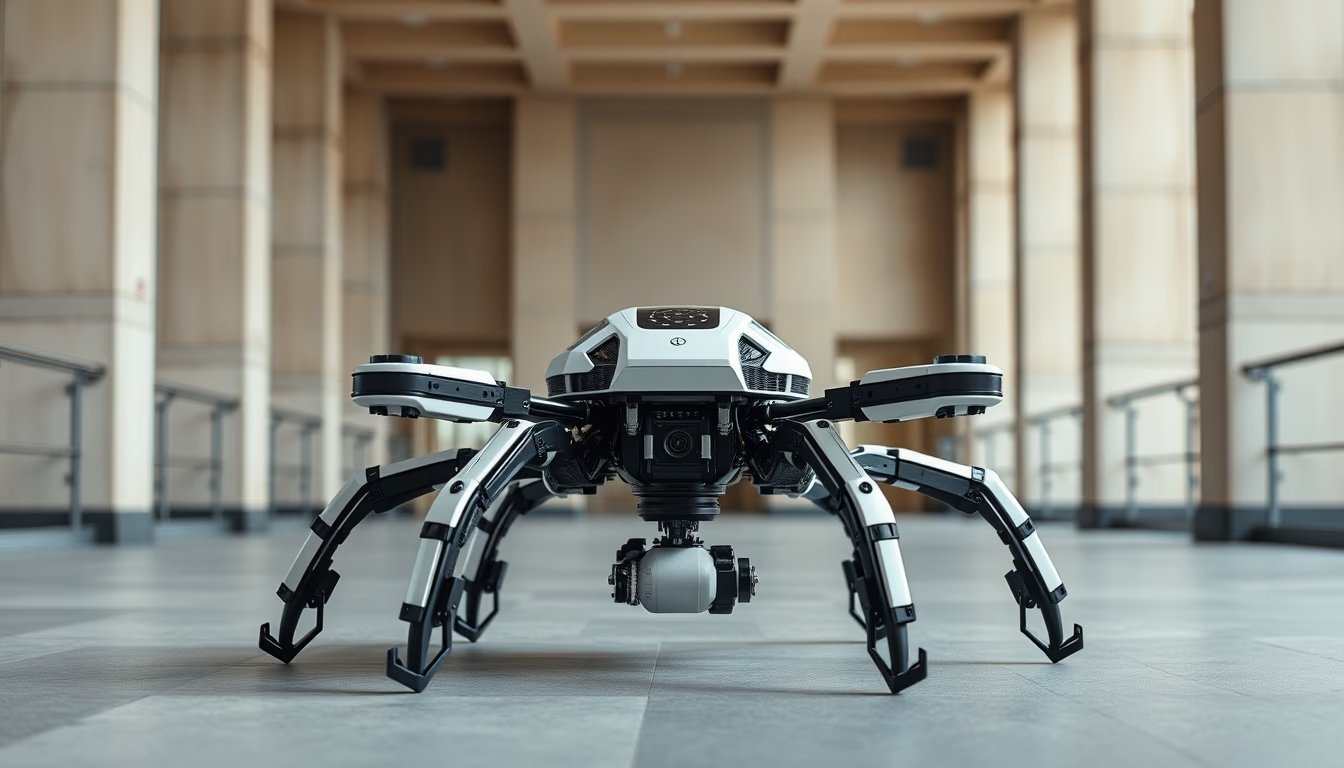
Hexapod robot moving
1344×768 · AVIF · CC BY 4.0
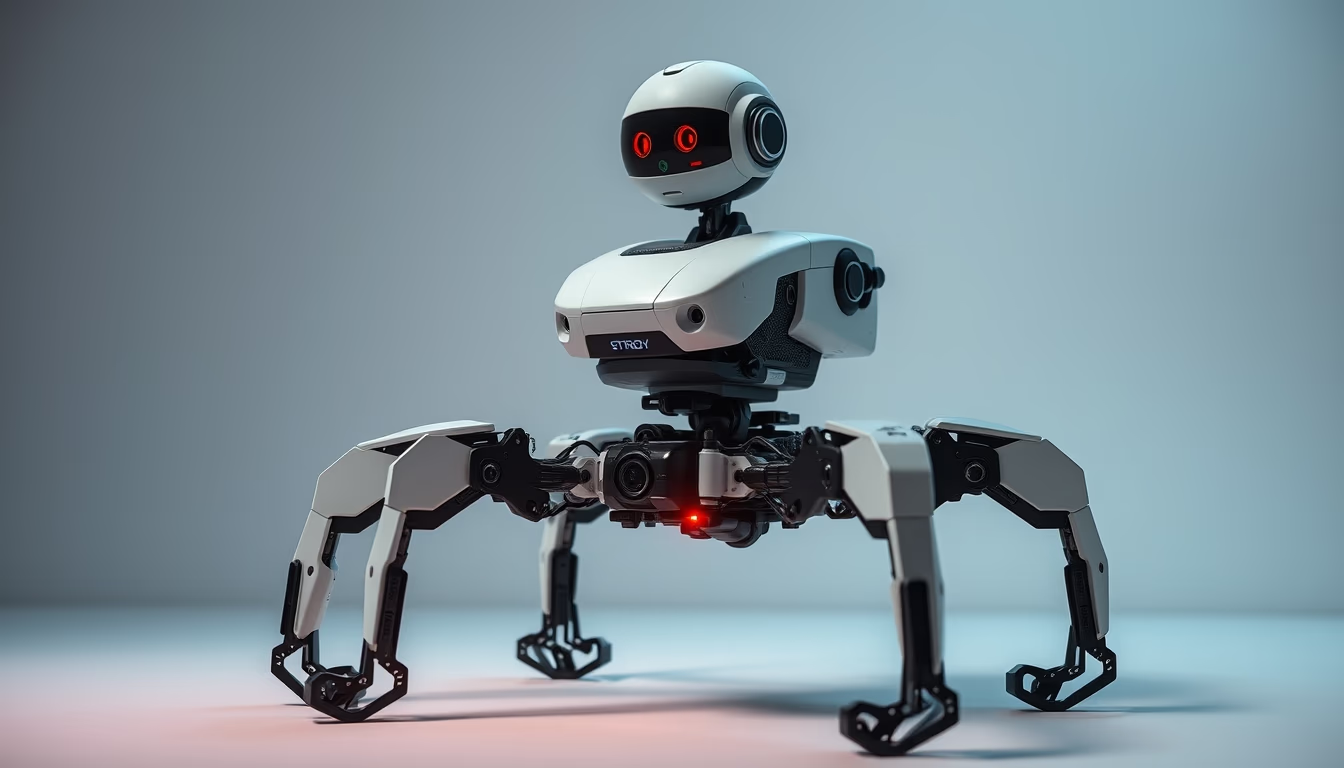
Hexapod robots are six-legged robotic platforms inspired by insects and arthropods, used in planetary exploration, search and rescue, and locomotion research.
About this subject
Hexapod robots, as the name suggests, have six legs. This configuration offers a balance between stability and complexity, allowing the robot to traverse uneven terrain where wheels or tracks fail. Inspired by nature, these robots mimic the gait patterns of insects and spiders, using coordinated leg sequences (like the tripod gait) to keep the center of mass stable.
Development of hexapods gained momentum in the 1980s and 1990s with projects such as MIT's Genghis and the University of Pennsylvania's RHex. Today, they are used in search and rescue missions after disasters, exploration of hostile environments (volcanoes, pipelines), and even entertainment as animatronics. The European Space Agency (ESA) has tested prototypes for lunar and Martian exploration, leveraging their ability to climb rocks and walk on loose soil.
Each leg of a hexapod typically has three joints (actuators) providing multiple degrees of freedom. Internal sensors (encoders, IMUs) and external ones (cameras, LIDAR) provide feedback for adaptive gait control. One major challenge is power consumption: moving six legs requires significant energy, and battery life is often limited. Advances in battery technology and lightweight materials like carbon fiber help mitigate this issue.
Fun fact: the fastest hexapod robot, the Mitsubishi MELFA (industrial), reaches speeds up to 4 km/h. Biomimetic models like Hamster III can climb stairs and traverse rubble efficiently. Ongoing research aims to make these robots more autonomous, robust, and affordable, opening doors to applications in precision agriculture, infrastructure inspection, and even surgery (as hexapod manipulators for laparoscopic instruments).
Frequently Asked Questions
Why use six legs instead of four or wheels?
Six legs provide static stability even when one leg is lifted, allowing locomotion on very rough terrain. Wheels fail on loose surfaces or large obstacles, while hexapods can climb and traverse more versatilely.
What is the main practical application of hexapod robots today?
They are widely used in search and rescue, inspection of hazardous areas (like pipelines and reactors), and planetary exploration. They also serve as research platforms for locomotion and control studies.
How long can a typical hexapod's battery last?
It depends on size and payload. Small robots may operate from 30 minutes to a few hours on lithium batteries. Larger models like Germany's LAURON achieve 2 to 3 hours of continuous walking.
Direct URL
https://pub-c7d6a6ea828543ac903a74a341ccb2e1.r2.dev/imagens/hexapod-robot-moving-studio-editorial-portrait-p2.avifHow to credit
Include a visible link back to UtilizAí. Copy one of the snippets below:
<a href="https://xn--utiliza-eza.com/en/midia/imagens/hexapod-robot-moving-studio-editorial-portrait-p2">Hexapod robot moving</a> by <a href="https://xn--utiliza-eza.com">UtilizAí</a>, licensed under <a href="https://creativecommons.org/licenses/by/4.0/">CC BY 4.0</a>.
[Hexapod robot moving](https://xn--utiliza-eza.com/en/midia/imagens/hexapod-robot-moving-studio-editorial-portrait-p2) by [UtilizAí](https://xn--utiliza-eza.com), CC BY 4.0
License: CC-BY-4.0