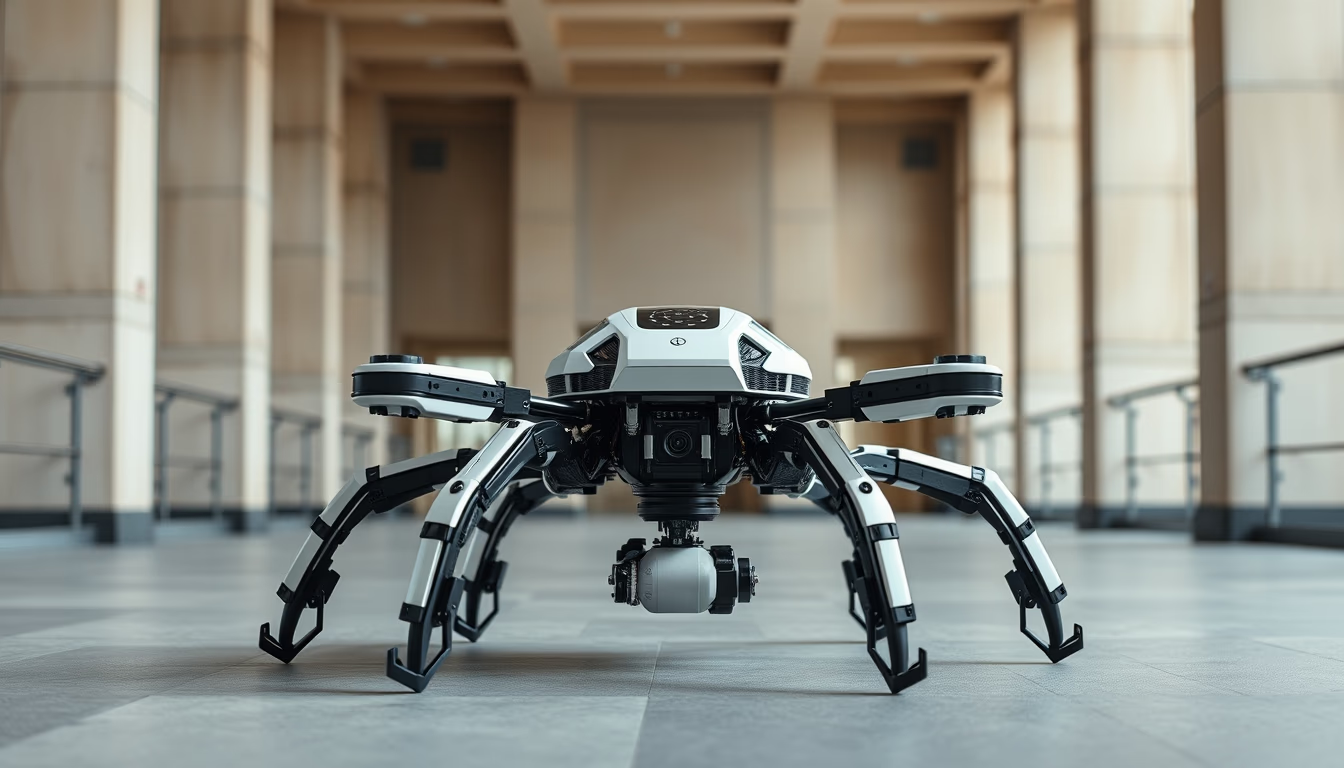
Hexapod robot moving
1344×768 · AVIF · CC BY 4.0
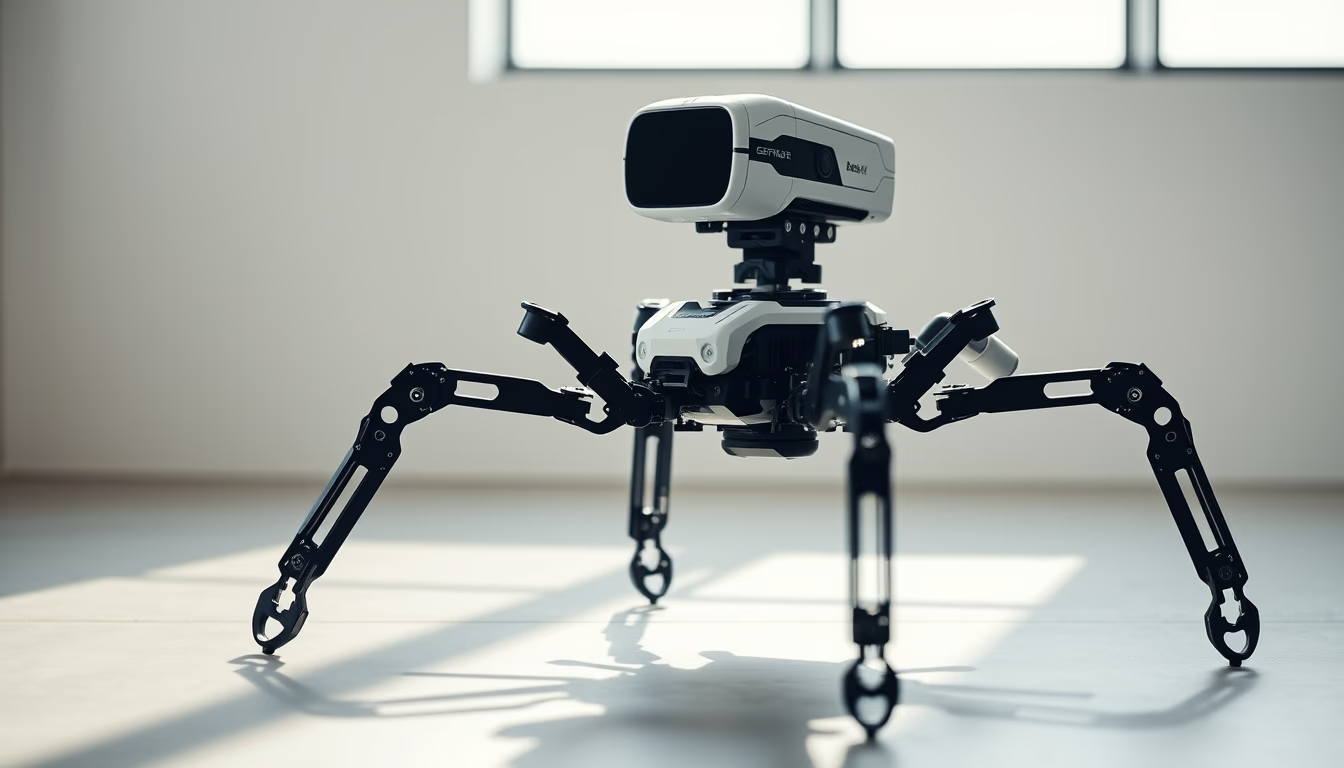
Hexápodes são robôs com seis pernas que imitam a locomoção de insetos e aranhas, oferecendo estabilidade e adaptabilidade em terrenos irregulares.
Sobre o tema
Os robôs hexápodes, também conhecidos como robôs de seis pernas, são projetados para replicar a locomoção de artrópodes como insetos e aranhas. Diferentemente de robôs com rodas ou esteiras, os hexápodes conseguem se deslocar em terrenos acidentados, subir obstáculos e até mesmo escalar superfícies inclinadas, graças à distribuição de peso entre as pernas e à capacidade de mover cada membro de forma independente. Essa arquitetura oferece redundância: mesmo que uma ou duas pernas falhem, o robô ainda pode continuar se movendo, o que é crucial em missões de resgate ou exploração.
O desenvolvimento de hexápodes remonta às décadas de 1980 e 1990, com projetos pioneiros como o Adaptive Suspension Vehicle (ASV) da Universidade de Ohio e o robô Dante II, da NASA, usado em 1994 para descer a cratera do Monte Spurr, no Alasca. Desde então, modelos como o RHex, da Universidade da Pensilvânia, e o PhantomX, comercializado pela Interbotix, popularizaram o uso de hexápodes em pesquisa e educação. Esses robôs utilizam algoritmos de controle iterativos, como o Central Pattern Generator (CPG), que simulam os padrões neurais de locomoção animal, permitindo andar, trotar e galopar de forma eficiente.
Na prática, os hexápodes são empregados em exploração espacial (como propostas para futuras missões em Marte), operações de busca e salvamento em escombros, inspeção de dutos e terrenos perigosos, e até mesmo na agricultura para monitoramento de plantações. A versatilidade vem do fato de que cada pata pode ser equipada com sensores (câmeras, LIDAR, sensores de força) e atuadores independentes. Além disso, a estabilidade estática de um hexápode é superior à de robôs bípedes ou quadrúpedes, pois ele pode manter três pontos de contato no chão enquanto levanta as outras pernas.
Uma curiosidade: o termo "hexápode" vem do grego "hex" (seis) e "pous" (pé). Embora existam robôs com mais ou menos pernas, o hexápode é um dos designs mais estudados em robótica, justamente pelo equilíbrio entre complexidade mecânica e capacidade de locomoção. No contexto de imagem minimalista, a silhueta geométrica de um hexápode em movimento evoca a interseção entre tecnologia e natureza, destacando a elegância da biomimética.
Perguntas frequentes
Qual a principal vantagem de um robô hexápode sobre um robô com rodas?
A principal vantagem é a capacidade de se locomover em terrenos irregulares e acidentados, como escombros, encostas ou superfícies rochosas, onde rodas ou esteiras teriam dificuldade. As pernas independentes permitem que o robô se adapte ao terreno, passo a passo.
Como os robôs hexápodes conseguem andar sem cair?
Eles usam um padrão de marcha chamado 'tripode', onde três pernas (duas de um lado e uma do outro) tocam o chão enquanto as outras três se movem. Isso mantém o centro de gravidade estável. Além disso, sensores e algoritmos de controle ajustam o movimento constantemente.
Exemplos famosos de robôs hexápodes?
Sim, exemplos incluem o RHex, da Universidade da Pensilvânia, conhecido por sua locomoção rápida; o Marsupial, um hexápode usado para exploração; e o PhantomX, um modelo acessível para educação. O Dante II da NASA foi um dos primeiros a ser usado em ambiente vulcânico.
URL direta
https://pub-c7d6a6ea828543ac903a74a341ccb2e1.r2.dev/imagens/hexapod-robot-moving-minimalist-composition-p5.avifComo creditar
Inclua um link visível de volta pro UtilizAí. Copie um dos snippets abaixo:
<a href="https://xn--utiliza-eza.com/midia/imagens/hexapod-robot-moving-minimalist-composition-p5">Hexapod robot moving</a> by <a href="https://xn--utiliza-eza.com">UtilizAí</a>, licensed under <a href="https://creativecommons.org/licenses/by/4.0/">CC BY 4.0</a>.
[Hexapod robot moving](https://xn--utiliza-eza.com/midia/imagens/hexapod-robot-moving-minimalist-composition-p5) by [UtilizAí](https://xn--utiliza-eza.com), CC BY 4.0
Licença: CC-BY-4.0