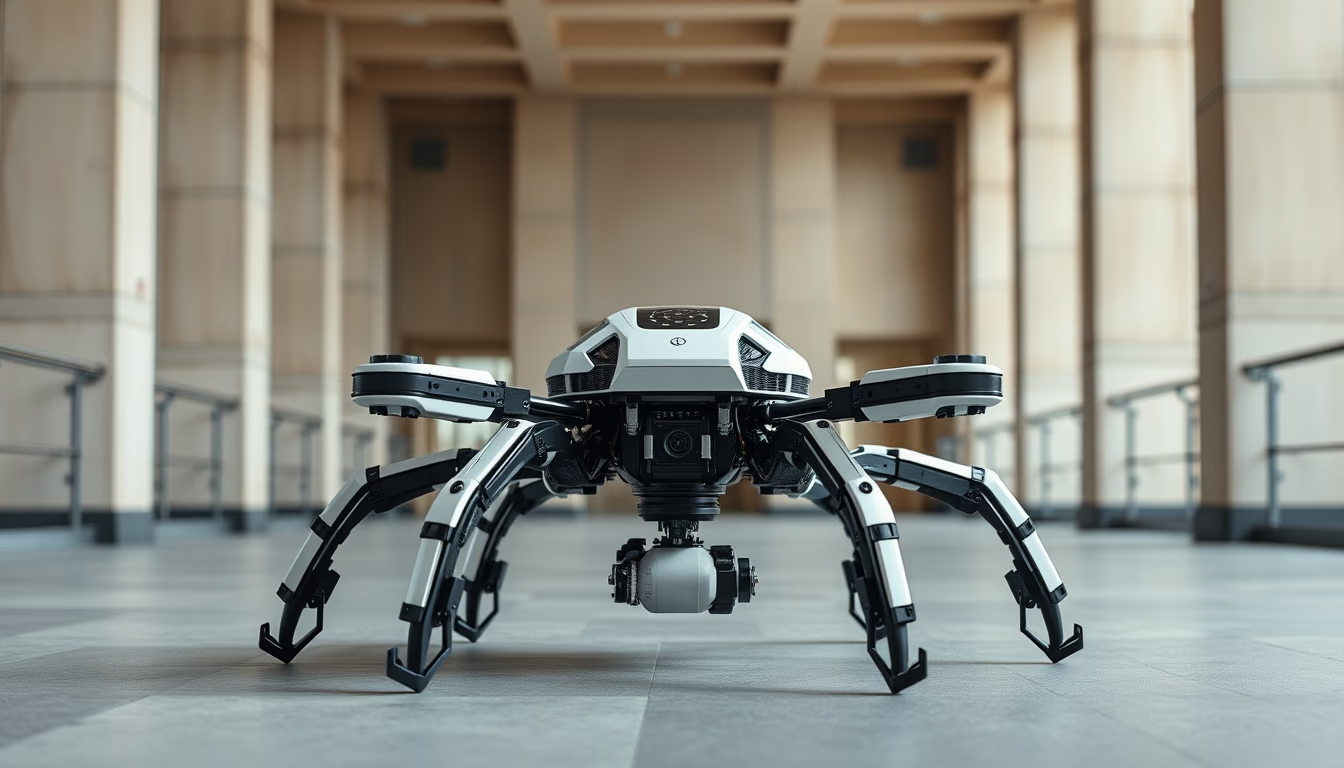
Hexapod robot moving
1344×768 · AVIF · CC BY 4.0

Hexapod robots, inspired by insects and arachnids, combine articulated locomotion with stability on rough terrain, used in exploration, rescue, and research.
About this subject
Hexapod robots are machines with six articulated legs, designed to mimic the locomotion of insects such as cockroaches, ants, or beetles. This configuration offers significant advantages over wheeled or tracked robots, especially on uneven or obstacle-filled surfaces. Static balance is achieved even with only three legs on the ground, allowing the robot to stop or move without tipping over. On rocky terrain, inclines, or rubble, the hexapod distributes weight adaptively, adjusting the height and angle of each leg individually.
Development of this robot type gained momentum in the 1990s with advances in microprocessors and servo motors. A milestone was the RHex project from the University of Pennsylvania and McGill University, which uses simple rotating legs to run at up to 8 km/h. Other models, such as the Fraunhofer Institute's LAURON, use arthropod-inspired legs with contact and force sensors. Today, commercial hexapods like the PhantomX Mark III are used in education and research, with affordable kits available for robotics enthusiasts.
Practical applications include search and rescue in disaster zones, pipeline inspection in mines or factories, planetary exploration (such as NASA's Sprawlette robot), and even entertainment in theme parks. A notable example is the Mantis robot, a large hexapod capable of carrying a person, developed by the British company Micromagic Systems. In Brazil, research groups at USP and UFMG study hexapods for precision agriculture and environmental monitoring, leveraging low ground pressure to avoid soil compaction.
Interesting fact: unlike quadrupeds, hexapods can adopt different gait patterns (tripod, tetrapod, or pentapod) depending on speed or stability needs. This locomotor repertoire is inspired by the energy efficiency of insects, which can travel long distances with low caloric consumption. With advances in polymer materials and artificial intelligence, hexapod robots are expected to become even more autonomous and versatile in the coming years.
Frequently Asked Questions
What is the main advantage of a hexapod robot compared to a wheeled robot?
The main advantage is its ability to traverse uneven terrain and obstacles such as rocks, steps, and rubble while maintaining stability. While wheels can get stuck or lose traction, articulated legs adjust dynamically to the ground.
Are hexapod robots used in space missions?
Yes, prototypes like NASA's Sprawlette have been tested for planetary exploration, especially on rocky surfaces of Mars or the Moon. Legged locomotion allows avoiding obstacles and accessing craters that wheeled rovers cannot reach.
Can I build a homebrew hexapod robot?
Yes, commercial kits such as the PhantomX Mark III or Lynxmotion Hexapod V2 use Arduino or Raspberry Pi. With 3D printing and servo motors, enthusiasts can assemble and program their own hexapod for around $200 to $500.
Direct URL
https://pub-c7d6a6ea828543ac903a74a341ccb2e1.r2.dev/imagens/hexapod-robot-moving-magazine-editorial-p7.avifHow to credit
Include a visible link back to UtilizAí. Copy one of the snippets below:
<a href="https://xn--utiliza-eza.com/en/midia/imagens/hexapod-robot-moving-magazine-editorial-p7">Hexapod robot moving</a> by <a href="https://xn--utiliza-eza.com">UtilizAí</a>, licensed under <a href="https://creativecommons.org/licenses/by/4.0/">CC BY 4.0</a>.
[Hexapod robot moving](https://xn--utiliza-eza.com/en/midia/imagens/hexapod-robot-moving-magazine-editorial-p7) by [UtilizAí](https://xn--utiliza-eza.com), CC BY 4.0
License: CC-BY-4.0