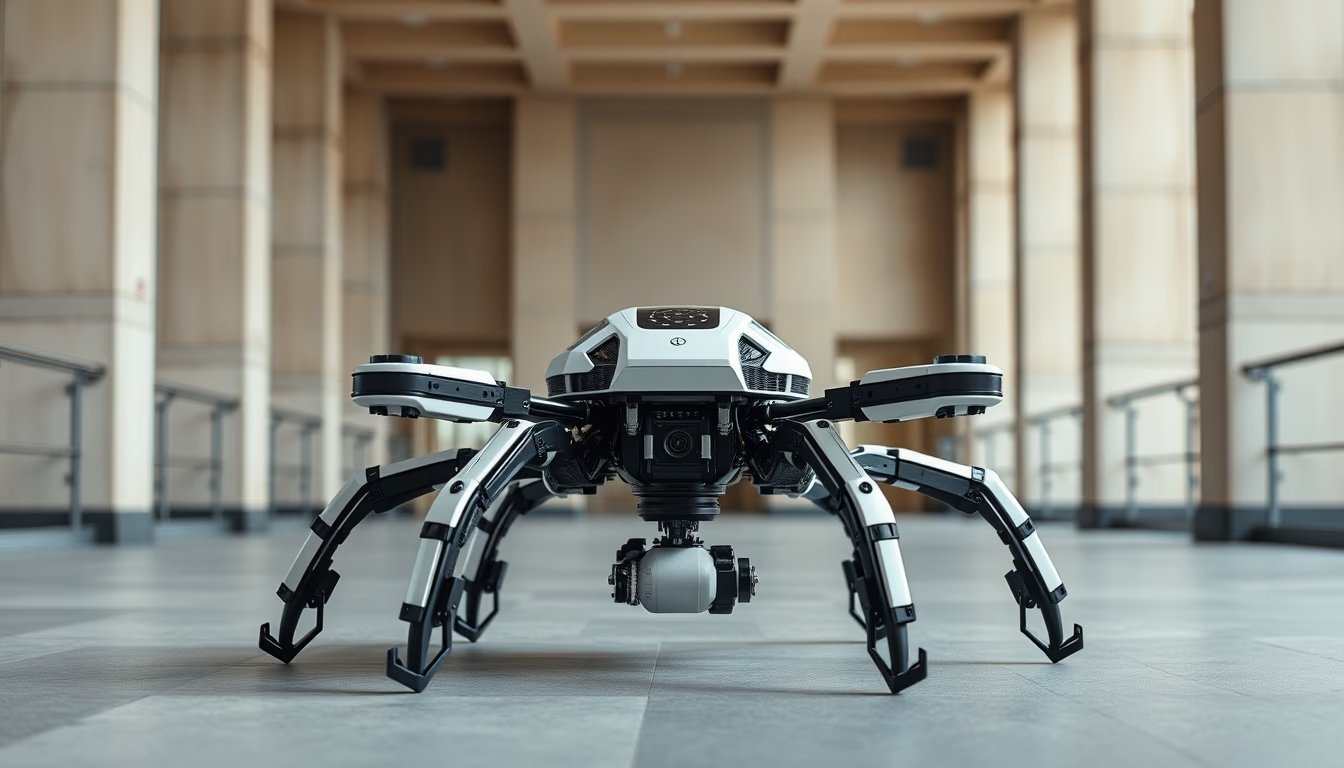
Hexapod robot moving
1344×768 · AVIF · CC BY 4.0
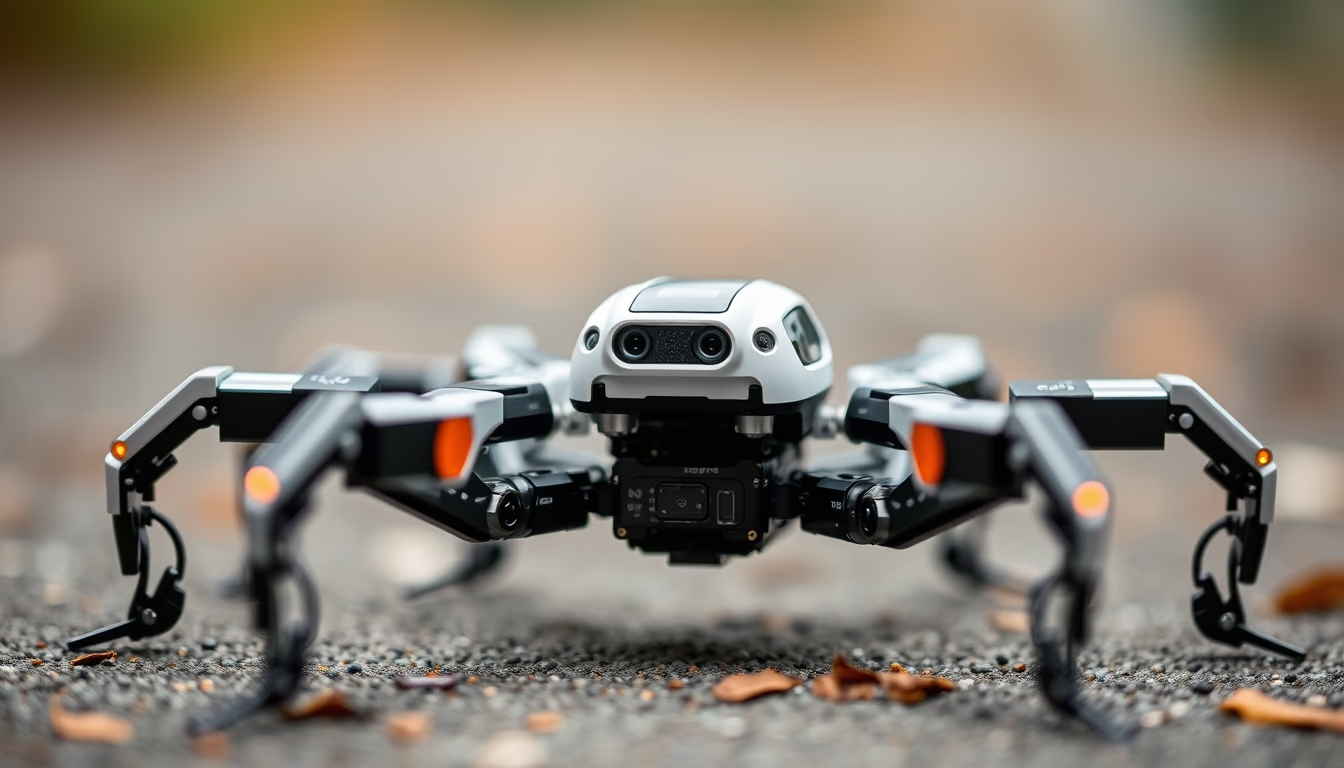
Hexapods are six-legged robots inspired by insects, used in rough terrain for exploration and rescue.
About this subject
Hexapod robots, with their six articulated legs, mimic the locomotion of insects like cockroaches and ants. This configuration offers exceptional stability on uneven surfaces, allowing the robot to maintain balance even if one or two legs fail. Unlike wheeled or tracked robots, hexapods can climb obstacles, step over debris, and traverse rubble, making them ideal for search and rescue missions in natural disasters.
Locomotion of a hexapod is controlled by complex algorithms that coordinate leg movements in patterns such as the tripod gait (three legs on the ground at a time) or wave gait. Each leg typically has three degrees of freedom, providing a wide range of motion. Notable designs include Fraunhofer Institute's LAURON and University of Pennsylvania's RHex, which demonstrate robustness and energy efficiency.
Beyond practical applications, hexapods are used in bionics and artificial intelligence research to better understand animal locomotion and develop autonomous systems. Sensors like cameras, LIDAR, and inertial sensors enable the robot to map its environment and make real-time decisions. Advances in materials and actuators have made these robots lighter, faster, and more affordable.
Interestingly, some hexapods can perform manipulation tasks using their own legs, such as grasping objects or opening doors, expanding their potential in industrial and domestic scenarios.
Frequently Asked Questions
How many legs does a hexapod robot have?
A hexapod has exactly six legs, inspired by insect anatomy, which provides greater stability on uneven terrain.
What are hexapod robots used for?
They are primarily used in search and rescue missions, exploration of hostile environments, academic research on robotic locomotion, and increasingly in industrial and domestic applications.
What is the difference between a hexapod and a wheeled robot?
Hexapods can walk over obstacles and rough terrain that would immobilize wheeled robots, as their articulated legs adapt to the ground, offering greater versatility and the ability to traverse rubble.
Direct URL
https://pub-c7d6a6ea828543ac903a74a341ccb2e1.r2.dev/imagens/hexapod-robot-moving-macro-closeup-p4.avifHow to credit
Include a visible link back to UtilizAí. Copy one of the snippets below:
<a href="https://xn--utiliza-eza.com/en/midia/imagens/hexapod-robot-moving-macro-closeup-p4">Hexapod robot moving</a> by <a href="https://xn--utiliza-eza.com">UtilizAí</a>, licensed under <a href="https://creativecommons.org/licenses/by/4.0/">CC BY 4.0</a>.
[Hexapod robot moving](https://xn--utiliza-eza.com/en/midia/imagens/hexapod-robot-moving-macro-closeup-p4) by [UtilizAí](https://xn--utiliza-eza.com), CC BY 4.0
License: CC-BY-4.0