Fresco painting ceiling
1344×768 · AVIF · CC BY 4.0
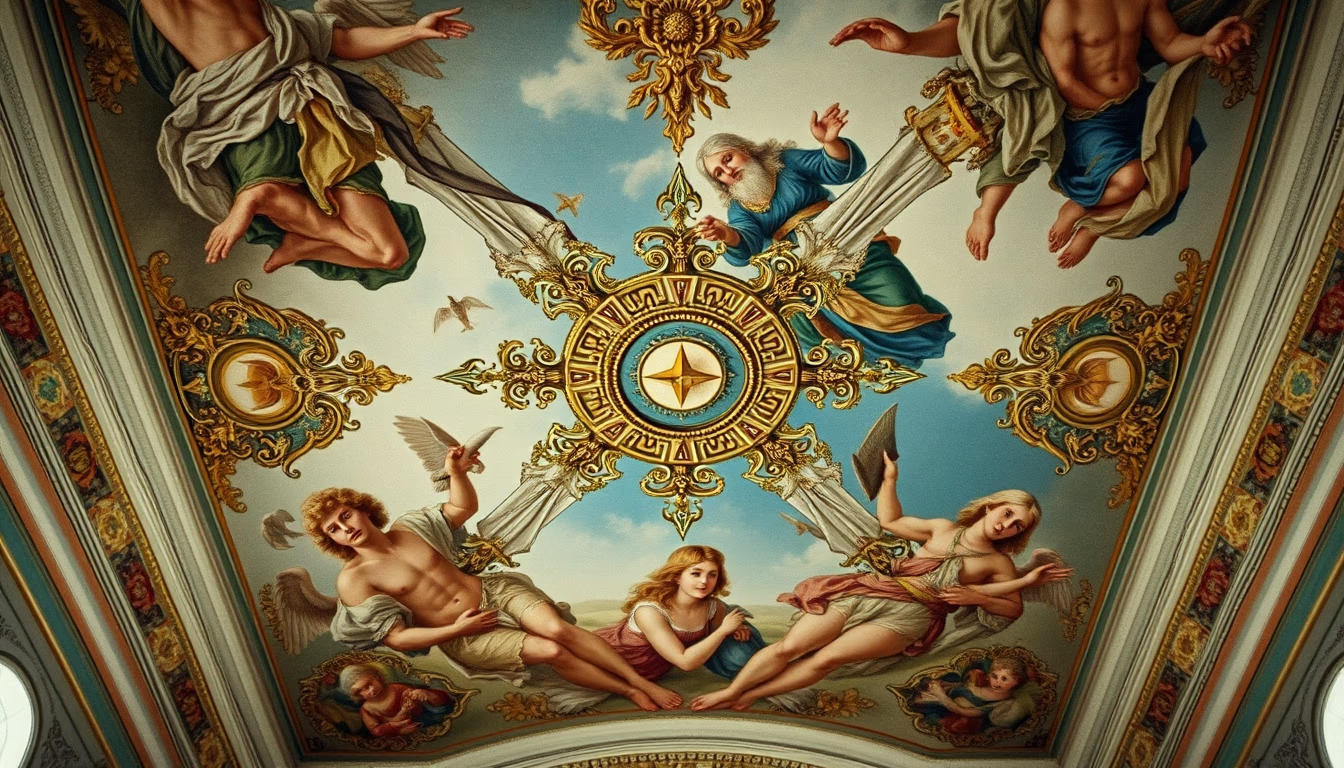
Afresco no teto é uma técnica milenar de pintura sobre gesso úmido, comum em igrejas e palácios europeus e brasileiros.
Sobre o tema
O afresco é uma técnica de pintura mural que remonta à antiguidade, com exemplos notáveis nas civilizações minoica e romana. Na Renascença italiana, artistas como Michelangelo e Rafael elevaram o afresco de teto a uma forma de arte monumental, como na Capela Sistina, no Vaticano. No Brasil, o estilo chegou com os jesuítas no período colonial, sendo aplicado em igrejas barrocas como a Basílica de Nossa Senhora do Carmo, em Ouro Preto, onde o forro da nave é decorado com cenas sacras pintadas diretamente na cal. A técnica exige rapidez: o pigmento é aplicado sobre gesso fresco, e a reação química com o ar fixa a cor permanentemente. Isso explica a durabilidade de afrescos centenários, que resistem ao tempo sem necessidade de verniz. No século XX, artistas como Cândido Portinari usaram variações do afresco para contar a história brasileira, como nos painéis do Palácio Gustavo Capanema, no Rio de Janeiro. A conservação de afrescos exige controle de umidade e temperatura, pois a umidade pode dissolver o gesso e descamar a pintura. Curiosamente, muitos afrescos renascentistas foram redescobertos sob camadas de gesso posterior, como os da Capela Brancacci, em Florença. A técnica continua a ser estudada e praticada por restauradores e artistas contemporâneos, mantendo viva uma tradição que atravessa milênios.
Perguntas frequentes
Qual a diferença entre afresco e pintura a óleo?
No afresco, o pigmento é aplicado sobre gesso úmido e se fixa por reação química, enquanto a pintura a óleo usa óleo como aglutinante sobre tela ou madeira. O afresco é mais durável em ambientes controlados, mas menos flexível para correções.
Onde posso ver afrescos famosos no Brasil?
Além das igrejas barrocas de Minas Gerais, afrescos modernos estão no Palácio Gustavo Capanema (Rio de Janeiro), de Portinari, e no Mosteiro de São Bento (São Paulo), com pinturas do frei Agostinho de Jesus.
Como é feita a restauração de um afresco danificado?
Restauradores removem sujeira e camadas de repintura com solventes suaves, consolidam o gesso com resinas e reintegram lacunas com aquarela ou têmpera, sempre reversíveis para futuras intervenções.
URL direta
https://pub-c7d6a6ea828543ac903a74a341ccb2e1.r2.dev/imagens/fresco-painting-ceiling-film-grain-authentic-p5.avifComo creditar
Inclua um link visível de volta pro UtilizAí. Copie um dos snippets abaixo:
<a href="https://xn--utiliza-eza.com/midia/imagens/fresco-painting-ceiling-film-grain-authentic-p5">Fresco painting ceiling</a> by <a href="https://xn--utiliza-eza.com">UtilizAí</a>, licensed under <a href="https://creativecommons.org/licenses/by/4.0/">CC BY 4.0</a>.
[Fresco painting ceiling](https://xn--utiliza-eza.com/midia/imagens/fresco-painting-ceiling-film-grain-authentic-p5) by [UtilizAí](https://xn--utiliza-eza.com), CC BY 4.0
Licença: CC-BY-4.0