Flower stamen pollen macro
1344×768 · AVIF · CC BY 4.0
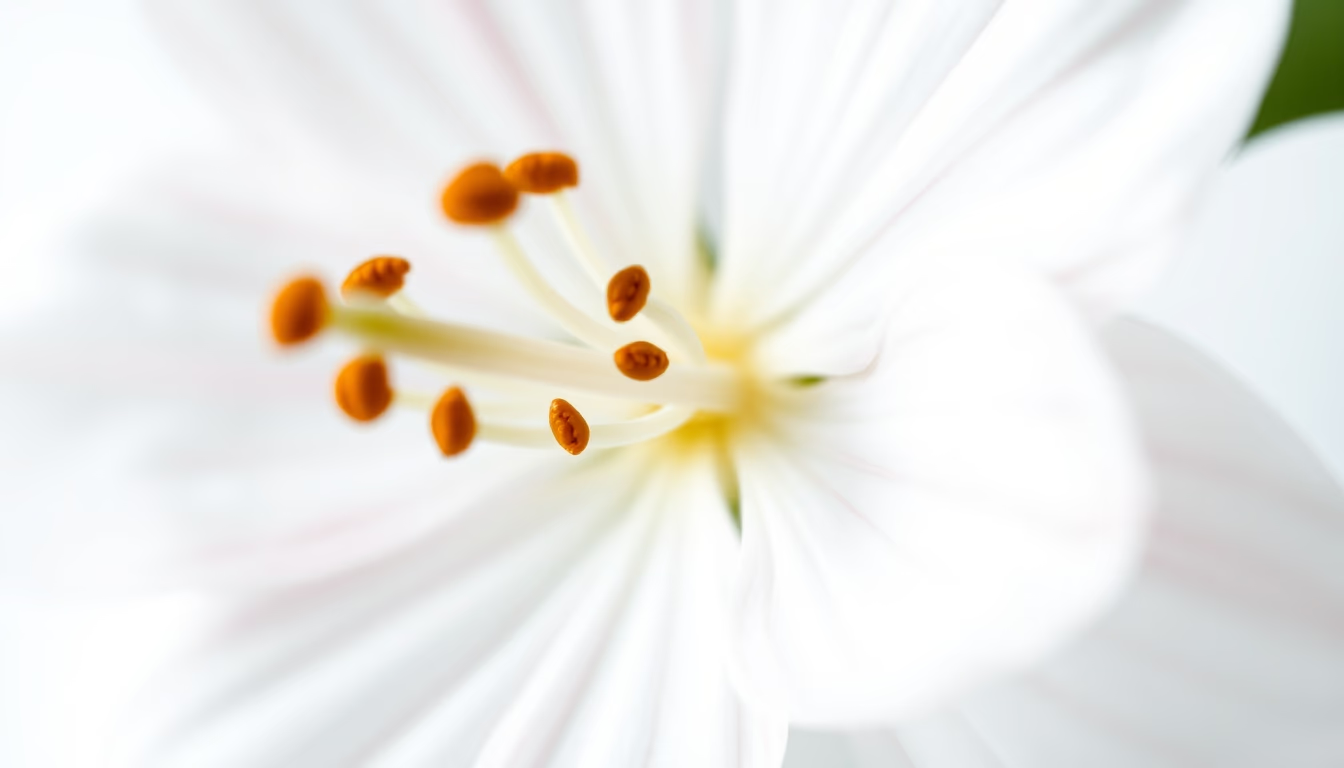
Macro of flower stamen with pollen grains reveals details of plant reproduction, essential for pollination and agriculture.
About this subject
The stamen is the male reproductive organ of flowers, composed of a filament and an anther. The anther contains pollen sacs where pollen grains are produced. Each pollen grain is a microscopic structure carrying the male gamete of the plant. Its morphology varies greatly among species, from spherical and smooth to elongated and ornamented, making it an important taxonomic character. Pollen is released when the anther opens, usually by longitudinal dehiscence, and then transported by biotic agents (bees, butterflies, birds) or abiotic agents (wind, water) to the stigma of another flower. Pollination is a vital ecosystem service, responsible for about 75% of global food crops such as coffee, apples, almonds, and soybeans. The economic value of pollination is estimated to exceed 200 billion dollars annually worldwide. The outer surface of pollen grains has a resistant layer called the exine, composed of sporopollenin, one of the most durable biopolymers known. This durability allows pollen to be preserved in sediments for thousands of years, used in paleontology and climate change studies. In laboratories, pollen is widely used in forensic analysis, geology, and research on seasonal allergies.
Frequently Asked Questions
What is the stamen of a flower?
The stamen is the male reproductive organ of flowering plants (angiosperms). It consists of a filament and an anther, where pollen grains are produced and stored.
What is the function of pollen in plant reproduction?
Pollen carries the male gamete to the flower's stigma, where it germinates and forms a pollen tube to fertilize the ovule, leading to seed formation. Without pollen, fruits and seeds would not develop.
How do pollen grains vary among plant species?
Pollen grains vary in size, shape, and surface ornamentation. For example, corn pollen is spherical and smooth, while pumpkin pollen is large and spiky. These features help identify species in botanical and forensic studies.
Direct URL
https://pub-c7d6a6ea828543ac903a74a341ccb2e1.r2.dev/imagens/flower-stamen-pollen-macro-commercial-product-photography-p2.avifHow to credit
Include a visible link back to UtilizAí. Copy one of the snippets below:
<a href="https://xn--utiliza-eza.com/en/midia/imagens/flower-stamen-pollen-macro-commercial-product-photography-p2">Flower stamen pollen macro</a> by <a href="https://xn--utiliza-eza.com">UtilizAí</a>, licensed under <a href="https://creativecommons.org/licenses/by/4.0/">CC BY 4.0</a>.
[Flower stamen pollen macro](https://xn--utiliza-eza.com/en/midia/imagens/flower-stamen-pollen-macro-commercial-product-photography-p2) by [UtilizAí](https://xn--utiliza-eza.com), CC BY 4.0
License: CC-BY-4.0