Feather quill ink
1344×768 · AVIF · CC BY 4.0
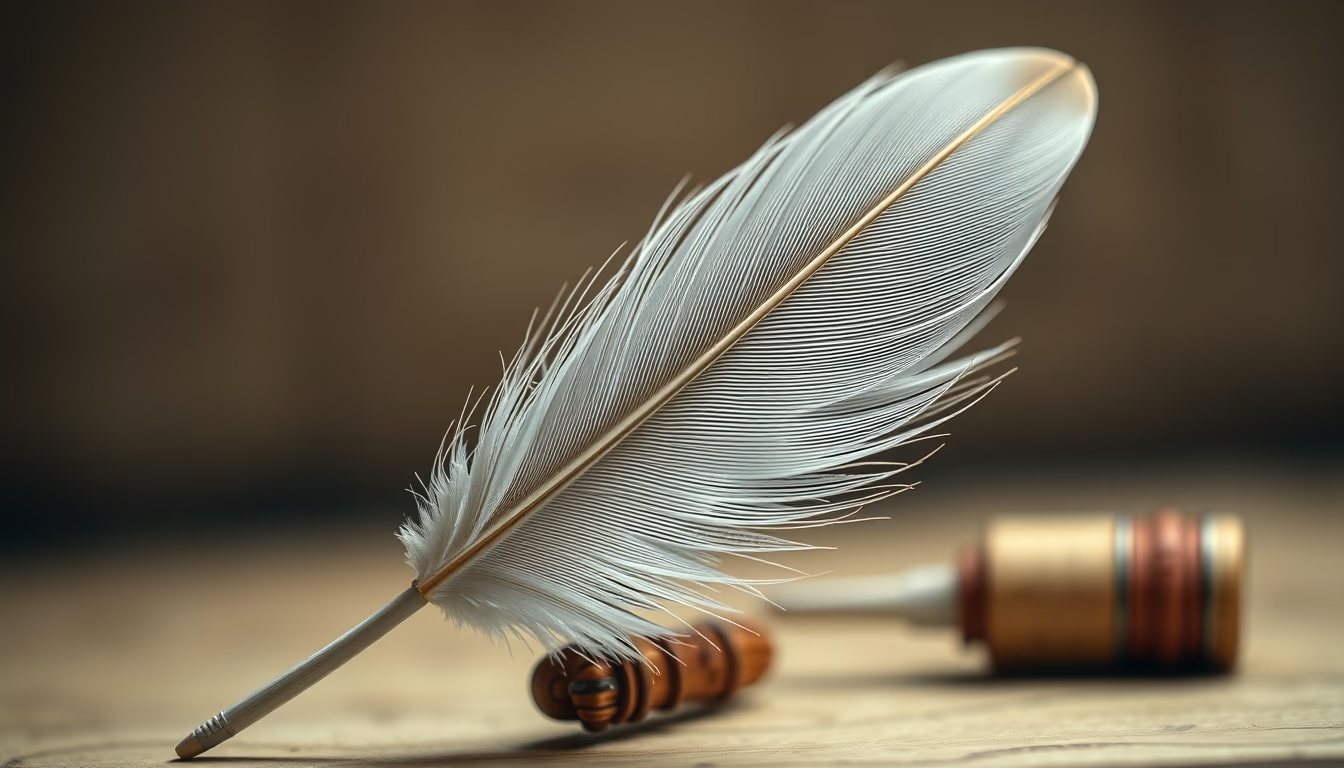
Feather quills and ink were the foundation of manual writing for centuries, especially before the popularization of fountain pens and ballpoints.
About this subject
The feather quill was the primary writing instrument in the West from the Middle Ages to the 19th century. Made from the primary flight feathers of geese, swans, or crows, the quill was carved into a fine point with a penknife. Preparation involved boiling to remove oil and hardening the shaft. Each quill lasted only a few hours of continuous use and needed regular resharpening.
The ink used was typically iron-gall ink, composed of oak galls rich in tannin, iron sulfate, and gum arabic as a binder. This ink penetrated the paper and darkened over time, resisting fading. For special documents or illuminations, scribes added pigments such as gold powder or ultramarine blue obtained from lapis lazuli.
The combination of quill and ink was crucial for producing historical documents like the Magna Carta, the U.S. Declaration of Independence, and countless medieval manuscripts. The word "pen" derives from the Latin "penna," meaning feather. In the 19th century, metal nibs and later fountain pens gradually replaced bird quills, but the quill remains a symbol of calligraphy and classical writing.
Interestingly, the bird species influenced quill quality: crow quills were harder and more precise for small script, while goose quills were more flexible. The nib cut determined stroke thickness, essential for copperplate and English cursive calligraphy.
Frequently Asked Questions
How was iron-gall ink produced in the past?
The ink was made from oak galls (rich in tannin), crushed and mixed with iron sulfate and gum arabic. The mixture was left to ferment for days or weeks. The result was a dark ink that reacted with paper and became indelible.
Which type of bird feather was most valued for writing?
The most prized feathers were the primary feathers of geese (for durability and flexibility) and swans (for size and ink capacity). Crow quills were preferred for very small script due to their stiffness.
Why were bird quills replaced by metal nibs?
Bird quills wore out quickly and required frequent cutting. Metal nibs, mass-produced from around 1820, offered durable and uniform tips that did not need sharpening. This made writing cheaper and easier.
Direct URL
https://pub-c7d6a6ea828543ac903a74a341ccb2e1.r2.dev/imagens/feather-quill-ink-tilt-shift-miniature-p2.avifHow to credit
Include a visible link back to UtilizAí. Copy one of the snippets below:
<a href="https://xn--utiliza-eza.com/en/midia/imagens/feather-quill-ink-tilt-shift-miniature-p2">Feather quill ink</a> by <a href="https://xn--utiliza-eza.com">UtilizAí</a>, licensed under <a href="https://creativecommons.org/licenses/by/4.0/">CC BY 4.0</a>.
[Feather quill ink](https://xn--utiliza-eza.com/en/midia/imagens/feather-quill-ink-tilt-shift-miniature-p2) by [UtilizAí](https://xn--utiliza-eza.com), CC BY 4.0
License: CC-BY-4.0